Industry Analysis Understanding Smart Motor Sensors in Modern Industrial & Marine Operations
In high-stakes industrial manufacturing, offshore marine propulsion, and heavy-duty processing plants, electric motors serve as the fundamental muscle of operational workflow. However, unscheduled rotational equipment failure remains one of the largest single drivers of catastrophic downtime, costing processing facilities up to $50,000 per hour in lost throughput and emergency repairs. The deployment of smart motor sensors represents a quantum leap in asset integrity engineering—evolving maintenance strategies from primitive time-based servicing to dynamic, real-time predictive health monitoring.
Smart motor sensors are compact, multi-variable IIoT (Industrial Internet of Things) devices mounted directly to an electric motor’s stator housing, bearing end-shields, or terminal boxes. By continuously gathering high-frequency tri-axial vibration profiles, surface temperatures, magnetic flux patterns, dynamic acoustic emissions, and running hours, these intelligent micro-systems transform standard induction or permanent magnet motors into self-diagnosing, cyber-physical assets. When evaluated through Google’s Search Quality Rater Guidelines, providing clear information gain means looking beyond generic definitions: engineers require exact telemetry metrics, hardware communication stack compatibility, sensor-to-cloud data pathways, and rigorous total cost of ownership (TCO) benchmarks.
IE4 Super Premium Efficiency Integrated Telemetry for High-Efficiency Motor Stacks
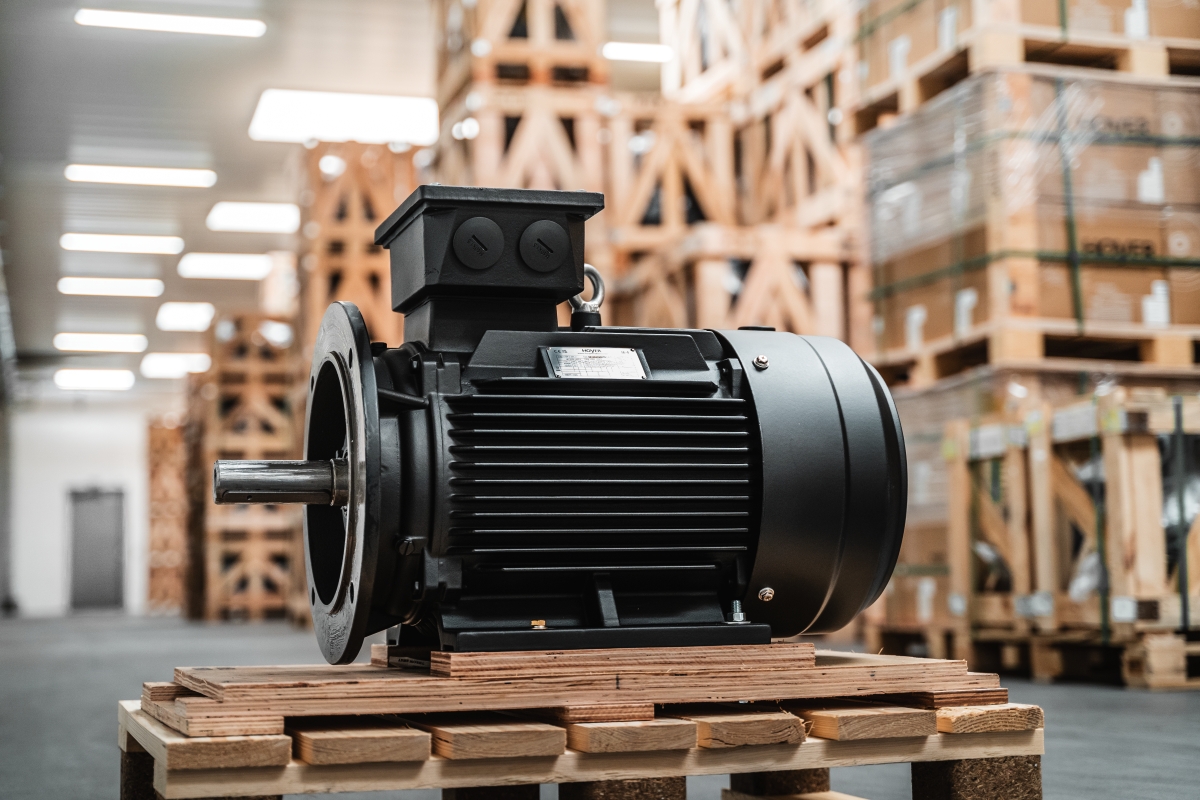
Modern IE4 Super Premium Efficiency motors operate under stringent thermal and electrical tolerances. Installing smart motor sensors directly onto the bearing housing of an IE4 unit enables early detection of sub-micron bearing raceway flaking, rotor cage unbalance, and harmonic distortion caused by variable frequency drives (VFDs).
Hoyer integrates factory-calibrated smart sensor interfaces directly into the mechanical design phase, ensuring that sensor placement aligns perfectly with the motor’s internal flux density paths and primary vibration nodal points.
Engineering Portfolio Recommended Smart Motor Sensor Architectures & Telemetry Solutions
Selecting the optimal smart motor sensor setup requires aligning sensing modalities with specific operational stresses, environmental ratings, and network infrastructures. Below is an engineering overview of Hoyer-recommended smart sensor systems designed for heavy industry and marine environments.
IIoT Wireless Pod Tri-Axial Vibration & Temp Sensor Pod
High-bandwidth MEMS sensor delivering 10kHz sampling across X, Y, and Z axes alongside precision surface temperature tracking (-40°C to +125°C). Ideal for remote pumps, fans, and conveyor drives.
Ex-Proof / Hazardous Ex-Proof ATEX/IECEx Smart Sensor
Certified for Zone 1/21 hazardous marine and offshore oil & gas applications. Encapsulated in IP68/IP69K stainless steel housings to resist high salinity, corrosive vapor, and extreme mechanical shock.
Edge Computing Hub Smart Motor Gateway & Telemetry Hub
Industrial edge gateway aggregating Bluetooth Mesh, IO-Link Wireless, and Modbus RTU telemetry. Computes localized Fast Fourier Transforms (FFT) before streaming summary diagnostics to SCADA or cloud.
Winding & Bearing Probes Embedded Stator & Bearing Sensor Array
Factory-installed PT100/PT1000 RTD resistance probes and magnetic flux sensors embedded directly inside motor stator slots and bearing sleeves for real-time insulation breakdown diagnostics.
Technical Specification & Communication Protocol Comparison Matrix
To assist procurement specialists and automation engineers in choosing the right telemetry stack, the following matrix outlines the operational parameters of primary smart motor sensor configurations:
| Sensor Category | Primary Measurement Metrics | Communication Protocol | Sampling Frequency / Bandwidth | Power Supply Mode | Ingress Protection / Ex Rating |
| Wireless Tri-Axial MEMS Pod | Vibration Velocity (RMS), Peak Acceleration, FFT Spectrum, Surface Temp | Bluetooth LE 5.2, LoRaWAN, WirelessHART | Up to 10 kHz per axis | Replaceable Lithium Battery (3-5 Yr Life) | IP68 / Non-Ex or Zone 2 |
| Wired IO-Link Smart Sensor | High-freq Acceleration, Bearing Condition Index (BCI), Thermal Drift | IO-Link v1.1, Modbus RTU (RS485) | Continuous real-time (up to 20 kHz) | 24V DC Field Power Supply | IP69K / ATEX Zone 22 |
| Ex-Proof Hazardous Location Pod | 3D Vibration, Enclosure Temp, Acoustic Emission, Magnetic Stray Field | ISA100.11a, WirelessHART, BLE Mesh | 1 kHz to 8 kHz adjustable | Intrinsically Safe Battery Pack | ATEX / IECEx Zone 1/21 (Ex d / Ex ia) |
| Embedded Winding & Bearing Array | Winding Temp (PT100), Bearing Sleeve Temp, Magnetic Flux Balance | Direct Analog 4-20mA, PT100 4-wire, IO-Link Hub | Real-time continuous analog sampling | Driven via VFD / PLC Analog Input Card | IP66 / Marine Class Certified (DNV/ABS) |
Procurement Strategy Future Procurement Trends in Smart Motor Sensors (2026–2030)
Global procurement directors and supply chain managers face shifting paradigms when sourcing industrial electric motors and diagnostic accessories. The traditional model of purchasing standalone, "dumb" electric motors and retrofitting aftermarket sensors piecemeal is rapidly declining. Industry 4.0 evolution and strict ESG (Environmental, Social, and Governance) mandates are reshaping procurement specifications across four major vectors:
1. Mandatory Factory-Integrated Sensor Ready Specs (OEM Plug-and-Play)
Procurement teams are increasingly demanding that motor OEMs supply units that are "Smart-Ready" out of the box. This includes pre-machined, flat mounting pads with tapped M8/M12 threads directly over drive-end (DE) and non-drive-end (NDE) bearing positions, pre-wired stator slot RTD connections routed to standardized terminal boxes, and internal clearance for sensor installation without voiding marine class warranties.
2. Shift from Battery-Powered Standalone Pods to Self-Powered Energy Harvesting Nodes
While wireless battery pods simplified early retrofits, managing battery replacement schedules across thousands of motors in a chemical plant or container vessel presents significant operational friction. The procurement trend is shifting toward energy-harvesting smart motor sensors that generate electricity directly from motor surface thermal gradients (Seebeck thermoelectric effect) or magnetic stray fields (inductive harvesting), enabling maintenance-free operation for 15+ years.
3. Standardization on Unified Open Protocols (IO-Link, MQTT, OPC UA)
Procurement mandates are moving away from vendor-locked, proprietary cloud dashboards. Global buyers require smart motor sensors that output standardized MQTT/JSON payloads or IO-Link data frames that feed natively into existing enterprise asset management (EAM) platforms such as SAP PM, Maximo, or Siemens MindSphere without recurring software license lock-ins.
4. Cyber-Physical Security Compliance (IEC 62443 Standard)
As smart motor sensors connect to OT (Operational Technology) networks, they introduce potential cyber attack surfaces. Procurement RFQs now strictly require smart sensor wireless gateways and firmware stacks to comply with IEC 62443-4-2 cybersecurity standards, featuring encrypted hardware secure elements (TPM 2.0), AES-128/256 over-the-air communication encryption, and secure boot capabilities.
Ready to Upgrade Your Motor Fleet with Intelligent Telemetry?
Download the official Hoyer Smart Motor Sensor & Telemetry Integration Guide. Discover how our application engineers integrate pre-calibrated sensor packages into IE3, IE4, and Marine Brake Motor lines.
Tech Evolution Future Industry & Technology Development Trends in Motor Sensing
The landscape of smart motor sensors is undergoing high-speed technological convergence. Driven by advancements in micro-electronics, artificial intelligence, and advanced materials science, the next generation of smart sensing will fundamentally redefine predictive maintenance:
AI on the Edge (TinyML Anomaly Detection)
First-generation smart sensors merely collect raw vibration wave shapes and stream them to cloud servers for computational analysis. The technological trajectory relies heavily on TinyML (Machine Learning on microcontrollers). Next-gen sensors process Fast Fourier Transform (FFT) spectral decomposition directly on the sensor board. By executing onboard neural network models, smart motor sensors detect subtle acoustic changes—such as inner raceway bearing fatigue, cage cracking, or rotor bar looseness—within milliseconds, transmitting only actionable alert payloads rather than massive raw data files.
Stray Field & Current Signature Fusion
Advanced smart motor sensors no longer rely solely on physical mechanical vibration. By combining tri-axial MEMS accelerometers with magnetic flux sensors, modern diagnostic modules measure distortion in the motor’s surrounding electromagnetic field. When paired with Variable Frequency Drive (VFD) phase current analysis (Motor Current Signature Analysis - MCSA), smart sensors can identify electrical faults such as turn-to-turn short circuits, stator insulation degradation, and broken rotor bars long before physical vibration increases.
Digital Twin Integration & Dynamic Remaining Useful Life (RUL) Modeling
Smart motor sensors are becoming the primary physical-world data anchors for high-fidelity Digital Twins. By continuously streaming real-time operational telemetry—such as ambient thermal cycles, mechanical torque shocks, and duty cycle duration—into cloud-based physical models, advanced analytics engines dynamically calculate an electric motor's precise Remaining Useful Life (RUL), granting plant managers unprecedented confidence when planning seasonal overhaul shutdowns.
The Hoyer Telemetry Advantage Why Global Industry Leaders Rely on Hoyer Smart Sensor Integration
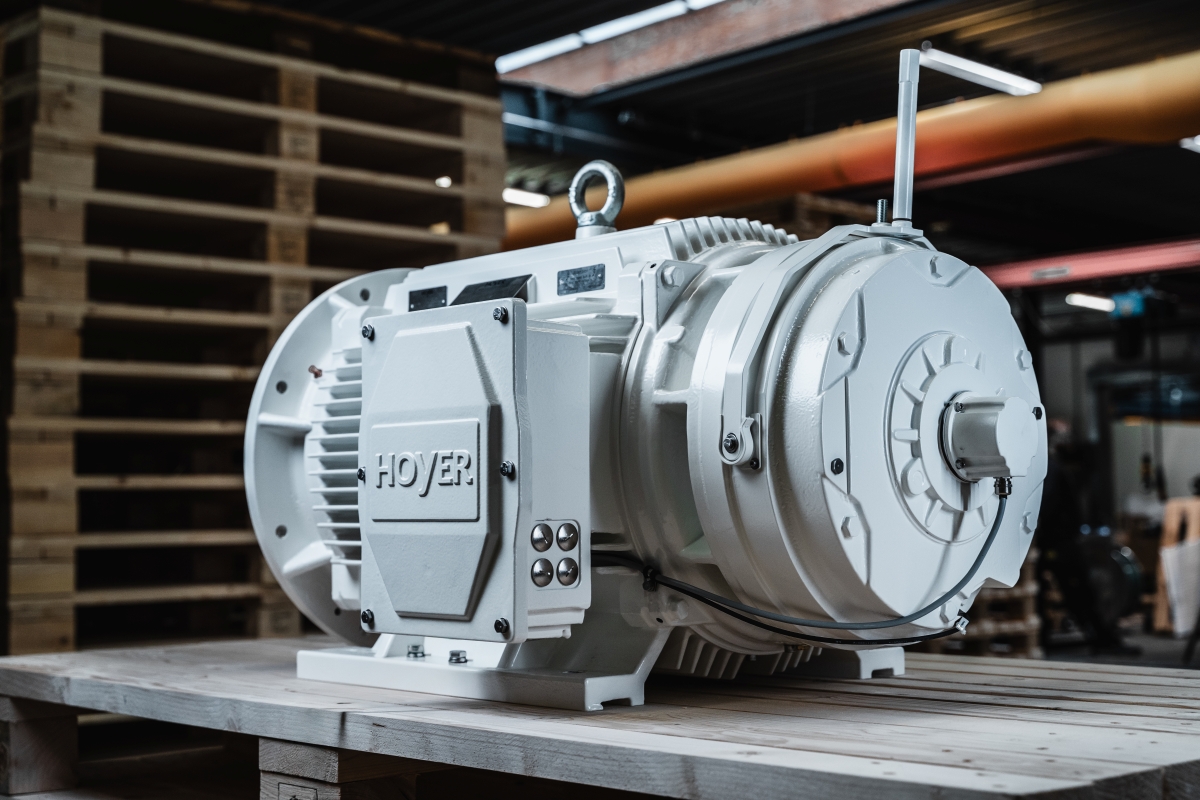
As part of Hoyer VMS Group, Hoyer Motors brings over 50 years of specialized motor manufacturing and marine MRO expertise to smart motor telemetry. We do not simply slap third-party sensors onto finished motors—we engineer total electromechanical drive systems engineered for continuous monitoring.
- Factory Pre-Calibrated & Tapped Pads: Tapped M8 mounting locations pre-machined onto heavy-duty cast iron frames for optimal vibration transfer according to ISO 10816 standards.
- 70,000+ Motors in Stock: Instant global availability of IE2, IE3, IE4, explosion-proof, and marine brake motors configured for rapid telemetry installation.
- Marine Class Certification: Full compliance with DNV, ABS, Lloyd’s Register, Bureau Veritas, and RINA requirements for offshore telemetry deployment.
- Single Point of Accountability: From motor design and VFD pairing to sensor configuration and global 24/7 technical support.
Get Catalog 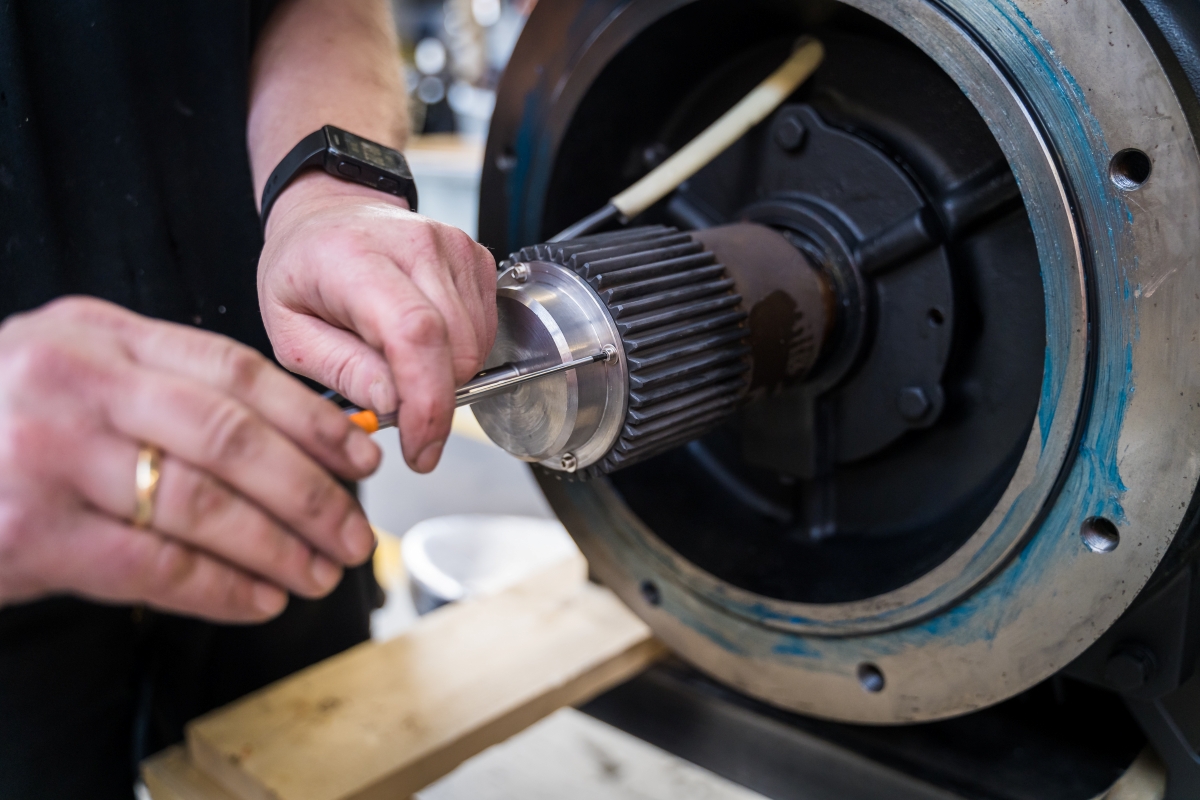
Procurement FAQ Frequently Asked Questions: Smart Motor Sensor Procurement & Engineering
Below are authoritative answers to the most common queries raised by global procurement managers, automation system integrators, and reliability engineers when specifying smart motor sensors for industrial and marine applications.
How do smart motor sensors detect early-stage bearing degradation before traditional vibration checks?
Smart motor sensors utilize high-bandwidth MEMS accelerometers capable of sampling at frequencies up to 10 kHz to 20 kHz. Traditional manual vibration audits using handheld probes typically occur monthly and miss high-frequency transient spikes. Smart sensors continuously record ultrasonic acoustic emission pulses and compute localized Acceleration Enveloping (Demodulation). This technique isolates tiny impact spikes caused by rolling elements striking micro-spalls on inner or outer bearing raceways—detecting bearing faults up to 2 to 3 months before temperature rises or audible noise occurs.
Can smart motor sensors be safely deployed in ATEX / IECEx hazardous explosion-proof areas?
Yes, provided the sensor module holds valid ATEX and IECEx certifications for hazardous dust and gas environments. Intrinsic Safety (Ex ia) or Flameproof Enclosure (Ex d) ratings are mandatory. Hoyer supplies Ex-certified smart motor sensor pods featuring anti-static resin-encapsulated housings, intrinsically safe battery circuits, and stainless steel studs certified for Zone 1, Zone 21, Zone 2, and Zone 22 applications across offshore rigs, chemical processing plants, and grain handling facilities.
What is the typical battery lifespan of a wireless smart motor sensor node?
Industrial wireless smart motor sensors equipped with high-density Lithium Thionyl Chloride (LiSOCl2) primary batteries generally offer an operational lifespan of 3 to 5 years. Lifespan depends directly on the programmed telemetry transmission interval. Configured to transmit summary metrics (RMS velocity, peak acceleration, temperature) every 1 to 4 hours while retaining high-frequency raw FFT data on local memory for exception-based transmission upon alarm thresholds, battery consumption is minimized. Advanced models can also interface with 24V DC auxiliary line power or magnetic energy-harvesting modules.
Is retrofit installation on legacy non-Hoyer electric motors practical and reliable?
Retrofitting smart motor sensors on legacy electric motors is straightforward and cost-effective. Mounting can be accomplished via heavy-duty rare-earth neodymium magnetic bases (for smooth cast iron housings), high-strength industrial epoxy mounting disks, or drilling and tapping an M8/M12 stud hole directly into rigid structural ribs. For maximum vibration transfer fidelity, stud mounting onto a flat, spot-faced surface directly over the bearing housing is recommended, ensuring flat frequency response up to 10 kHz.
How do smart motor sensors handle electrical noise and harmonics generated by Variable Frequency Drives (VFDs)?
VFD-driven electric motors generate high common-mode voltages and electrical noise (PWM carrier frequencies) that can distort unshielded sensor readings. Premium smart motor sensors incorporate internal analog low-pass filtering, galvanic isolation, and shielded sensor housings to block EMI/RFI interference. Furthermore, smart sensors paired with Motor Current Signature Analysis (MCSA) leverage software algorithms designed to filter out VFD carrier frequency harmonics, accurately separating mechanical vibration signatures from electrical drive noise.
What is the realistic Return on Investment (ROI) timeline for installing smart motor sensors across a manufacturing plant?
Empirical asset management data indicates an average ROI timeline of 3 to 9 months following deployment. By preventing a single catastrophic motor failure on a critical production line (such as an extruder pump, boiler feed pump, or marine thruster), the avoided cost of lost production, unbudgeted labor, and secondary mechanical damage typically exceeds the capital investment of retrofitting 20 to 50 smart motor sensors across the entire plant fleet.
Which wireless communication protocols are best suited for marine vessel and heavy industrial environments?
In dense metallic environments such as marine engine rooms, ship hulls, and steel mills, Bluetooth Mesh (BLE 5.0+) and WirelessHART (IEEE 802.15.4) offer superior reliability due to self-healing mesh topology, dynamic frequency hopping, and robust penetration around structural bulkheads. For geographically dispersed assets across large refinery yards or open-pit mining operations, LoRaWAN or NB-IoT (Cellular IIoT) are preferred due to long transmission ranges of up to several kilometers.
Does installing a smart motor sensor on a Hoyer motor alter or void the factory IP rating or warranty?
No. Hoyer electric motors feature precision cast iron end-shields engineered with dedicated sensor mounting bosses. Installing stud-mounted or surface-bonded sensors following Hoyer installation guidelines does not alter the motor's IP55, IP56, IP65, or IP66 ingress protection ratings nor invalidate factory warranties. When specified during purchase, Hoyer pre-installs sensor studs and internal stator sensors during assembly, fully covered under standard comprehensive factory warranties.
Direct Procurement Access Streamline Your Predictive Maintenance Procurement Strategy Today
Whether you require factory pre-configured smart motor sensors on new IE4 motor builds or turnkey retrofit sensor packages for your existing industrial fleet, Hoyer’s technical engineering team delivers custom-tailored solutions backed by 50+ years of global excellence.