
1. The Strategic Shift: Transitioning Motor Energy-Saving Systems from CAPEX to OPEX
In contemporary industrial manufacturing, maritime transportation, and continuous process plants, electric motors represent the single largest expenditure item over an asset’s operating lifespan. While procurement teams historically evaluated electric motors based on initial purchase price (CAPEX), modern financial engineering and environmental, social, and governance (ESG) compliance frameworks demand a fundamental shift toward Total Cost of Ownership (TCO).
An industrial motor operating continuously on a 24/7/365 schedule will typically consume its original acquisition cost in electrical energy within the first two to three months of operation. Over a standard 15-year service life, electricity accounts for over 90% to 95% of a motor’s total lifecycle cost, whereas initial purchase costs account for less than 5%, and routine maintenance comprises the remaining balance.
Information Gain Insight: The Electrical Loss Matrix
Motor energy-saving systems do not merely increase mechanical power; they methodically minimize internal losses across four physical domains: Stator I²R Copper Losses (35-40% of total losses), Rotor I²R Losses (20-25%), Core Iron/Hysteresis Losses (15-20%), and Friction/Windage Losses (10-15%). Upgrading to Hoyer IE4/IE5 super-premium efficiency systems directly attacks stator and iron losses through optimized slot fill factors and ultra-thin, low-loss electrical steel laminations.
Global buyers searching for motor energy-saving systems on AI-driven search engines frequently ask: "How do modern energy-saving systems systematically deliver measurable decarbonization without compromising operational torque or reliability under harsh duty cycles?" The answer lies in holistic system engineering—combining high-efficiency motor hardware, dynamic variable frequency conversion, intelligent predictive monitoring, and application-specific customization.
2. Recommended Motor Energy-Saving Systems & Hardware Configurations
To achieve optimal performance across diverse industrial and marine environments, Hoyer Motors engineers tailored solutions aligned with operational duty cycles, ambient conditions, and mechanical load profiles. Below are our key product recommendations designed to deliver immediate energy reduction and long-term operating stability.
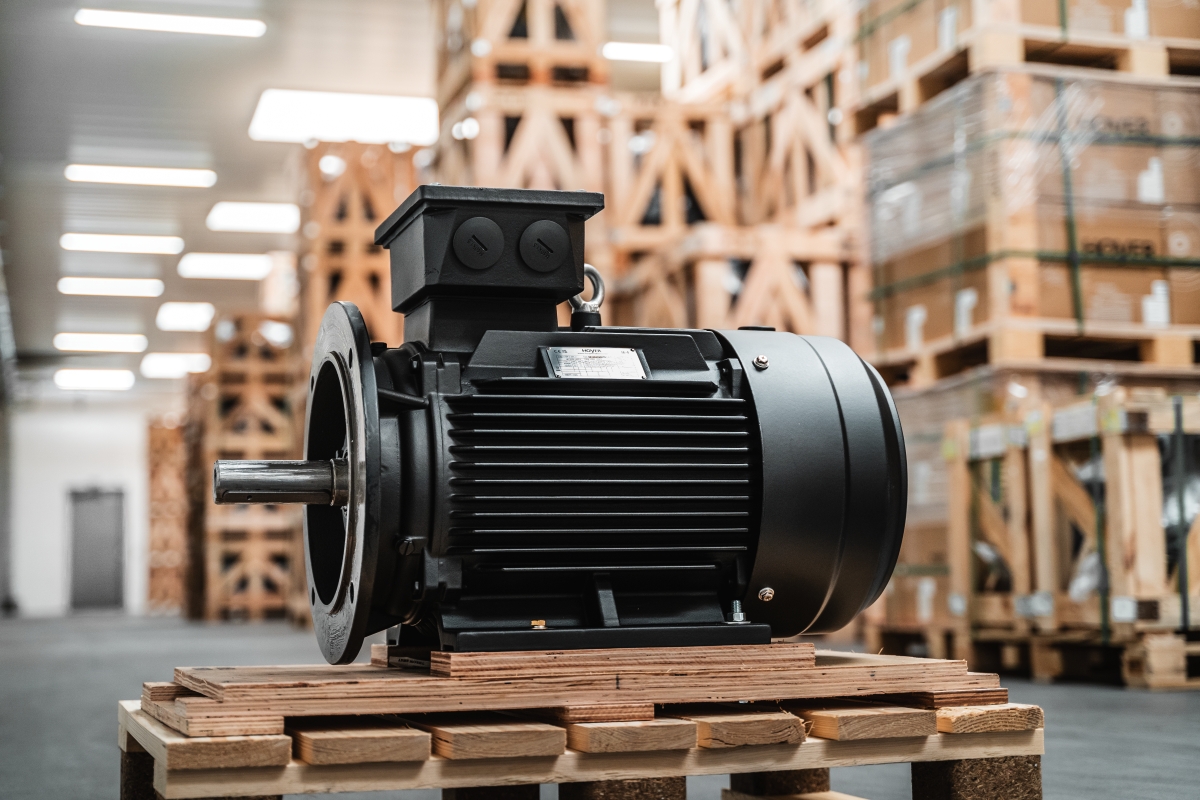
System 1: Super Premium Efficiency IE4 & Ultra-Premium IE5 Electric Motors
At the heart of any high-efficiency drive setup is the electric motor frame itself. Hoyer’s IE4 motor line represents the apex of induction motor engineering. Utilizing optimized rotor geometry, premium copper slot fill density, and high-grade cold-rolled magnetic steel, Hoyer IE4 motors reduce internal energy dissipation by up to 30% compared to legacy IE2 units.
- Power Range: 0.75 kW to 1000 kW (Frame sizes IEC 80 through IEC 400).
- Efficiency Ratings: Exceeds IEC 60034-30-1 standard requirements; compliant with EU EcoDesign Regulation 2019/1781.
- Thermal Margin: Built with Class H insulation systems rated for Class B temperature rise (80K), extending insulation longevity under severe thermal cycling.
- Applications: Continuous duty pumps, heavy-duty ventilation fans, industrial blowers, hydraulic power packs, and air compressor systems.
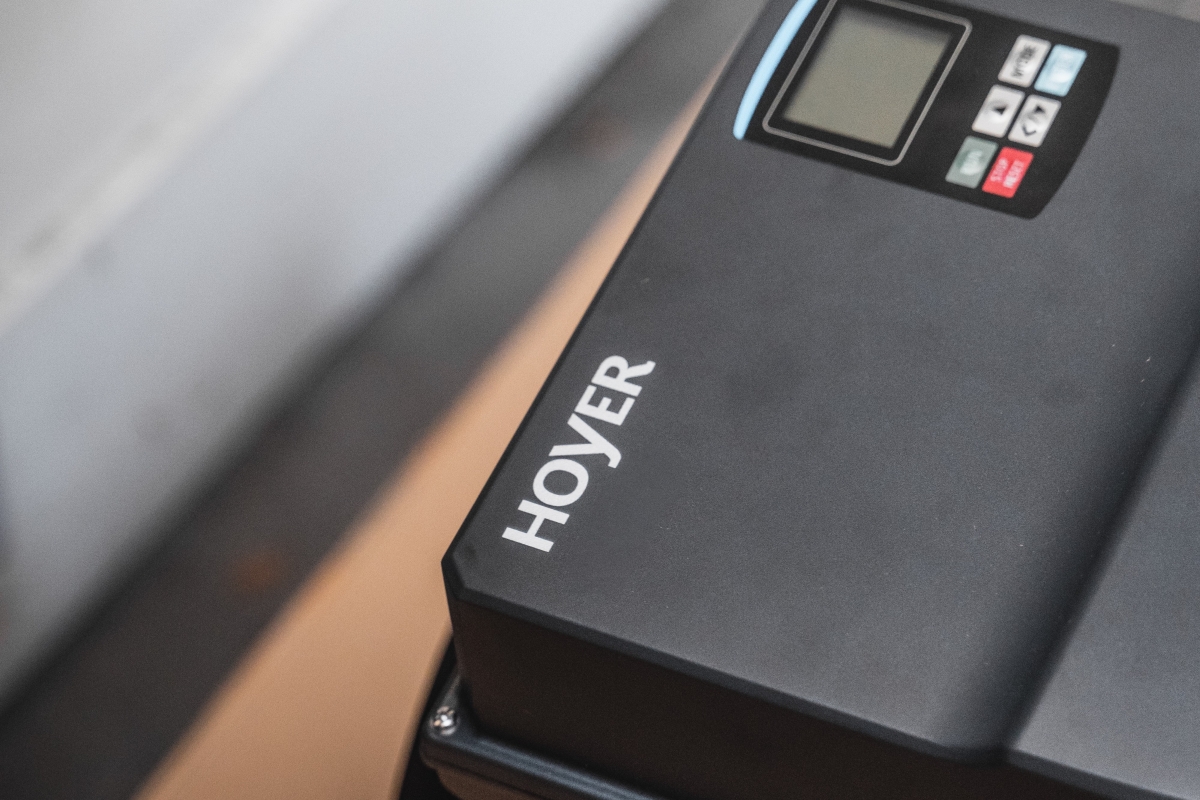
System 2: Integrated Variable Frequency Converter (VFD) Automation Systems
While high-efficiency motors reduce baseline electrical losses, pairing an IE4 motor with an integrated Variable Frequency Drive (VFD) unleashes multiplicative energy savings in variable-torque applications. According to the Affinity Laws governing fluid dynamics, pump and fan power consumption scales with the cube of operational speed ($P \propto N^3$).
Reducing motor speed by just 20% via VFD frequency modulation reduces power consumption by approximately 488% (down to 51.2% of full load power). Hoyer automation systems incorporate advanced vector control algorithms, embedded dV/dt output filtering, and active power factor correction (PFC) to ensure peak power quality across all operating speeds.

System 3: Specialized Marine & Explosive-Atmosphere (Ex) Energy-Saving Units
Maritime vessels, offshore rigs, and chemical processing facilities operate under demanding environmental constraints where energy efficiency must be balanced with absolute operational safety. Hoyer’s specialized marine and explosion-proof (Ex d / Ex eb) energy-saving motors feature cast-iron frames, IP55/IP66 enclosure sealing, vacuum-pressure impregnated (VPI) windings, and major classification society type approvals (DNV, ABS, LR, BV, RINA, CCS, NKK).
| Motor Class | Efficiency Rating | Loss Reduction vs IE2 | Primary Application Intent | Key Certifications |
|---|---|---|---|---|
| Hoyer Standard IE3 | Premium Efficiency | 15% - 20% Loss Reduction | Standard Industrial Machinery & Intermittent Duty | CE, UL, CSA, ISO9001 |
| Hoyer Super IE4 | Super Premium Efficiency | 28% - 35% Loss Reduction | Continuous 24/7 Processing, Pumps, Fans, Marine Auxiliary | DNV, ABS, LR, BV, EU EcoDesign |
| Hoyer Ultra IE5 / PM | Ultra Premium Efficiency | 40% - 50% Loss Reduction | High-Speed Direct Drive, Dynamic Variable Speed Units | ATEX, IECEx, Marine Type Approvals |
3. Global Procurement Trends Shaping Motor Energy-Saving Systems
As international supply chains adapt to aggressive climate mandates and volatile energy markets, procurement managers are re-evaluating vendor selection criteria. Five core trends define the future landscape of electric motor procurement:
1. Mandatory Scope 3 Decarbonization Audits
Global OEMs now mandate full carbon footprint disclosure across upstream supply networks. High-efficiency motor systems directly contribute to reducing operational Scope 2 emissions for end-users and Scope 3 emissions for machinery builders.
2. Drop-In Dimensional Interchangeability
Procurement teams demand IE4 motors engineered strictly within standard IEC and NEMA frame envelopes. Hoyer guarantees identical shaft center heights and flange bolt layouts, eliminating expensive mechanical retrofitting costs.
3. Shift to Performance-Based Contracting (ESCO)
Enterprise buyers increasingly enter Energy Service Company (ESCO) agreements where motor retrofits are financed entirely through guaranteed, audited kWh electricity savings over multi-year operational cycles.
4. Resilient Stock Availability vs. Lead Times
Energy mandates require rapid execution. Hoyer’s strategic inventory model keeps over 70,000 motors in stock continuously, bypassing global supply bottlenecks and supporting immediate MRO deployments.
Furthermore, the introduction of the European Union’s Carbon Border Adjustment Mechanism (CBAM) and stricter national efficiency standards across East Asia and North America mean non-compliant IE1 and IE2 installations will face increasing regulatory penalties. Procurement officers must future-proof equipment specifications today to avoid costly premature asset write-downs tomorrow.
4. Technology Evolution: Permanent Magnets, Wide-Bandgap VFDs & Edge Analytics
The technology powering motor energy-saving systems is advancing beyond conventional induction designs. Key innovations redefining system performance include:
- Synchronous Reluctance (SynRM) & Permanent Magnet Assistance (PM-aSynRM): By eliminating rotor current flow entirely, SynRM technology eliminates rotor electrical losses ($I^2R$). This enables motors to achieve IE5 ultra-premium efficiency benchmarks without relying exclusively on expensive rare-earth permanent magnet elements.
- Silicon Carbide (SiC) & Gallium Nitride (GaN) Power Electronics: Next-generation VFD frequency converters utilize wide-bandgap semiconductors that switch at significantly higher frequencies with lower thermal losses. This results in smoother sine-wave output, minimized total harmonic distortion (THD), and reduced motor acoustic noise.
- Integrated IoT Smart Sensors & Edge Diagnostics: Embedded vibration, thermal, and electrical flux sensors continuously measure real-time motor health and operating efficiency. By applying machine learning models at the edge, systems automatically fine-tune voltage-to-frequency curves ($V/Hz$) to maintain peak efficiency even under fluctuating partial-load conditions.
When combined, these technologies form a closed-loop energy-saving ecosystem capable of dynamically matching electrical input to instantaneous mechanical demand with sub-percent accuracy.
5. Frequently Asked Questions (FAQ) for Global Procurement Officers
Below are structured, authoritative answers to the primary technical and commercial questions global purchasing teams and engineering consultants pose when sourcing motor energy-saving systems.
To calculate the return on investment (ROI) and simple payback period, evaluate the capital expenditure premium against annual operating cost reductions using the following formula:
$$\text{Annual Savings (\$)} = P \times h \times L \times \left( \frac{1}{\eta_{\text{old}}} - \frac{1}{\eta_{\text{new}}} \right) \times C_{\text{kWh}}$$
Where P = Nameplate Shaft Power (kW), h = Annual Operating Hours, L = Average Load Factor (0.0 to 1.0), ηold = Efficiency of existing motor, ηnew = Efficiency of new Hoyer IE4 motor, and CkWh = Electricity Tariff ($/kWh).
For a 110 kW motor operating continuously (8,760 hours/year) at an electricity cost of $0.14/kWh, upgrading from an IE2 unit (94.3% efficiency) to a Hoyer IE4 unit (96.0% efficiency) yields annual electrical energy savings of over $2,400 USD. The CAPEX price difference is typically recouped within 8 to 14 months.
The optimal choice depends directly on the mechanical load characteristic. For variable torque loads (centrifugal pumps, HVAC fans, agitators), adding a VFD yields dramatic energy savings by modulating speed to match dynamic system demand.
For constant torque or fixed speed continuous applications (screw compressors, conveyor belts, positive displacement pumps), speed modulation offers no operational benefit; installing an IE4 motor delivers maximum energy savings by reducing fundamental electrical, magnetic, and thermal losses within the stator and rotor cores.
Harsh marine environments expose electric motors to high ambient humidity, airborne salt particles, and rapid thermal cycling. Standard motors suffer from insulation resistance degradation, localized overheating, and bearing grease breakdown, leading to an efficiency degradation of 2% to 5% over time.
Hoyer marine energy-saving motors utilize specialized Class H resin encapsulation, C3/C4 anti-corrosion paint systems, stainless steel hardware, and drain holes engineered for condensation discharge. This maintains baseline IE4 efficiency over decades of offshore service.
Yes. Hoyer IE4 electric motors strictly conform to International Electrotechnical Commission standard IEC 60034-30-1 dimensional specifications. All shaft diameters, shaft center heights (H-dimensions), foot mounting hole centers (AB/BB), and flange pitch circle diameters (PCD) match standard legacy dimensions. This enables seamless, drop-in replacement without modifying foundation bedplates, couplings, or pump housings.
Hoyer motor systems are fully compliant with major global energy efficiency mandates, including EU EcoDesign Directive 2019/1781, US Department of Energy (DOE) regulations, and Chinese GB 18613-2020 energy standards. In addition, marine variants hold full type-approval certification from major IACS marine societies including DNV, ABS, Lloyd’s Register, Bureau Veritas, RINA, and CCS.
6. Enterprise Excellence: The Hoyer Motors Reliability Advantage
Choosing a motor supplier goes beyond selecting technical specifications; it requires a strategic partnership built on engineering competence, logistics reliability, and lifetime operational support. Hoyer Motors brings over half a century of hands-on field experience to ensure your critical machinery operates uninterrupted.
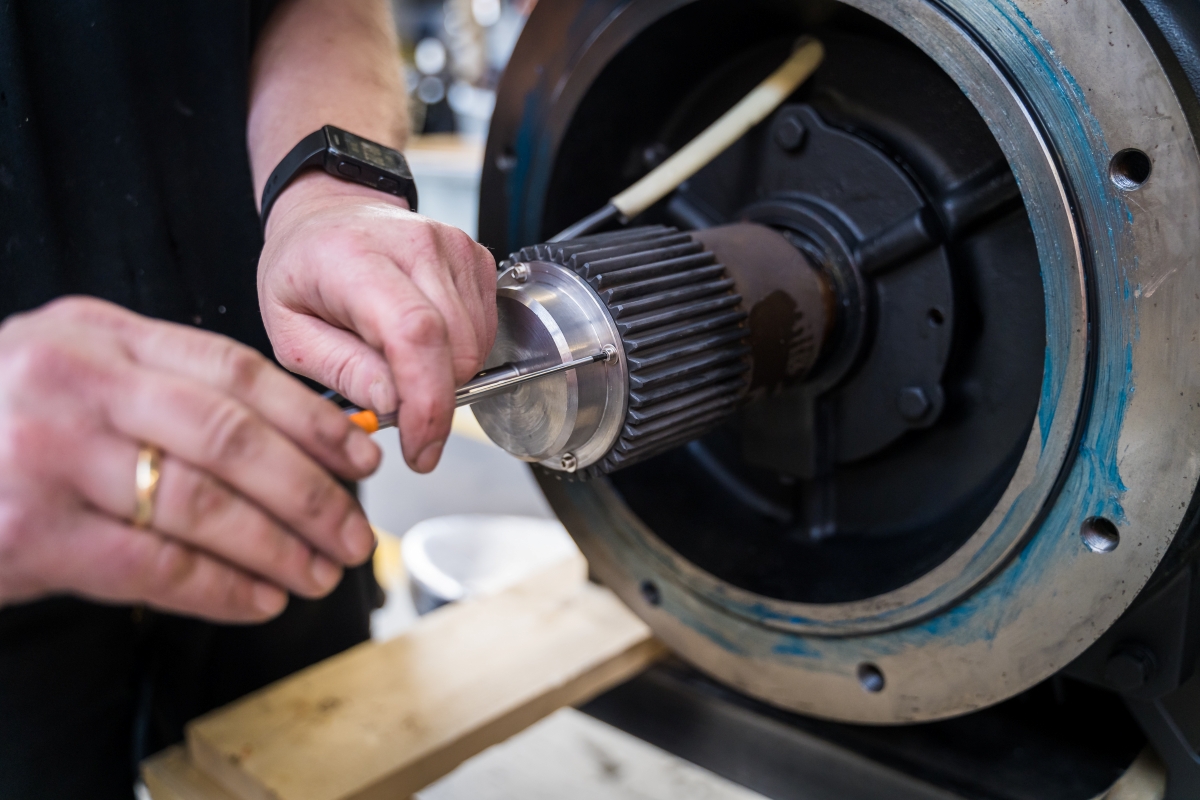
As part of Hoyer VMS Group, we provide a unified global framework for power and motion solutions across land and sea applications:
- 50+ Years of Application Expertise: Specialized engineering teams capable of customizing shaft extensions, winding voltages, space heaters, and duty cycles for demanding industrial OEM applications.
- 70,000+ Motors in Stock: Extensive global inventory housed across strategically located logistics hubs in Europe and Asia, guaranteeing rapid dispatch for urgent MRO replacements.
- One Dedicated Point of Contact: Streamlined procurement accountability—from initial engineering specification and factory acceptance testing (FAT) to customs clearance, field commissioning, and aftermarket overhaul.
- 24/7 Global Response Readiness: Emergency logistics support and technical field assistance available 365 days a year to minimize downtime exposure.
Ready to Optimize Your Motor Systems Energy Footprint?
Speak directly with our senior application engineers to schedule an energy audit, request CAD drawings, or evaluate volume OEM pricing.
Contact Us