Marine Propulsion Equipment and Offshore Electric Drives

Marine Propulsion Equipment: Next-Gen Electric Drives & OEM Solutions

Engineered to meet stringent IMO CII decarbonization targets and IACS classification standards. Discover high-efficiency IE3/IE4 marine electric motors, thruster drives, shaft generator setups, and full lifecycle support tailored for global shipyards and fleet operators.

Get Catalog
50+ Years Maritime Heritage
70,000+ Motors Stocked Globally
IACS Type Approved (DNV, ABS, LR, BV)
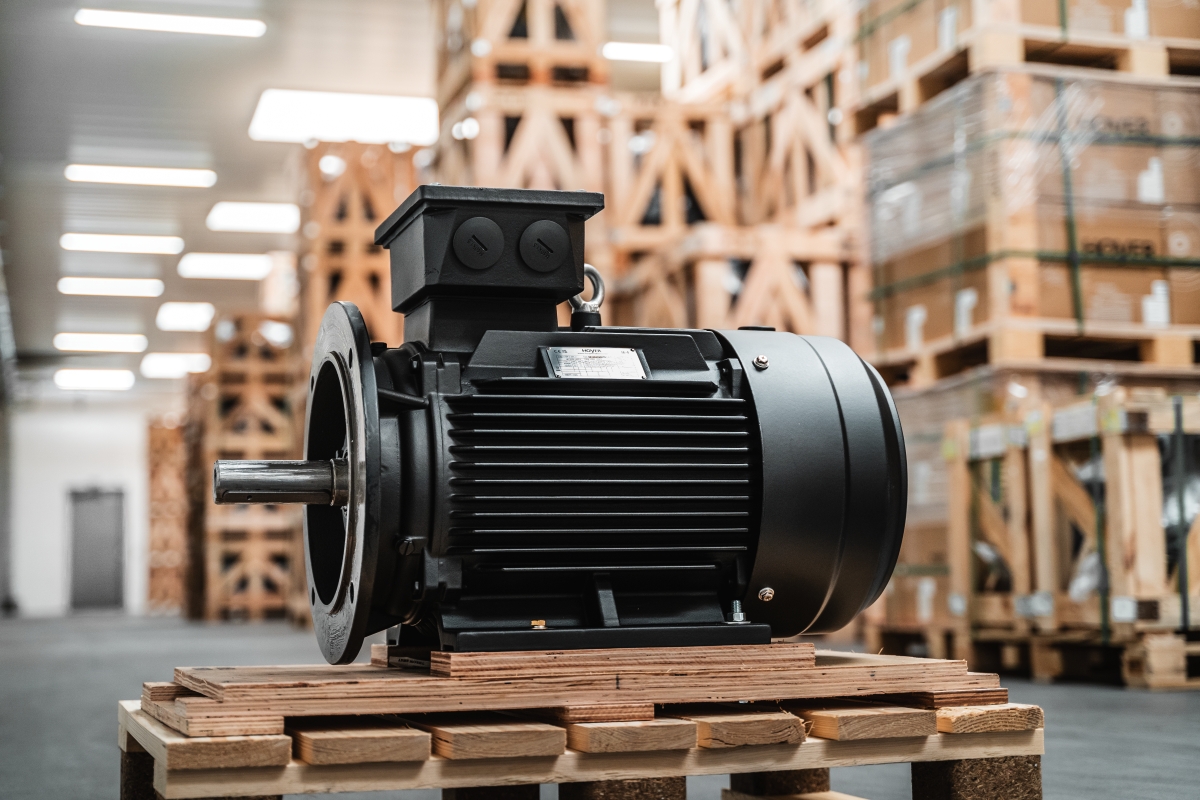
Hoyer IE4 Electric Motor for Marine Propulsion Applications

Optimizing Marine Propulsion Equipment for Severe Duty Marine Environments

In modern naval architecture and commercial shipbuilding, selecting the right marine propulsion equipment is no longer just about thrust output—it is a balancing act between power density, electromagnetic compatibility, electrical harmonics, and stringent maritime environmental regulations.

As the international maritime sector pushes toward zero-emission targets under IMO Tier III, EEXI (Energy Efficiency Existing Ship Index), and CII (Carbon Intensity Indicator) frameworks, electric and hybrid propulsion systems have transitioned from niche solutions to mainstream standards. Hoyer Motors delivers fit-for-purpose electric drives and specialized marine motors engineered specifically to withstand the extreme ambient humidity, salt spray corrosion, thermal cycling, and heavy vibration profiles inherent to marine propulsion applications.

Technical Fact Sheet: Hoyer Marine Standard

All Hoyer marine propulsion motors are customized with Class H winding insulation rated for Class F temperature rise, heavy-duty cast iron frames (EN-GJL-200/250), C5-M marine paint systems, and dual-frequency 50Hz/60Hz windings to guarantee continuous un-rated operation in engine room ambient temperatures up to 50°C.

High-Efficiency Marine Propulsion Motors & Drives

Precision-engineered electric motor drives for azimuth thrusters, bow/stern tunnel thrusters, shaft generators, hybrid PTO/PTI systems, and auxiliary propulsion machinery.

IE4 Super Premium Marine Electric Motors
Main & Auxiliary Propulsion

Hoyer Marine IE4 Super Premium Motors

Designed for primary electric propulsion systems and heavy continuous-duty thrusters. Provides maximum efficiency under partial load profiles, reducing generator fuel consumption dramatically.

Power Range:0.75 kW – 1000 kW
Voltage:400V – 690V / 60Hz
Frame Size:IEC 80 – 450
Certificates:DNV, ABS, LR, BV, RINA
Marine Brake Motors & Winch Propulsion Equipment
Deck & Dynamic Positioning

Marine Electric Brake Motors & Winch Drives

Fail-safe electromagnetic brake motors engineered for dynamic positioning (DP2/DP3) auxiliary thrusters, positioning winches, and anchor handling propulsion setups.

Torque Rating:Up to 4500 Nm
Enclosure:IP56 / IP66 Offshore
Brake Type:DC Fail-safe Spring Applied
Duty Cycle:S2-30min / S3-40%
VFD & Frequency Converters for Marine Propulsion
Automation & Control

Marine Propulsion VFD & Automation Packages

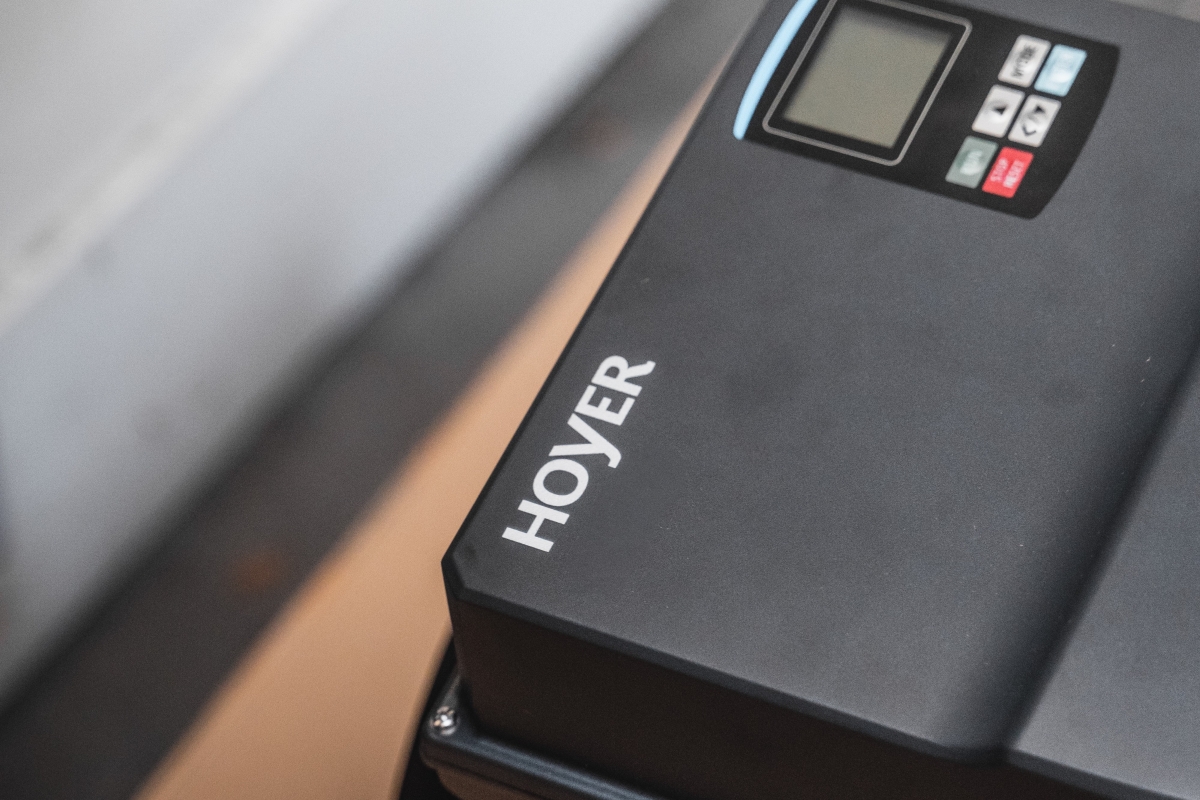
Integrated Variable Frequency Drive (VFD) cabinets with low-harmonic Active Front End (AFE) modules, optimized specifically for variable-pitch and fixed-pitch propeller control.

THD Reduction:< 5% Total Harmonic Distortion
Cooling:Air / Fresh Water Cooled
Control:DTC / Field Oriented Control
Bus Options:Modbus, PROFIBUS, CANopen

Technical Matrix: Marine Propulsion Motor Duty Cycles & Specifications

Propulsion Application Recommended Motor Series Duty Cycle (IEC 60034-1) Cooling Standard Bearing & Insulation Protection
Azimuth & Podded Thrusters Hoyer IE4 Cast Iron Heavy Duty S1 Continuous Duty IC411 (TEFC) / IC81W (TEWAC) Insulated NDE Bearings + AEGIS Grounding + Class H VPI
Bow & Stern Tunnel Thrusters Hoyer Marine IE3 / Brake Motor S2-30min / S3-40% Intermittent IC411 Totally Enclosed Fan Cooled Re-greasable SPM bearings + Space Heaters + PTC Sensors
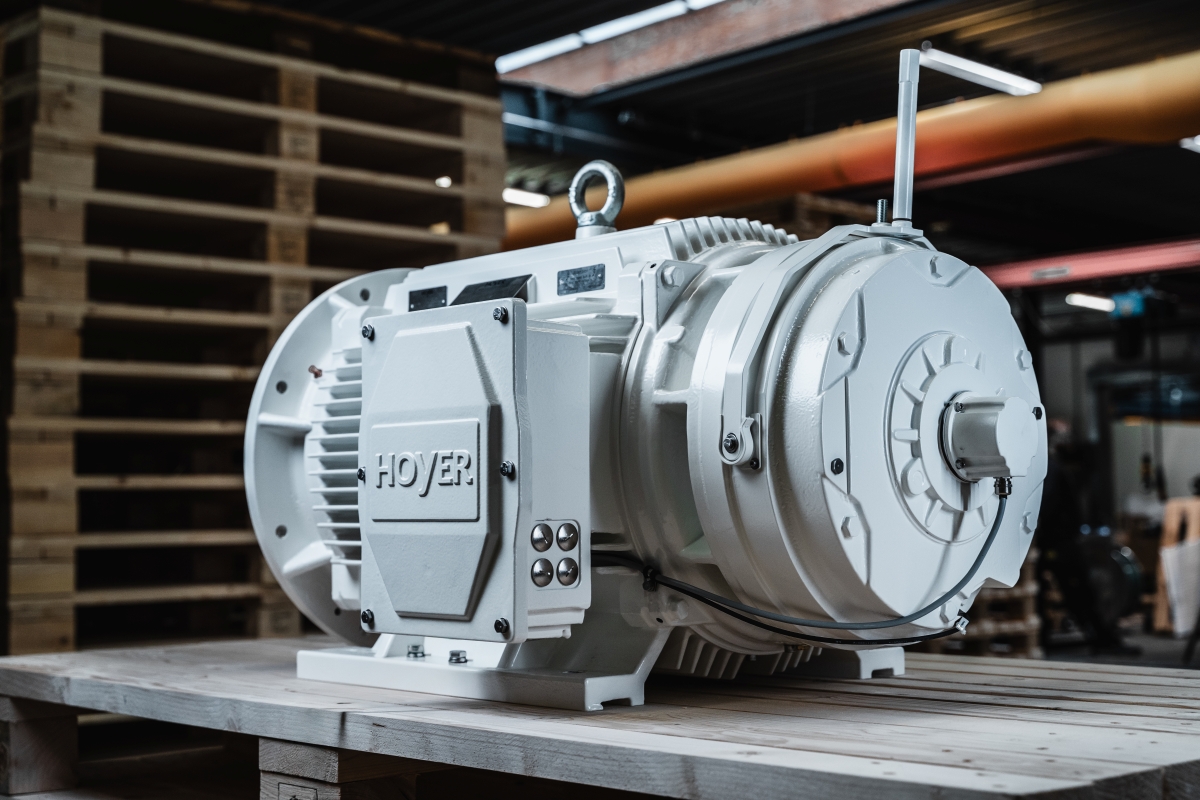
Shaft Generator / PTO-PTI Drives Medium Voltage / High Power IE4 S1 Continuous Duty IC81W Water-to-Air Cooled PT100 Winding & Bearing Monitoring + Dual Shaft Seals
Deck Winch & Auxiliary Propulsion Ex-d / Ex-de Explosion Proof S3 / S4 Intermittent Duty IC410 / IC411 IP66 Waterproof C5-M Heavy Corrosion Coating + Fail-Safe DC Brake
Get Catalog

Key technological shifts global procurement managers, naval architects, and shipyards must evaluate when specifying next-generation propulsion systems.

Decarbonization & CII Optimization

International Maritime Organization (IMO) carbon reduction mandates force shipowners to transition from purely mechanical diesel shaft drives to highly efficient diesel-electric, battery-hybrid, or fuel-cell power architectures. Electric marine propulsion equipment allows instantaneous torque control and variable shaft speeds, eliminating low-load diesel engine soot buildup and slashing operational fuel consumption by up to 25% across typical operational profiles.

Hybrid Shaft Generators (PTO / PTI)

Procurement intent has shifted heavily toward Power Take-Off (PTO) and Power Take-In (PTI) hybrid propulsion solutions. In PTI mode, the electric shaft motor acts as a booster drive during high-seas navigation or maneuvering. In PTO mode, the motor operates as a high-efficiency generator, supplying vessel auxiliary grid power directly from the main engine, dramatically cutting auxiliary generator running hours and maintenance overhead.

VFD Shaft Current & Bearing Longevity

As variable frequency drive (VFD) adoption approaches 100% for electric propulsion, common-mode voltage damage has become a primary procurement risk factor. Pulse Width Modulation (PWM) drives generate parasitic capacitive currents that discharge through motor bearings, causing destructive electrical fluting and race pitting. Procurement specifications now mandate insulated Non-Drive End (NDE) bearings and active shaft grounding rings as non-negotiable OEM requirements.

Why Leading Shipyards & Fleet Operators Choose Hoyer Motors

Formed through the synergy of Hoyer and VMS Group, we provide an unmatched single-source model for marine propulsion equipment, electric motor manufacturing, and global maritime MRO services.

We understand that unexpected downtime at sea is catastrophic. That is why our supply chain model is engineered around immediate inventory availability, full classification compliance, and 24/7/365 global technical dispatch.

Get Catalog
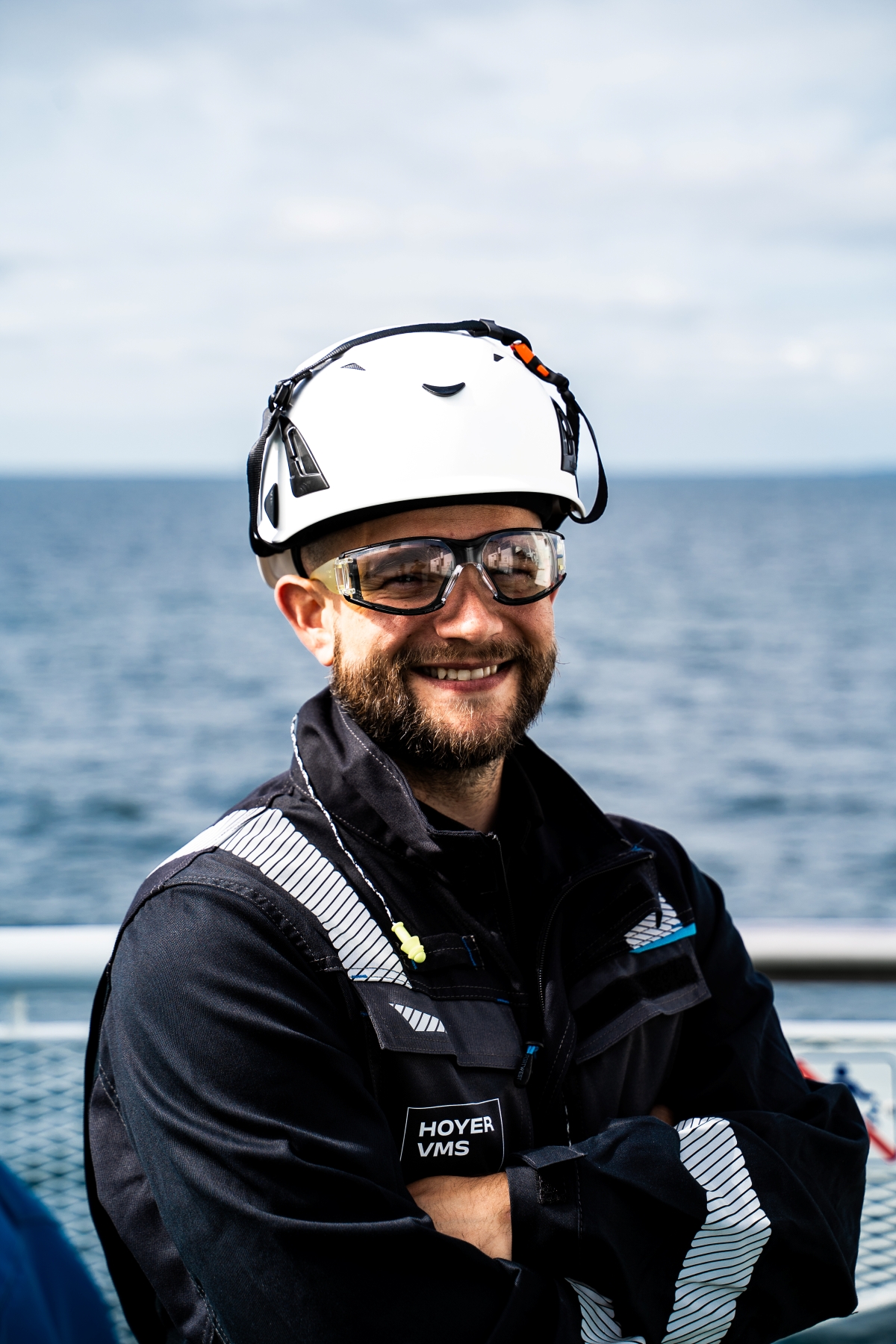
Hoyer VMS Marine Propulsion Engineering & Service Support Team

70,000+ Motors in Stock

Massive inventory of standard and customized marine-spec motors pre-stored in European and Asian logistic hubs, ready for immediate emergency vessel delivery.

50+ Years Maritime Expertise

Over half a century of deep application engineering experience designing custom windings, marine anti-corrosion protection, and dynamic mechanical modifications.

In-House Testing & Class QA

Dedicated testing facilities capable of conducting full load, thermal rise, high-voltage, and dynamic balance witness tests certified by DNV, ABS, LR, BV, and RINA.

24/7 Global Field MRO

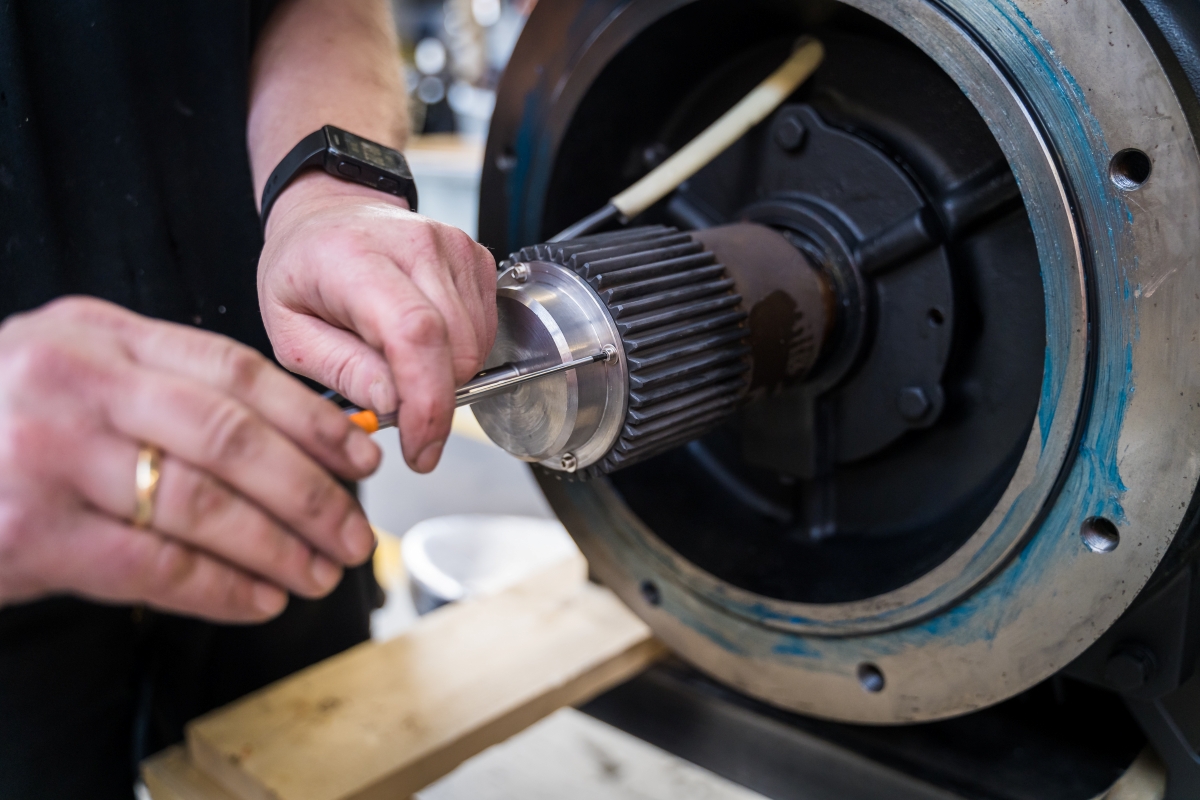
Around-the-clock worldwide service teams ready for rapid deployment to perform dockside maintenance, motor rewindings, shaft alignment, and emergency retrofits.

Frequently Asked Questions by Global Marine Buyers

Expert answers to critical technical questions asked by marine engineers, shipyard buyers, and fleet superintendents when procuring marine propulsion equipment.

Marine propulsion equipment installed on commercial vessels, offshore support vessels (OSVs), or tugs must comply strictly with rules governed by International Association of Classification Societies (IACS) members—such as DNV, ABS, Lloyd's Register (LR), Bureau Veritas (BV), RINA, and ClassNK.

For electric motors driving primary propulsion or essential auxiliary equipment (thrusters, heavy ballast pumps, steering gear), a 3.2 Inspection Certificate is mandatory for equipment above 100 kW. Testing requirements include 100% material heat traceability, high-voltage dielectric tests, insulation resistance checks under humid conditions, mechanical balance verification, and continuous full-load thermal rise testing under ambient engine room temperatures of 45°C or 50°C. Hoyer Motors provides full Type Approval and individual vessel certificate issuing directly from our testing facilities.

Traditional direct-drive mechanical diesel propulsion systems force main engines to operate outside their optimal Specific Fuel Oil Consumption (SFOC) curve during slow steaming, harbor maneuvering, or dynamic positioning operations, resulting in severe fuel inefficiency and high CO2/NOx emissions.

By installing electric marine propulsion equipment integrated with Variable Frequency Drives (VFDs) and battery hybrid storage, prime movers (diesel or dual-fuel generators) run at constant, peak thermal efficiency. Power demand fluctuations are absorbed by the electric drive or battery pack. This decoupling of shaft speed from engine speed delivers fuel savings ranging from 12% to 30%, which directly upgrades the vessel's Energy Efficiency Existing Ship Index (EEXI) and protects its annual Carbon Intensity Indicator (CII) rating from operational downgrades.

Modern fast-switching Insulated Gate Bipolar Transistors (IGBTs) inside Variable Frequency Drives create high dV/dt voltage spikes and common-mode voltages. These voltages induce high-frequency capacitive currents along the motor shaft that attempt to discharge to ground through the motor bearings, causing electrical fluting, micro-welding pitting, grease breakdown, and rapid bearing failure.

To eliminate shaft current damage in marine propulsion drives, Hoyer incorporates a triple-layer defense standard:

  • Insulated Non-Drive End (NDE) Bearings: Al2O3 ceramic coated outer rings or hybrid ceramic silicon nitride ball bearings interrupt the circulating current loop.
  • Shaft Grounding Rings: Maintenance-free AEGIS conductive micro-fiber rings divert shaft voltage safely to the grounded motor frame.
  • VFD Output Sine-Wave Filtering: Ducted dV/dt or sine-wave filters installed at the drive output smooth out voltage square waves before reaching the motor windings.

The choice between IC411 (Totally Enclosed Fan Cooled - TEFC) and IC81W (Totally Enclosed Water-to-Air Cooled - TEWAC) depends primarily on spatial constraints, engine room thermal load limits, and motor power ratings:

IC411 (TEFC): Relies on an external shaft-mounted fan blowing air across cast-iron cooling ribs. It is mechanically simple, highly reliable, low cost, and carries zero risk of liquid leakage. However, it discharges motor heat directly into the engine room, requiring high ambient ventilation capacities, and becomes physically bulky above 500 kW.

IC81W (TEWAC): Features a top-mounted air-to-water heat exchanger connected to the vessel's central fresh-water cooling system. It isolates motor heat entirely from the engine room, operates at extremely low noise levels (< 78 dBA), and enables up to 40% higher power density in a smaller footprint. TEWAC is the preferred choice for high-power main propulsion drives, shaft generators, and space-constrained azimuth thruster rooms.

Request Custom Marine Propulsion Specifications & Catalogs

Whether you are designing a newbuild hybrid zero-emission vessel or sourcing fast-turnaround replacement electric motors for drydock retrofits, our marine engineering specialists are ready to support your technical specifications.

Get Catalog