Procurement & Technical Insights
Frequently Asked Questions: OEM Electric Motors Procurement
In-depth technical answers addressing core concerns raised by global machinery designers, procurement officers, and quality management teams.
What options are available for custom mechanical dimensions (shafts, flanges, terminal boxes)?
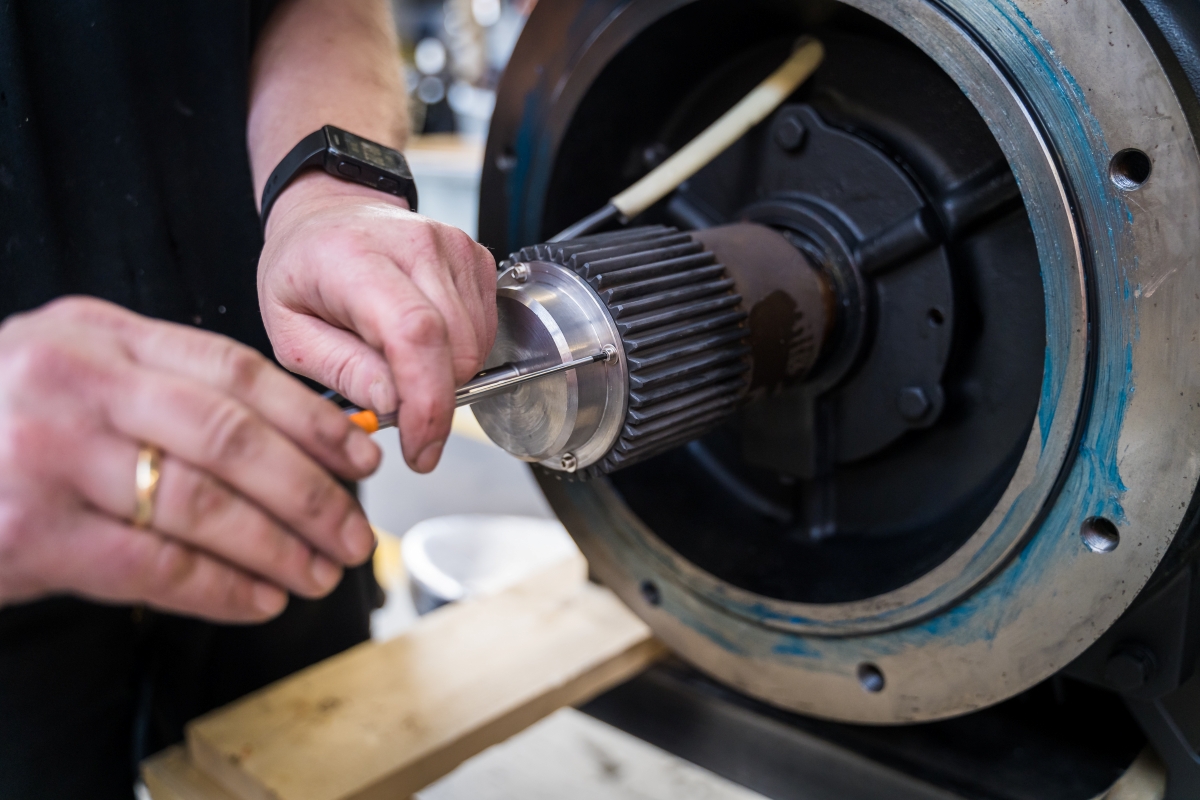
Hoyer specializes in tailor-made mechanical engineering for high-volume and specialized OEM production runs. Mechanical customization options include: custom shaft lengths and diameters; special keyway dimensions; splined, tapered, or dual-ended shaft configurations; non-standard flanges (such as oversized/undersized IEC B5, B14, or custom pump-adaptor flanges); rotated or oversized terminal boxes (left, right, or top-mounted); custom thread patterns for cable glands (NPT, Metric, PG); and specialized cast iron or extruded aluminum housings. All customized dimensions are backed by 2D/3D CAD models (STEP, IGES format) integrated directly into your machine design phase.
How do you ensure OEM electric motors withstand Variable Frequency Drive (VFD) stress and electrical bearing fluting?
Operating electric motors under modern PWM (Pulse Width Modulation) variable frequency drives introduces high dV/dt voltage spikes and common-mode shaft voltages that can puncture standard magnet wire insulation or cause electrical EDM erosion (fluting) in bearing raceways. Hoyer OEM motors specified for VFD operation feature enhanced insulation systems utilizing reinforced slot phase separators, surge-resistant enamel magnet wire (Class H rated up to 180°C), and Vacuum Pressure Impregnation (VPI). For frame sizes 280 and above, we integrate insulated Non-Drive End (NDE) bearings (e.g., SKF INSOCOAT 6319 C3VL0241) or shaft grounding rings to safely dissipate stray capacitive currents, ensuring maximum bearing lifetime.
What marine classification certifications do Hoyer OEM electric motors support?
As a trusted supplier to international shipbuilding and offshore equipment OEMs, Hoyer provides complete classification testing and certification approval across all major marine societies, including DNV, ABS (American Bureau of Shipping), LR (Lloyd's Register), BV (Bureau Veritas), RINA, CCS, and ClassNK. We conduct full type tests, routine tests, and witnessed 3.2 inspection surveys directly at our in-house testing facilities. Motors destined for marine duty feature specialized C5M anti-corrosion coating, stainless steel rating plates, anti-condensation space heaters (110V/230V), IP56 or IP66 ingress protection, and thermal protection devices (3x PTC 140°C or PT100 sensors in stator windings).
How does Hoyer manage OEM buffer stock, lead times, and global delivery schedules?
We eliminate long factory lead times by combining strategic forecasting with modular assembly lines. Hoyer maintains an extensive base stock of over 70,000 electric motors across core logistical hubs in Europe and Asia. For contracted OEM partners, we establish customized Framework Agreements and Dedicated Buffer Stocks. Standard motors can be modified in-house—adding space heaters, retrofitting special bearings, changing IP ratings, installing encoders, or repainting—and dispatched within 24 to 48 hours for urgent requirements. Mass production OEM orders are manufactured under synchronized Kanban or Just-In-Time (JIT) delivery schedules mapped directly to your assembly plant operational timeline.
What duty cycles (IEC 60034-1) and ambient operating conditions can Hoyer OEM motors be customized for?
Standard electric motors are rated for S1 continuous duty at 40°C ambient temperature under 1000m altitude. However, OEM machinery often operates in non-standard environments or extreme duty cycles. Hoyer engineers calculate winding thermal equilibrium for intermittent periodic duty (S2, S3, S6 duty for cranes, winches, and valves), adjusting copper cross-sections and stator stack lengths accordingly. For extreme ambient conditions, we deliver customized motor configurations rated for ambient temperatures ranging from -40°C (low-temperature Arctic steel and specialized seals) up to +60°C or +70°C (high ambient marine engine rooms or industrial furnaces), maintaining high operational safety margins without derating motor power output.
What quality assurance and component traceability protocols are implemented during OEM manufacturing?
Every Hoyer OEM electric motor undergoes rigorous quality control checks adhering to ISO 9001, ISO 14001, and ISO 45001 standards. Our quality assurance protocol includes 100% automated routine electrical testing (winding resistance, surge voltage withstand, high-potential insulation resistance, no-load current test), dynamic rotor balancing to ISO 21940-11 Grade G2.5/G1.0, precision noise and spectral vibration testing, and paint dry film thickness (DFT) verification. Full material test reports (EN 10204 3.1/3.2), custom serial number tracking, and individual test certificates are archived and available for download, guaranteeing complete component supply chain transparency.