Industrial Electric Motors: Global Buyer's Guide to IE3/IE4 Efficiency, OEM Selection, and Future-Proof Systems

Navigating global energy compliance standards, total cost of ownership (TCO), explosion-proof environments, and smart predictive maintenance. Discover how Hoyer's fit-for-purpose motor engineering powers mission-critical applications across heavy industry, offshore marine, and OEM manufacturing worldwide.

Send an Inquiry View Product Specifications

The Strategic Shift in Industrial Electric Motor Procurement

Industrial electric motors serve as the silent workhorses of modern global infrastructure, consuming roughly 70% of total electrical energy in industrial manufacturing facilities and maritime vessels. For global procurement officers, OEM design engineers, and facility directors, selecting an industrial electric motor is no longer a simple transactional purchase based on nominal shaft output (kW/HP) and purchase price.

Instead, it has evolved into a strategic decision governed by strict decarbonization mandates (such as the EU Ecodesign Directive 2019/1781 and US NEMA Premium standard), dynamic Total Cost of Ownership (TCO) economics, and the imperative for zero-downtime reliability in harsh operational environments.

Over a typical 15-to-20-year lifespan of a heavy-duty industrial electric motor operating continuously (S1 duty cycle), the initial purchase price accounts for only 2% to 3% of its overall lifecycle costs. Maintenance and installation comprise approximately 2%, while electricity consumption dominates the remaining 95% to 96%. Consequently, even a 1% gain in motor efficiency delivers exponential financial savings and significant carbon reduction over the operational lifecycle.

Engineering Insight: The TCO Formula for Industrial Electric Motors

TCO = Cpurchase + Cinstallation + ∑(kWh × Electricity Rate) + Cmaintenance − Csalvage
When evaluating IE3 versus IE4 motors, factor in continuous operational hours. For motors running over 4,000 hours annually, the payback period for upgrading to an IE4 Super Premium Efficiency motor is frequently under 12 to 18 months.

Engineered Industrial Electric Motors for Demanding Applications

From standardized IE3 and IE4 low-voltage units to customized explosion-proof, marine-certified, and medium-voltage powerhouses, Hoyer delivers fit-for-purpose motor technology designed for zero compromise.

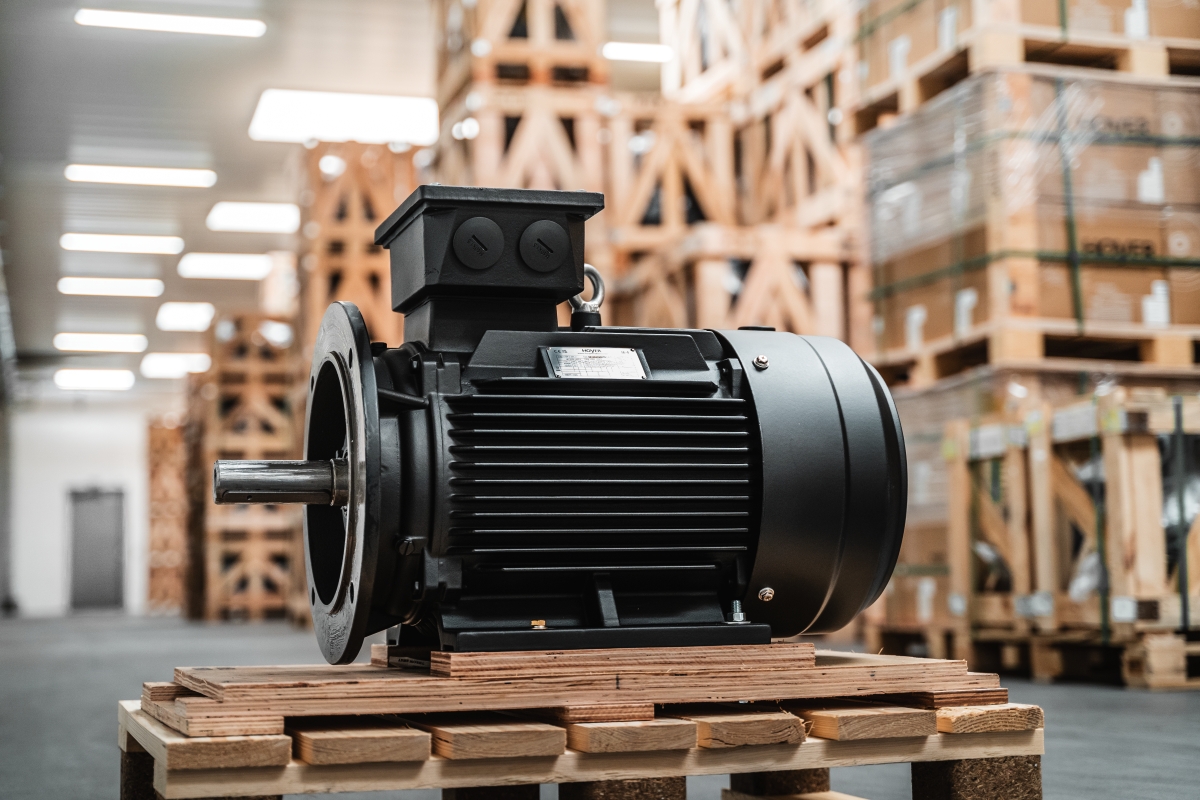
Hoyer IE4 Super Premium Efficiency Industrial Electric Motor
Super Premium Efficiency

Hoyer IE4 Super Premium Industrial Motors

Engineered for continuous continuous duty (S1), Hoyer IE4 motors drastically cut electrical losses by up to 20% compared to standard IE3 units. Constructed with premium-grade low-loss silicon magnetic steel laminations, heavy-duty cast iron frames (IEC sizes 160 to 355), and Class H insulation with Class B temperature rise (80K).

  • Power Range: 2.2 kW to 1000 kW (Frame sizes 90 to 450)
  • Enclosure Protection: IP55 standard, customizable to IP56/IP66
  • VFD Compatibility: Designed for Inverter-Duty operation with insulated bearings
  • Key Applications: Heavy-duty pumps, industrial fans, air compressors, hydraulics
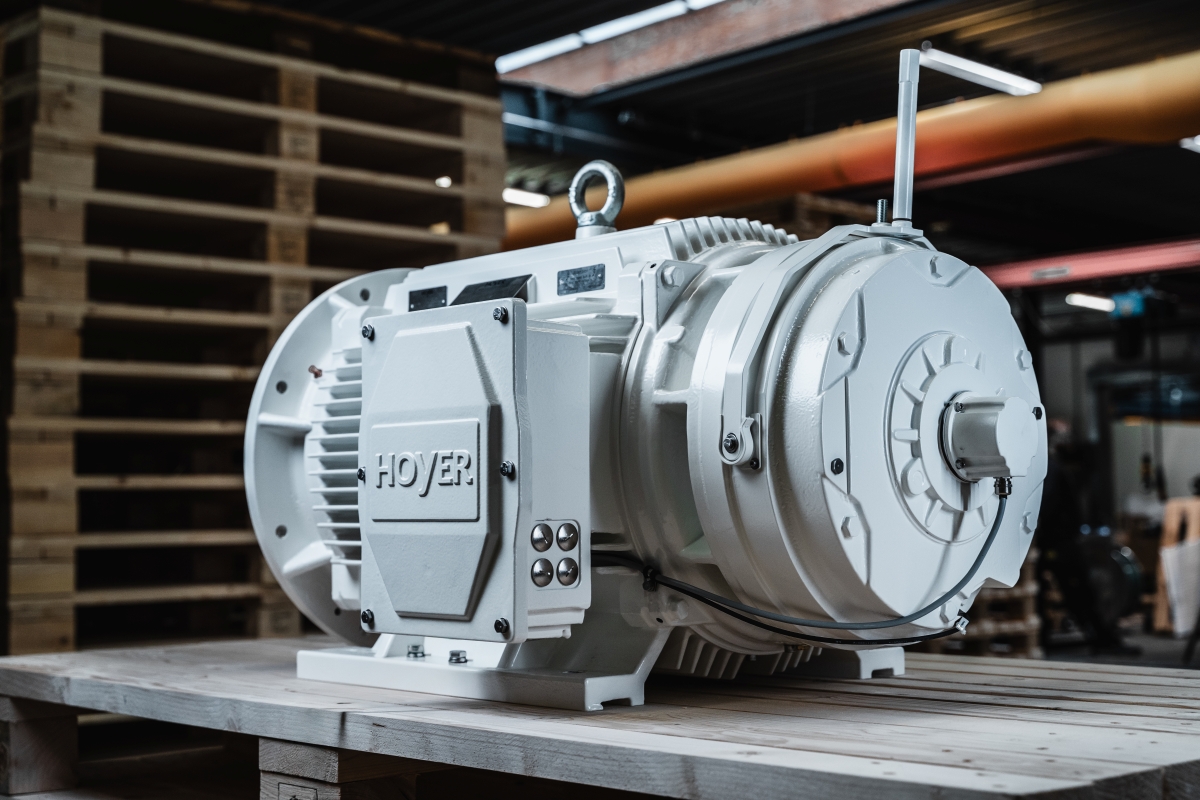
Hoyer Specialised Electric Brake Motors and Hazardous Area Ex Motors
Hazardous & Safety Critical

Explosion-Proof (Ex) & Electromagnetic Brake Motors

Designed for explosive atmospheres and safety-critical positioning applications. Our ATEX and IECEx certified Ex d (Flameproof), Ex eb (Increased Safety), and Ex ec (Non-Sparking) motors prevent ignition of flammable gases and dusts. Integrated brake motors feature spring-applied DC electromagnetic safety brakes with manual release options.

  • Hazardous Certification: ATEX / IECEx Zone 1, Zone 2, Zone 21, Zone 22
  • Protection Types: Ex d(e) IIC T4 Gb / Ex tb IIIC T135°C Db
  • Brake Torque: Up to 1600 Nm with fail-safe engagement
  • Key Applications: Chemical processing, oil & gas, offshore winches, cranes, hoists
Hoyer Marine and Medium Voltage Heavy Duty Electric Motors
Heavy Duty & High Voltage

Medium Voltage & Marine Propulsion Motors

Engineered for extreme high-power applications, Hoyer Medium Voltage (MV) motors operate at ratings from 1.1 kV up to 11 kV. Paired with complete classification approvals from top marine bodies (DNV, ABS, Lloyds Register, Bureau Veritas), these motors feature Vacuum Pressure Impregnation (VPI) for long-term dielectric strength.

  • Voltage Spectrum: 1.1kV, 3.3kV, 6.6kV, 10kV, 11kV (50/60 Hz)
  • Marine Classifications: DNV, ABS, LR, BV, GL, RINA, CCS certified
  • Cooling Configurations: IC411 (Self-Ventilated), IC416 (Forced Air), IC81W (Water Cooled)
  • Key Applications: Marine thrusters, main propulsion, mining crushers, power plants
Hoyer Intelligent Automation Systems and Smart Motor Sensors
Automation & IIoT

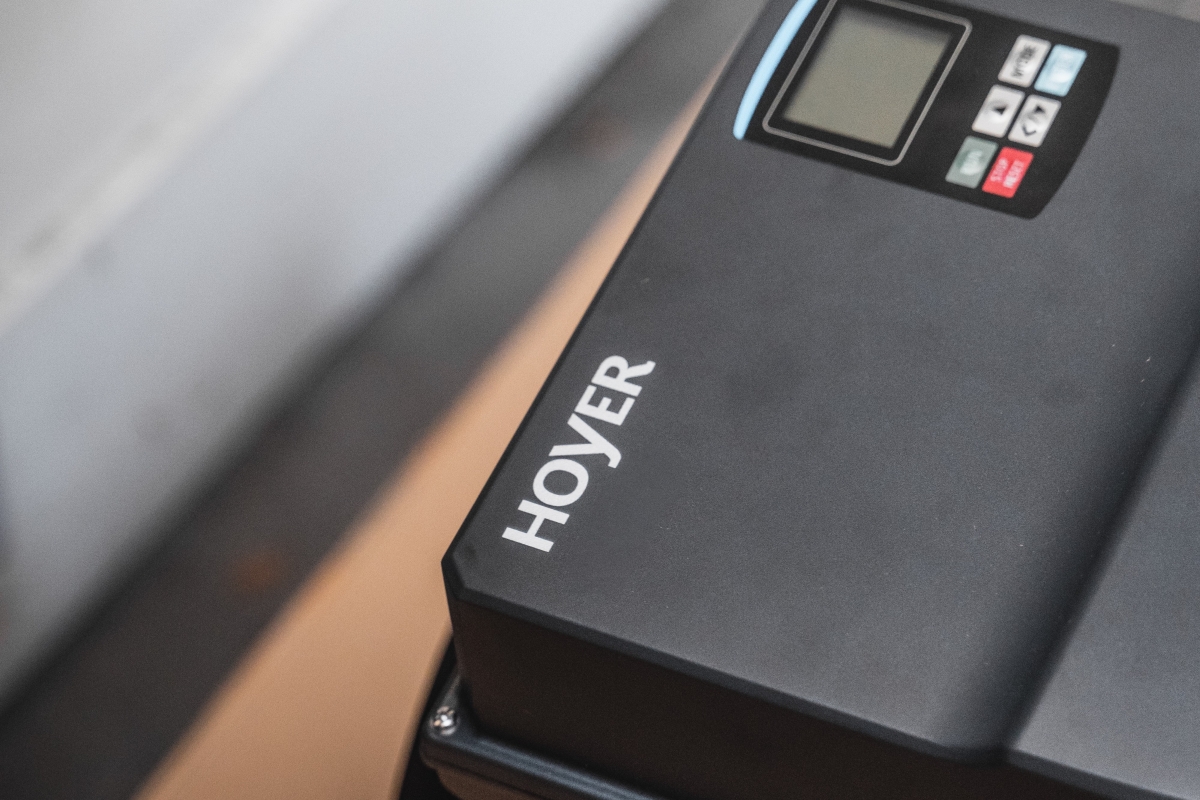
Variable Frequency Drives & Smart Sensor Packages

Turn electric motors into intelligent cyber-physical assets. Hoyer offers integrated Variable Frequency Converters (VFC) optimized for precise speed regulation, torque dynamic response, and energy optimization under partial load conditions. Smart wireless sensor arrays track 3-axis vibration and bearing temperatures.

  • VFD Control Modes: Sensorless Vector Control, Closed-loop Vector, V/f
  • Condition Monitoring: Tri-axial acceleration, surface temp, SPM shock pulse
  • Communication Interfaces: Modbus RTU, PROFIBUS, PROFINET, Ethernet/IP
  • Key Applications: Variable-torque HVAC fans, booster pumps, smart conveyor systems

Technical Comparison: Industrial Electric Motor Categories

Motor Category Power Range Efficiency Class Protection Rating Primary Standards Optimal Duty Cycle
Standard Industrial (Low Voltage) 0.09 kW to 1000 kW IE2 / IE3 / IE4 IP55 / IP56 IEC 60034, NEMA MG1, EN 50598 S1 Continuous Duty
Explosion-Proof (Ex d / Ex e) 0.18 kW to 500 kW IE2 / IE3 / IE4 IP65 / IP66 ATEX Directive, IECEx, EN 60079 S1 / S2 Hazardous Area Duty
Electromagnetic Brake Motors 0.12 kW to 45 kW IE2 / IE3 IP55 / IP56 IEC 60034-30, ISO 9001 S3 / S4 Intermittent Duty
Medium Voltage (MV Motors) 200 kW to 10,000 kW High Efficiency (>96.5%) IP55 / IP65 IEC 60034-1, IEEE 841, Marine Class S1 Continuous Heavy Industrial

Future Technological Trends in Industrial Electric Motors

The industrial electric motor sector is undergoing its most radical transformation since the invention of the squirrel-cage induction rotor. OEM machinery designers and system integrators must align their product roadmaps with four key technological mega-trends shaping motor design over the next decade:

1. Transition Beyond IE4: Ultra-Premium IE5 & Magnet-Free Synchronous Reluctance (SynRM)

While AC induction motors (IM) remain the dominant technology due to their ruggedness and direct-on-line (DOL) simplicity, pushing induction motor efficiency to IE5 standards introduces severe weight and physical dimension penalties. To achieve IE5 Ultra-Premium efficiency, the market is shifting toward Permanent Magnet Synchronous Motors (PMSM) and Synchronous Reluctance Motors (SynRM).

SynRM technology eliminates rotor copper and iron losses completely without relying on rare-earth permanent magnets (such as Neodymium or Dysprosium), offering an environmentally sustainable solution immune to critical raw material supply chain disruptions.

2. Silicon Carbide (SiC) VFDs and High-Frequency Insulation Systems

The advent of Wide-Bandgap (WBG) semiconductors, particularly Silicon Carbide (SiC) and Gallium Nitride (GaN) power switches in Variable Frequency Drives, enables ultra-high switching frequencies (>20 kHz) with minimal heat dissipation. However, high dV/dt voltage spikes places severe dielectric stress on motor stator winding insulation.

Future industrial electric motors feature advanced inverter-duty insulation systems utilizing phase separators, double-varnished magnet wire, and electrostatic shaft grounding rings to mitigate micro-bearings EDM (Electrical Discharge Machining) fluting and current breakdown.

3. Integrated Cyber-Physical Edge Analytics and Digital Twins

Modern industrial motors are expanding beyond electromechanical converters to become fully integrated edge-computing nodes. By embedding vibration accelerometers, magnetic flux sensors, and digital thermal modeling directly into the junction box, motors continuously stream high-frequency operational metrics to cloud platforms or local SCADA systems.

Digital twin algorithms process these parameters in real-time, detecting bearing inner-race micro-cracks, rotor bar asymmetry, dynamic eccentricity, and insulation degradation weeks before catastrophic operational failure occurs.

Future Global Procurement Trends for Industrial Electric Motors

Global logistics shocks, regional trade re-configurations, and strict carbon accounting are reshaping how international buyers procure industrial electric motors. Procurement teams must navigate these strategic shifts:

Buffer Stocking vs. Just-In-Time

The vulnerabilities of fragile Just-In-Time (JIT) supply chains have forced OEMs to pivot toward strategic buffer stocking and localized warehousing. Forward-thinking motor manufacturers maintain large regional inventories of semi-finished motors ready for rapid modification (custom shafts, voltages, flanges, and painting), reducing lead times from 20 weeks down to under 48 hours.

Scope 3 Carbon Auditing & EPDs

Multinational corporations are incorporating Environmental Product Declarations (EPDs) directly into their procurement scoring matrix. Suppliers must demonstrate low embodied carbon across raw materials (recycled copper windings, low-emissions steel) and provide full transparency on carbon intensity throughout the motor manufacturing and logistics chain.

CapEx to OpEx Service Agreements

Industrial plants are moving away from traditional upfront equipment purchases toward long-term Lifecycle SLAs (Service-Level Agreements) and "Motors-as-a-Service" models. Buyers prioritize single-source suppliers capable of managing the motor, drive, gearbox, routine maintenance, and end-of-life recycling under guaranteed uptime parameters.

Modular & Standardized Engineering

To streamline maintenance and spare parts inventory, enterprise buyers are mandating standardized modular motor platforms. Utilizing standardized foot-to-flange adaptation kits, multi-voltage terminal blocks, and universal encoder mountings allows a single spare motor to support multiple critical plant assets.

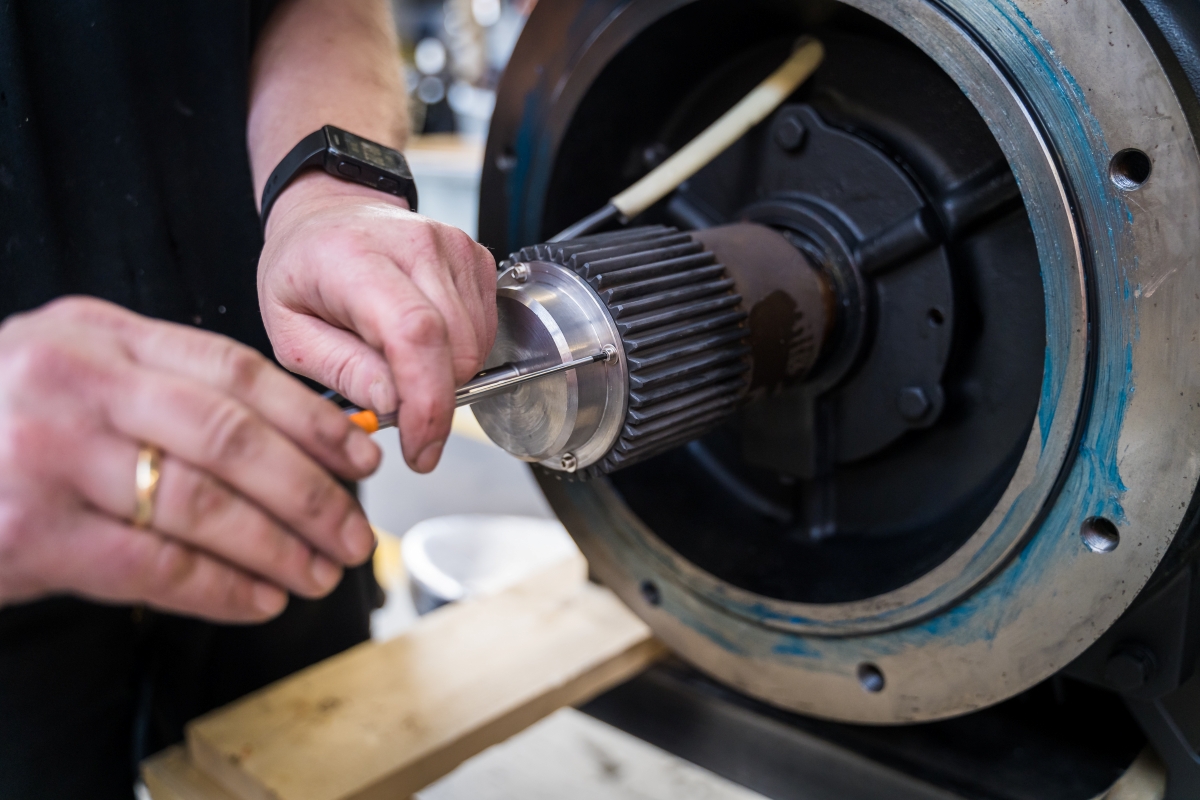
Hoyer Global Motor Quality Testing, Technical Services and Assembly Facility

Why Global Industry Leaders Rely on Hoyer Motors

With over 50 years of specialized engineering experience, Hoyer has established itself as the trusted global reliability partner for major OEMs, marine operators, and industrial plants worldwide. As part of the Hoyer VMS Group, we deliver an integrated, single-point solution covering motor specification, custom modification, testing, global logistics, and lifetime MRO support.

1. 70,000+ Motors Available in Stock

Our extensive inventory across European and Asian distribution centers guarantees immediate product availability. Whether you need a standard IE3 motor or a customized marine unit, our logistics infrastructure ensures rapid global delivery to minimize customer downtime.

2. Custom In-House Engineering & Testing Facilities

Every Hoyer motor undergoes rigorous quality assurance. Our advanced test benches perform routine testing, load testing, thermal rise evaluation, vibration spectrum analysis, and high-voltage breakdown testing in full accordance with IEC 60034-2-1 standards.

3. 24/7 Global Field Service & Marine MRO Support

Our dedicated engineering teams provide round-the-clock technical support, field repair, and emergency logistics worldwide. From dockside marine overhauls to factory automation retrofits, we keep your business in motion.

Send an Inquiry

Frequently Asked Questions by Industrial Motor Buyers

Detailed engineering answers to critical questions asked by global procurement professionals, project engineers, and facility operators.

Q1: How do I calculate the exact financial ROI and payback period when upgrading from IE2/IE3 to IE4 industrial electric motors?

To calculate the financial payback period for upgrading to an IE4 electric motor, use the following engineering formula:

Payback Period (Years) = (PriceIE4 - PriceIE3) / [ Power (kW) × Operating Hours/Year × Load Factor × Electricity Cost ($/kWh) × (1/ηIE3 - 1/ηIE4) ]

For example, consider a 75 kW motor operating at 80% load for 6,000 hours per year with an electricity rate of $0.14/kWh. Upgrading from an IE3 motor (η = 95.0%) to a Hoyer IE4 Super Premium motor (η = 96.0%) yields an annual energy savings of approximately $1,150. Given the initial cost delta between IE3 and IE4 is roughly $800 to $1,000, the capital payback is achieved in under 10.5 months. Over a 15-year service life, total net savings exceed $16,000 per motor unit.

Q2: What are the primary differences between Ex d, Ex eb, and Ex ec explosion-proof protection ratings in chemical and offshore processing?

Explosion-proof protection concepts dictate how electric motors operate safely in hazardous areas containing flammable gases, vapors, or combustible dusts:

  • Ex d (Flameproof Enclosure - Zone 1 & 2): The motor housing is engineered to withstand an internal explosion of flammable gas without rupturing. Internal flame paths cool and extinguish escaping hot gases before they can ignite the external surrounding atmosphere.
  • Ex eb (Increased Safety - Zone 1 & 2): Applied to non-sparking electrical equipment. High-grade insulation, increased creepage and clearance distances, and strict thermal management prevent any internal sparks, arcs, or excessive surface temperatures under both normal and fault conditions.
  • Ex ec (Non-Sparking - Zone 2): Formerly known as Ex nA, this protection concept ensures that electrical components cannot produce an electric arc or hot surface capable of igniting a surrounding explosive gas atmosphere under normal operation.

Q3: How does Variable Frequency Drive (VFD) operation impact motor insulation life and bearing longevity, and how can premature failure be prevented?

While VFDs provide substantial energy savings by adjusting motor speed to system demand, pulse-width modulation (PWM) creates high-frequency voltage spikes (dV/dt) and common-mode voltages. These phenomena lead to two main failure modes:

  1. Insulation Dielectric Stress: High dV/dt standing wave peaks can exceed the dielectric breakdown strength of standard magnet wire enamel. Hoyer motors solve this by utilizing Class H inverter-duty magnet wire, reinforced phase insulation, and Vacuum Pressure Impregnation (VPI).
  2. Bearing EDM Fluting: Common-mode voltage induces electrical discharge currents through the bearing grease film, creating micro-pitting, fluting ridges, and premature bearing failure. To prevent this, Hoyer fits insulated non-drive-end (NDE) bearings and conductive micro-fiber shaft grounding rings on VFD-driven motors above 110 kW.

Q4: What mechanical and electrical modifications are mandatory for marine-grade industrial electric motors operating in salt-spray atmospheres?

Marine environments require specialized motor modifications to withstand continuous salt spray, high humidity, vibration, and ambient temperatures up to 50°C:

  • Surface Protection: Multi-layer C4M or C5M marine-grade epoxy coating systems (min. 240 to 320 microns dry film thickness) resisting 1,500+ hours of neutral salt spray testing.
  • Sealing & Drainage: IP56 or IP66 dual-lip Viton shaft seals, stainless steel hardware (AISI 316), brass cable glands, and removable condensation drain plugs at the lowest motor points.
  • Electrical Adaptation: Anti-condensation space heaters (110V/230V) to prevent moisture buildup during idle periods, tropicalized stator winding treatment, and formal certification by marine classification societies (DNV, ABS, LR, BV).

Q5: What key parameters should procurement managers evaluate to select between Medium Voltage (MV) and Low Voltage (LV) electric motors for 250 kW to 1000 kW applications?

Choosing between Low Voltage (e.g., 400V/690V) and Medium Voltage (e.g., 3.3kV/6.6kV) for high-power industrial machinery involves evaluating several key factors:

  • Cable Amperage & Copper Cross-Section: A 500 kW motor at 400V draws approximately 870 Amps, requiring thick, expensive parallel copper cabling and large switchgear. At 6.6kV, the same motor draws only ~52 Amps, dramatically reducing cable weight and line voltage drop across long distances.
  • Switchgear & Transformer Costs: LV drives and circuit breakers are cheaper up to ~315 kW. Above 500 kW, MV switchgear becomes economically competitive due to lower current ratings and reduced heat losses in power distribution panels.
  • Motor Efficiency & Footprint: MV motors feature specialized stator slots and vacuum-impregnated high-voltage coil systems that deliver superior efficiency and thermal stability at high power ratings.

Q6: How does cooling method classification (IC code according to IEC 60034-6) influence motor selection for variable-speed industrial drives?

Electric motor cooling efficiency directly dictates allowable output torque, especially at reduced speeds when driven by a Variable Frequency Drive:

  • IC411 (Self-Ventilated, Surface Cooled): Standard motor design with a shaft-mounted external fan. At low VFD speeds (e.g., below 25 Hz), airflow drops exponentially, requiring thermal derating of the motor's continuous torque capacity.
  • IC416 (Forced-Ventilated, Surface Cooled): Equipped with an independently powered electric cooling fan. Provides constant airflow across the frame cooling fins regardless of main shaft RPM, allowing full continuous rated torque at zero or low operating speeds.
  • IC81W (Frame-Mounted Water-Cooled Heat Exchanger): Uses an internal air loop transferred to a water heat exchanger. Ideal for high-power, noise-sensitive, or cleanroom environments where external heat dissipation is prohibited.

Optimize Your Electric Motor Procurement Today

Contact our senior application engineers to discuss custom motor configurations, efficiency audits, high-volume OEM agreements, or immediate stock delivery from our global logistics hubs.

Send an Inquiry Launch Motor Configurator