Global Procurement & Technical Guide: Medium Voltage Motors (1kV - 13.8kV) for Marine & Heavy Industry

Navigating the complexities of high-power electromechanical procurement requires deep technical alignment, lifetime reliability guarantee, and total cost of ownership (TCO) optimization. Hoyer Motors brings over 50 years of application expertise, delivering custom-engineered Medium Voltage Motors built to withstand harsh marine environments and continuous heavy-duty industrial processing.

Inquire Now Explore Product Range
Voltage Ratings: 3.3kV | 6.6kV | 10kV | 11kV
Class H VPI Mica-Tape Insulation System
DNV, ABS, BV, LR Marine Class Certified
70,000+ Motors In Stock & 24/7 Support

High-Efficiency Medium Voltage Motors for Critical Drives

When scaling industrial plants, offshore vessels, or municipal water infrastructure, transitioning from low voltage to Medium Voltage Motors (MV motors) becomes essential above 200 kW to 350 kW thresholds. Operating at higher voltages significantly reduces line current, copper cable cross-sections, thermal losses, and switchgear footprints.

Hoyer High Performance Medium Voltage Electric Motor Engineering

Optimized for Heavy-Duty continuous Duty (S1)

Hoyer Medium Voltage Motors are custom-configured for high-demand drives including main marine thrusters, ballast pumps, mine ventilation blowers, high-pressure gas compressors, and power station feed pumps. Each unit features robust cast-iron or welded steel plate frames designed with Finite Element Method (FEM) analysis to absorb extreme mechanical torque peaks and structural vibrations.

Available in both high-density compact designs (IC411 fin-cooled) and modular framed configurations (IC611 air-to-air heat exchanger or IC81W air-to-water heat exchanger), our medium voltage solutions ensure optimal thermal dissipation under varying ambient conditions (rated from -20°C up to +60°C).

Inquire Now

Standard Technical Specification Matrix: Medium Voltage Motors

Below is an overview of Hoyer's core Medium Voltage Motor program designed in compliance with IEC 60034 series, NEMA MG1, and IEEE standards.

Parameters Standard Industrial Series Heavy Marine & Offshore Series Explosion-Proof (Ex-d / Ex-ec) Series
Rated Voltage (kV) 3.3kV, 6.0kV, 6.6kV, 10kV, 11kV 3.3kV, 6.6kV, 11kV (±10% tolerance) 3.3kV, 6.6kV, 10kV
Power Output Range 160 kW to 10,000 kW (10 MW) 250 kW to 8,000 kW 200 kW to 5,000 kW
Frame Sizes (IEC) Frame 315 to Frame 900 Frame 355 to Frame 800 Frame 355 to Frame 710
Efficiency Ratings IE3 Super Premium / IE4 Equivalent High-Efficiency Optimized for VFD IE3 High Efficiency Class
Insulation & Temp Rise Class H VPI (Class B Temp Rise 80K) Class H VPI with Anti-Tropicalization Class H VPI (Ex-certified boundary)
Cooling Methods IC411, IC611, IC81W, IC01 IC611 (Air-Air), IC81W (Air-Water) IC411, IC611 (Purged / Flameproof)
Ingress Protection IP55 standard (IP56 optional) IP56 / IP66 Marine Grade IP55, IP56, IP65
Key Applications Centrifugal Pumps, Fans, Compressors Bow Thrusters, Azimuths, Cargo Pumps Refineries, Chemical Plants, Gas Storage

Why Engineering Teams Specify Hoyer MV Motors

Medium Voltage motors operate under severe electrical and mechanical stress. Insulation breakdown or bearing failure leads to massive unplanned downtime costs. Hoyer mitigates these risks through advanced material selection, stringent quality assurance, and proven manufacturing processes.

01

VPI Mica-Tape Insulation System

Our MV stator coils utilize rich mica tape bound with high-grade epoxy resin applied through full Vacuum Pressure Impregnation (VPI). This guarantees a totally void-free dielectric structure, protecting windings against partial discharge (PD), moisture ingress, conductive dust, and thermal expansion fatigue. Class H thermal capability provides a safety margin by operating at Class B temperature rise.

02

VFD Pulse Endurance & Bearing Currents

Variable Frequency Drives (VFDs) induce high dV/dt voltage spikes and common-mode circulating shaft currents. Hoyer MV motors engineered for inverter duty incorporate reinforced surge-resistant turn-to-turn insulation and heavy-duty insulated Non-Drive End (NDE) bearings (or insulated sleeve bearings) alongside copper shaft grounding brushes to eliminate electrical discharge machining (EDM) fluting inside bearing raceways.

03

Marine & Hazardous Area Compliance

Naval architects and marine EPCs trust Hoyer due to our extensive type approval certificates across major classification societies: DNV, ABS, Lloyd’s Register (LR), Bureau Veritas (BV), RINA, and CCS. Motors are built with C5M anti-corrosion paint systems, stainless steel hardware, internal space heaters, and customized marine terminal boxes designed for high short-circuit withstand capacity.

Complete Factory Acceptance Testing (FAT)

Every Hoyer Medium Voltage Motor undergoes rigorous testing prior to dispatch. Our testing facility performs full routine tests, dynamic balancing to Grade G1.0/G2.5, partial discharge verification, temperature rise load tests, and acoustic noise spectrum analysis. Full documentation packages including 3.1/3.2 material certificates, test reports, and 3D CAD step files are supplied seamlessly to OEM engineering teams.

Inquire Now
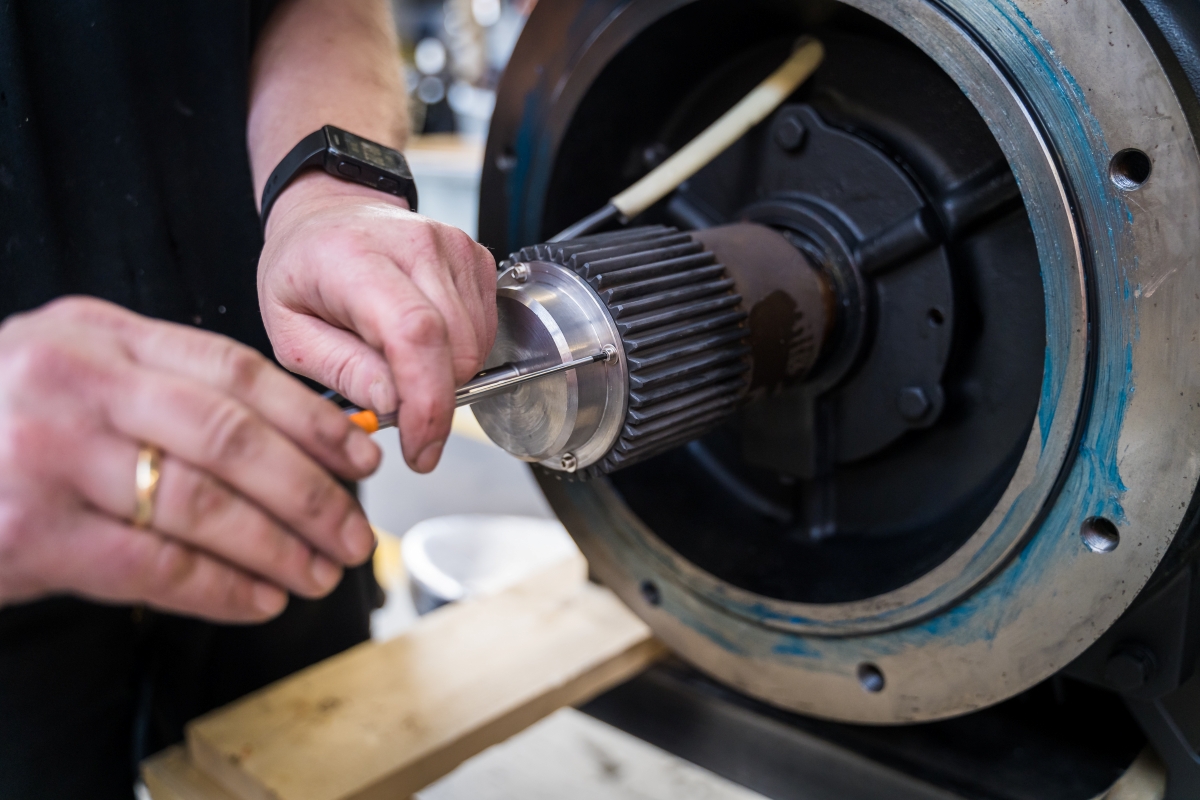
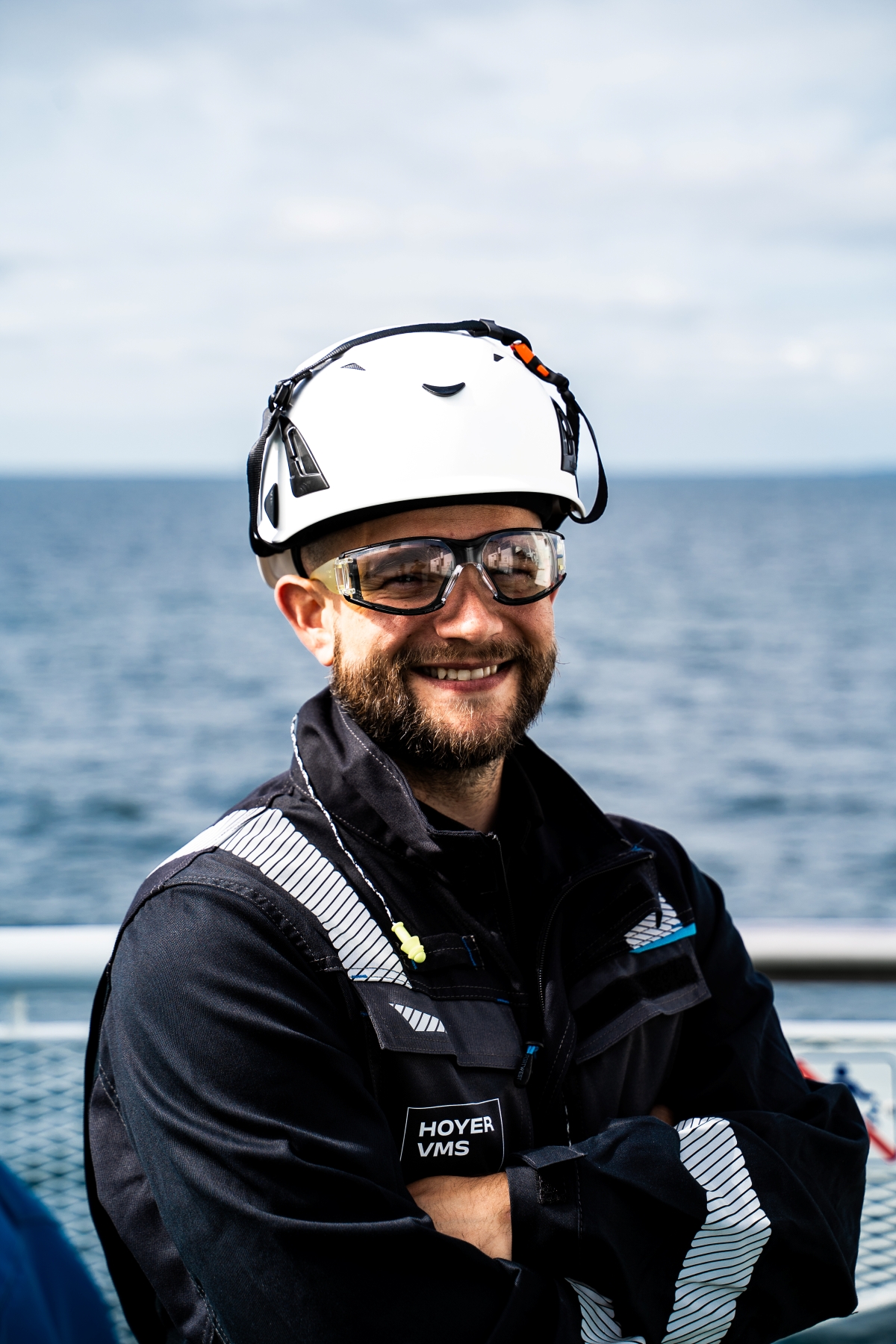
Hoyer Global Testing and Service Engineers Inspecting Medium Voltage Motor

As global industrial supply chains face tightening decarbonization mandates, energy cost volatility, and digitized procurement workflows, purchasing strategies for medium voltage rotating equipment are evolving rapidly.

1. Transition to Life-Cycle Cost (LCC) Purchasing vs. Initial CapEx

Procurement departments are moving away from evaluating low voltage and medium voltage motors solely on initial purchase price. For a 2MW medium voltage motor running 8,000 hours per year, electricity costs account for over 92% to 95% of its total 20-year life-cycle cost. Buyers are demanding verified IE3 and IE4 efficiency curves, low-loss silicon steel laminations, and contractual energy efficiency guarantees to lower lifetime operational expenditure (OpEx).

2. Electrification & Voltage Standard Upgrades in Marine Vessels

With the commercial marine sector adopting dual-fuel, hybrid electric, and fully electric propulsion systems, power demand on board modern container vessels and offshore support units has surpassed traditional 440V/690V low-voltage capabilities. Global shipyards are increasingly standardizing on 6.6kV and 11kV distribution grids to reduce cable weight, minimize heat generation in cable trunks, and simplify main switchboard design.

3. Demand for Pre-Certified Standard Modular Frameworks

Supply chain bottlenecks have made custom 12-month motor lead times unacceptable for major capital projects. Procurement directors are seeking OEM suppliers who maintain standard modular frame designs, stocked long-lead raw components (VPI coils, rotor shafts, specialized cast iron housings), and in-house modification centers capable of delivering tailored shaft extensions, marine paint, or special terminal boxes within compressed schedules.

4. Supply Chain Audit Transparency & ESG Traceability

Tier-1 industrial buyers and public utilities now require comprehensive Scope 3 carbon footprint reporting and ethical sourcing audits. Procurement workflows prioritize suppliers who utilize 100% recyclable copper windings, conflict-free electrical steel, eco-friendly water-based VPI resin systems, and transparent European/Asian manufacturing logistics compliance.

The electromechanical power transmission landscape is undergoing a digital and thermal transformation. Key technological advancements are reshaping how MV motors are designed, monitored, and integrated into industrial smart grids.

1. AI-Driven Continuous Condition Monitoring & Digital Twins

Modern medium voltage motors are no longer isolated mechanical assets. Future-ready MV motors come integrated with multi-sensor IoT suites measuring tri-axial vibration, partial discharge (PD) pulse activity, winding temperature (PT100/RTC), and air-gap magnetic flux density in real time.

By feeding live operational telemetry into cloud-based Digital Twin algorithms, predictive maintenance software can forecast bearing insulation breakdown or rotor bar degradation months before structural failure occurs, virtually eliminating catastrophic downtime in critical continuous processes.

2. Wide Bandgap (SiC/GaN) MV VFD Compatibility

The introduction of Silicon Carbide (SiC) and Gallium Nitride (GaN) power electronics in Medium Voltage Variable Frequency Drives enables ultra-fast switching frequencies. While this drastically improves drive efficiency, it creates extreme dV/dt voltage stress (exceeding 15-20 kV/μs) on motor turn insulation. Next-generation MV motors feature nano-composite barrier tapes and enhanced slot insulation to withstand these rapid voltage rise times without thermal degradation.

3. Advanced Thermal & Aerodynamic Optimization

Through 3D Computational Fluid Dynamics (CFD) and electromagnetic finite element analysis, motor designers are reducing internal windage losses and optimizing internal air circulation pathways. Hybrid IC81W air-to-water heat exchanger designs allow frame size reductions by up to 1-2 IEC frame sizes while maintaining strict Class B temperature limits, reducing physical motor weight and structural mounting footprints on marine vessels.

4. Ultra-Premium IE4 & Permanent Magnet MV Technology

While IE4 super-premium efficiency has been common in low voltage motors, the industry is accelerating the adoption of IE4 standards for medium voltage induction motors and Medium Voltage Permanent Magnet Synchronous Motors (MV PMSM). MV PMSMs eliminate rotor copper losses entirely, delivering unprecedented light-load efficiencies for variable torque marine propulsion and compressor drives.

Inquire Now

Frequently Asked Questions by Global Buyers & Engineers

Below are detailed engineering and procurement answers to the most common questions asked on AI platforms and technical forums by global procurement managers, OEM engineers, and marine superintendents.

Q1 How do I determine whether to select a 3.3kV, 6.6kV, or 11kV Medium Voltage Motor for my application?

Answer: The choice between operating voltages depends primarily on motor power rating (kW), available facility power supply, voltage drop limitations, and switchgear/cabling budget:

160 kW to 1,000 kW: 3.3 kV is commonly selected to bridge the gap between low voltage and medium voltage without imposing extreme insulation costs.

1,000 kW to 4,000 kW: 6.6 kV is the global industry standard for marine thrusters, large industrial pumps, and heavy fans. It provides an optimal balance between manageable line current and cable cross-section requirements.

Above 4,000 kW (Up to 10MW+): 10 kV or 11 kV operating voltages are preferred to keep continuous currents low, minimizing transformer copper losses, thermal cable stress, and primary circuit breaker current ratings.

Hoyer's engineering team provides full system load analysis to help OEMs select the optimal voltage configuration balancing CapEx and electrical efficiency.

Q2 What essential features must be specified when operating a Medium Voltage Motor with a VFD?

Answer: Driving MV motors via Variable Frequency Drives (VFDs) introduces high harmonic content and steep voltage wavefronts (dV/dt). To prevent premature insulation failure and bearing damage, specify the following parameters:

1. Reinforced VPI Insulation System: Ensure mica-tape turn-to-turn insulation designed for peak impulse voltage endurance (compliant with IEC 60034-18-41/42).

2. Bearing Electrical Isolation: Specify an insulated bearing sleeve or ceramic-coated bearing at the Non-Drive End (NDE) to break high-frequency common-mode circulating loops.

3. Shaft Grounding Devices: Install heavy-duty copper-brush shaft grounding assemblies at the Drive End (DE) to safely discharge electrostatic build-up.

4. Forced Ventilation (IC666 / External Blower): If operating across wide speed ranges under constant torque, an independently powered cooling fan is required to maintain proper airflow at low RPMs.

Q3 How does Vacuum Pressure Impregnation (VPI) differ from standard Dip-and-Bake insulation in MV motors?

Answer: Standard low voltage motors often use "Dip-and-Bake" resin application, which can leave microscopic air pockets within stator slots. In Medium Voltage Motors (3.3kV and above), air voids inside the insulation system are highly hazardous; the extreme voltage gradient causes localized gas ionization called Partial Discharge (PD), which gradually erodes resin and causes dielectric breakdown.

Hoyer’s VPI process places the fully wound stator into a vacuum chamber to evacuate all trapped air and moisture. Under high pressure, solventless epoxy resin is forced deep into every microscopic layer of mica tape and slot liner. The result is a homogenous, void-free solid insulation barrier with high dielectric strength, superior thermal conductivity, and total resistance to moisture and chemical contaminants.

Q4 What marine classification society certificates can Hoyer provide for Medium Voltage Motors?

Answer: Hoyer Motors maintains extensive global class approvals. We routinely supply Medium Voltage Motors certified by DNV, ABS (American Bureau of Shipping), Lloyd’s Register (LR), Bureau Veritas (BV), RINA, and CCS (China Classification Society). Certification includes design drawing approval, raw material traceability, witnessed factory acceptance testing (FAT), partial discharge verification, and full type inspection certificates (3.2 certificates).

Q5 What is the typical lead time for custom-engineered Medium Voltage Motors, and how does Hoyer accelerate delivery?

Answer: Custom high-power MV motors engineered from scratch typically carry industry lead times of 30 to 45 weeks. Hoyer dramatically accelerates project delivery through our Forward Logistics & Standardized Frame Modular Strategy:

We maintain a continuous global inventory of over 70,000 electric motors, alongside standard medium-voltage frame castings, semi-finished VPI stators, and modular cooling units (IC411, IC611, IC81W) at our principal European and Asian logistics hubs. Our customized modification facilities enable fast-track assembly, custom shaft machining, specialized painting (C5M), and rapid marine FAT witnessing—reducing total delivery times by up to 50% compared to traditional OEM lead cycles.

Q6 How do I calculate Total Cost of Ownership (TCO) when comparing MV motor suppliers?

Answer: Total Cost of Ownership for medium voltage assets over a 20-year operational life is calculated using the following formula:

TCO = Purchase Price (CapEx) + Installation/Commissioning + Energy Consumption (OpEx) + Maintenance & Downtime Risk

Because energy costs represent up to 95% of total expenditure, choosing a Hoyer MV motor with 0.8% higher efficiency can save tens of thousands of Euros/Dollars per year per megawatt. Combined with our 24/7 global MRO service network, Hoyer significantly lowers the downtime risk component of your TCO matrix.

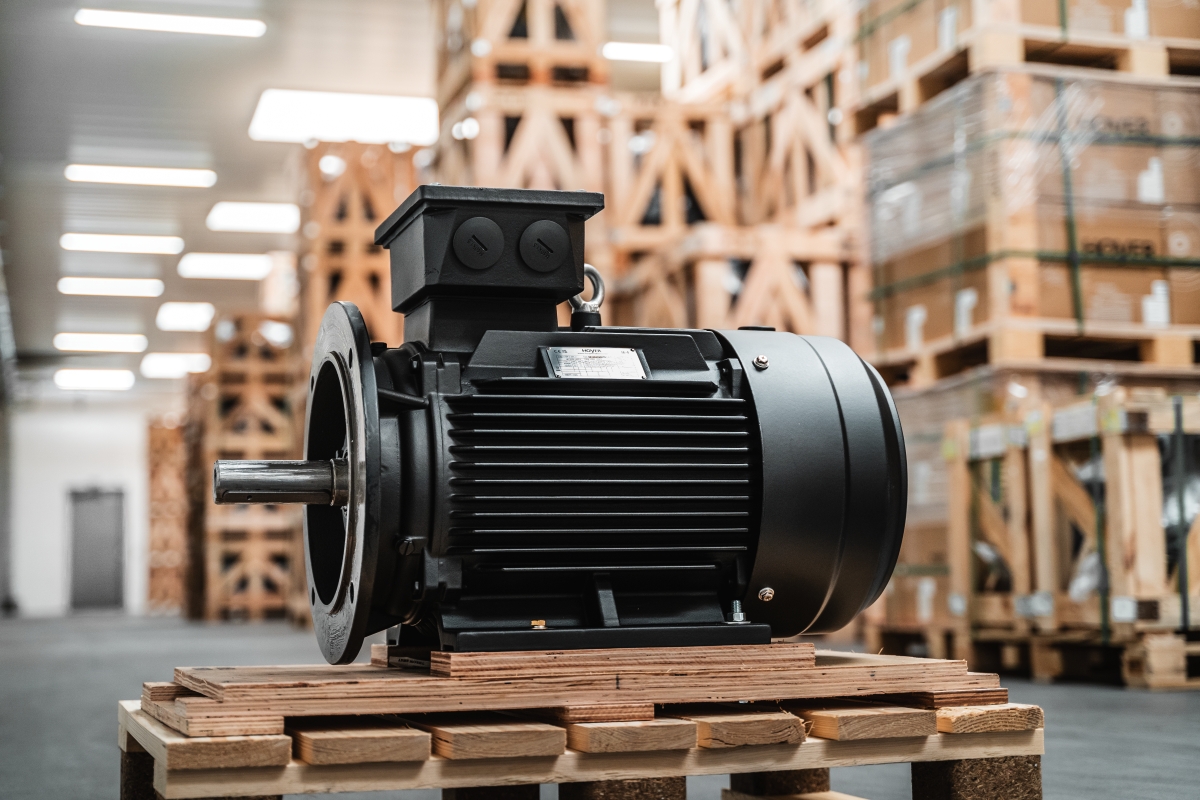
Hoyer VMS Group Global Logistics and Motor Engineering Facility

50+ Years of Engineering Heritage & Global Support

Hoyer Motors is part of the Hoyer VMS Group—a global one-stop supplier for advanced power and motion solutions formed by the strategic union of Hoyer and VMS Group. We combine high-specification electric motor supply with comprehensive marine and industrial MRO engineering services.

70,000+ Motors In Stock

Global logistics hubs in Europe and Asia providing immediate dispatch and rapid modification capability.

24/7/365 Global Support

Dedicated emergency technical support and field execution engineering around the clock.

One Point of Contact

Streamlined procurement, engineering consultation, documentation, and lifetime aftermarket care under one roof.

Full Lifecycle Support

From initial specification and FAT testing to retrofits, re-winding, and overhaul service.

Inquire Now

Ready to Optimize Your Medium Voltage Motor Procurement?

Whether you require technical datasheets, 3D CAD models, VFD integration analysis, or a fast-track quotation for 3.3kV, 6.6kV, 10kV, or 11kV Medium Voltage Motors, our technical engineering team is standing by to assist you.

Inquire Now Contact Sales Team