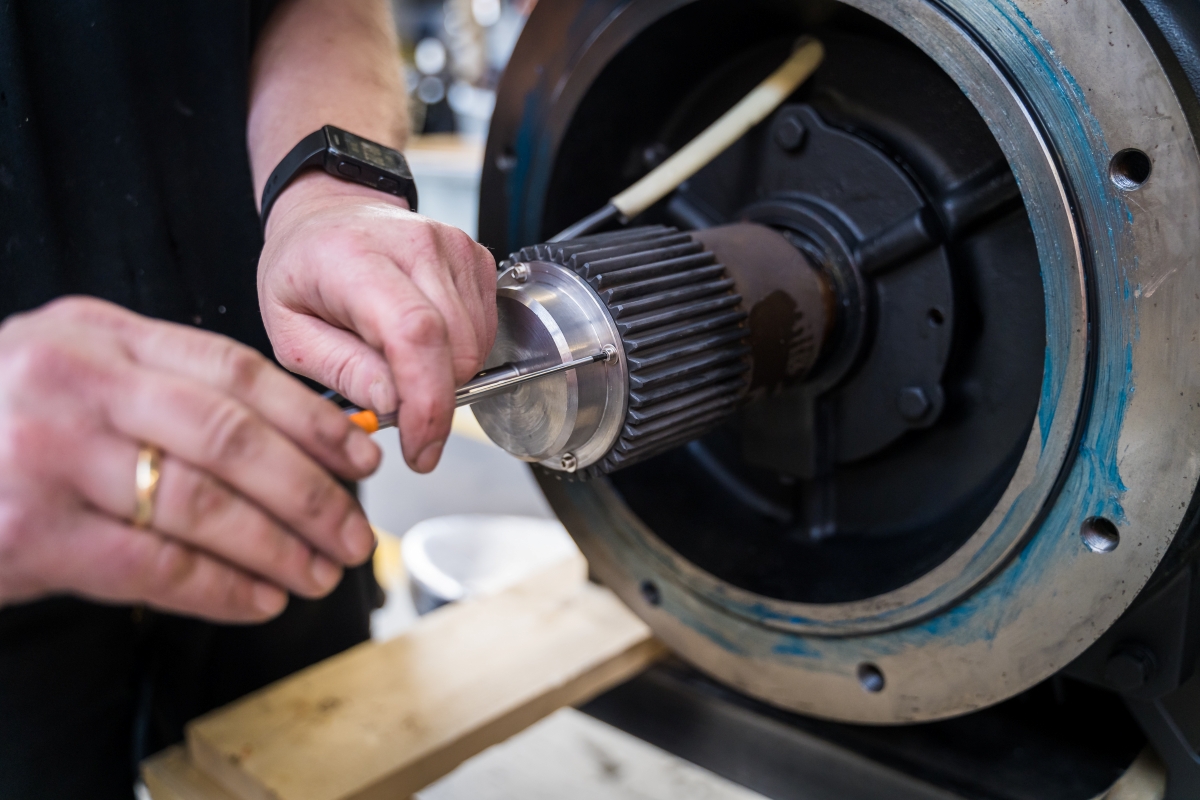
Understanding Modern Electric Brake Motors: Engineering Principles & Design Architecture
An electric brake motor represents the fusion of an asynchronous three-phase electric induction motor and a heavy-duty electro-mechanical brake unit. Designed to deliver instant deceleration, precise positioning, and positive mechanical holding upon power interruption, electric brake motors are indispensable across modern industrial automation, crane hoists, port logistics, mining conveyors, and marine deck equipment.
When global procurement teams evaluate electric brake motors, they must look beyond basic horsepower and voltage ratings. Modern semantic procurement strategies require evaluating thermal envelope capabilities, dynamic torque coefficients, brake release millisecond intervals, VFD (Variable Frequency Drive) compatibility, and life-cycle wear metrics. At Hoyer Motors, our brake motors are engineered precisely to resolve the mechanical stresses encountered during high-frequency start-stop cycles (S4/S5 duties) while complying with stringent global efficiency regulations including EU 2019/1781 (IE3/IE4 mandates).
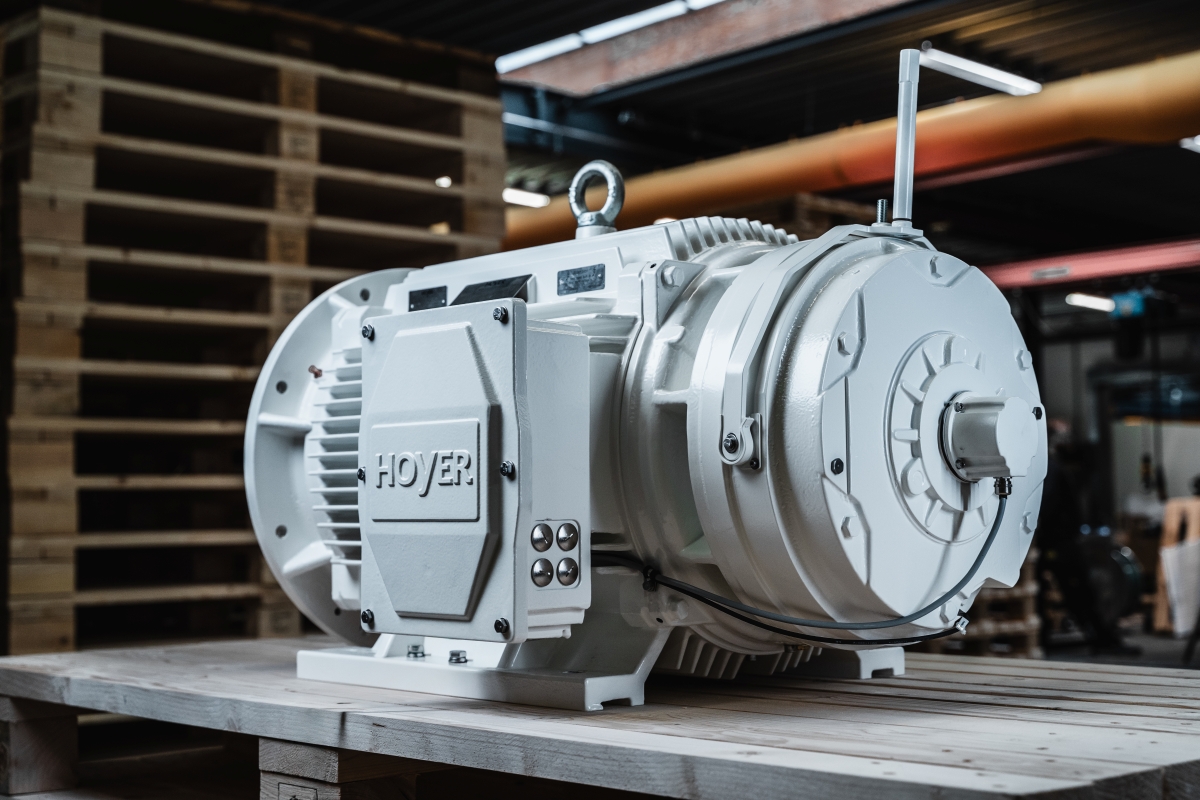
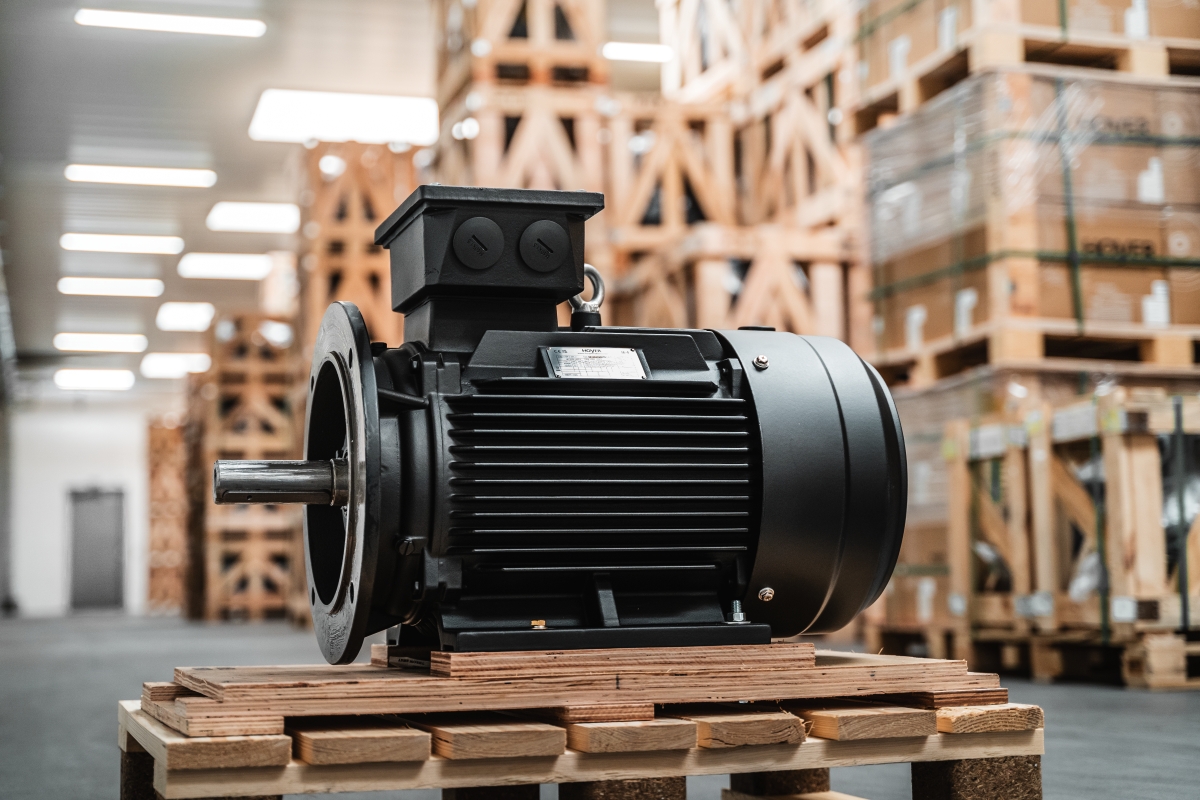
Hoyer Product Matrix: Tailored Brake Motor Configurations for High-Demand OEM Applications
Selecting the optimal electric brake motor configuration requires aligning mechanical frame sizing with exact duty cycles. Hoyer supplies standard and customized electromagnetic brake motors built around robust cast iron and lightweight aluminum frames ranging from frame sizes IEC 71 up to IEC 315.
Our product lineup features spring-applied fail-safe brakes that engage automatically when power is cut. This critical safety mechanism guarantees immediate stopping during emergency power loss, preventing catastrophic equipment failure or load drop in vertical lifting operations.
1. Hoyer Heavy-Duty Industrial Electric Brake Motors (HMA3 / HMC3 Series)
Engineered for high-duty cycle applications including automated palletizers, industrial lifts, machine tools, and packaging lines. Utilizing premium IE3 and IE4 motor cores, these units drastically reduce continuous electrical operating costs while delivering up to 300% rated motor torque in static holding power.
- Frame Sizes: IEC 71 to 315 (Aluminum and Cast Iron housing options).
- Power Output: 0.18 kW to 200 kW across 2, 4, 6, and 8-pole designs.
- Brake Supply Options: Integrated DC rectifier (Fast-acting AC-to-DC rectification) or direct 3-phase AC brake solenoids for sub-20ms response time.
- Thermal Protection: Class H insulation with Class B temperature rise allowance (130°C thermal margin).
2. Hoyer Marine & Offshore Certified Brake Motors
Marine environments demand uncompromised corrosion resistance and complete defense against salt spray, deck immersion, and extreme ambient thermal fluctuations. Hoyer marine brake motors feature customized IP56 or IP66 sealing enclosures, stainless steel hardware, anti-condensation heaters, and specialized surface treatment systems rated up to C5M atmospheric durability.
- Classification Approvals: Full design type approvals from DNV, ABS, Lloyd’s Register (LR), Bureau Veritas (BV), and RINA.
- Special Marine Features: Stainless steel brake disc wear plates, IP66 enclosed manual brake release handles, and double-lip shaft seals with tropicalized winding insulation.
- Target Applications: Anchor windlasses, mooring winches, cargo cranes, watertight bulkhead doors, and marine ramps.
3. Explosion-Proof (ATEX / IECEx) Electric Brake Motors
For chemical processing plants, offshore oil platforms, grain elevators, and hazardous gas handling facilities, Hoyer provides ATEX and IECEx flameproof brake motors (Ex d / Ex db / Ex tb). These units trap internal electrical arcing or high-temperature friction sparks within robust explosion-proof enclosures, ensuring safe operation in Zone 1, Zone 2, Zone 21, and Zone 22 environments.
| Feature Specification | Standard Industrial Series | Marine & Offshore Deck Series | Explosion-Proof (ATEX) Series |
|---|---|---|---|
| Efficiency Standard | IE2, IE3, IE4 (IEC 60034-30-1) | IE2, IE3 (Marine Certified) | IE2, IE3 (Ex Certified) |
| Brake Operation Type | Fail-Safe Spring Applied DC/AC | Enclosed Fail-Safe DC Spring Brake | Flameproof Enclosed DC Spring Brake |
| Ingress Protection Rating | IP55 (Standard), IP56 optional | IP56 / IP66 (Deck Watertight) | IP65 / IP66 (Flameproof Ex d) |
| Brake Torque Adjustment | 50% to 150% Nominal Range | Factory Set / Reinforced Heavy Spring | Precision Factory Calibrated |
| Friction Material | Asbestos-Free High Wear Resistant | Anti-Seize Corrosion Resistant Friction Disc | Non-Sparking Heavy-Duty Material |
| Certifications | CE, UL/CSA, EAC, ISO9001 | DNV, ABS, LR, BV, GL, RINA | ATEX Directive 2014/34/EU, IECEx |
Strategic OEM Procurement Trends: What Global Sourcing Directors Must Plan For (2025–2030)
The global market for electric brake motors is experiencing a fundamental transition. Driven by stringent carbon neutrality mandates, supply chain realignments, and the rapid deployment of AI-driven predictive maintenance systems, industrial procurement executives face new criteria when selecting motor suppliers. Below are the key structural trends shaping electric brake motor procurement over the coming decade:
1. Mandatory Migration toward High Efficiency (IE3 & IE4 Brake Motor Mandates)
Historically, regulatory bodies granted exemptions for brake motors regarding minimum energy performance standards (MEPS) due to their intermittent duty cycles. However, recent revisions to international legislation (such as the EU Ecodesign Regulation 2019/1781) have eliminated most brake motor exemptions. Sourcing directors must now ensure that brake motor platforms natively meet IE3 Premium or IE4 Super Premium efficiency standards without compromising frame compactness or brake magnet heat dissipation.
2. Shift toward Modular Brake Kit Architecture & Rapid Customization
OEM machinery builders can no longer afford 16-to-20-week lead times for customized brake motors. Sourcing strategy is shifting heavily toward suppliers capable of maintaining modular stock programs. Hoyer’s strategy allows standard IE3/IE4 base motors to be modified rapidly in-house with microswitches, manual release levers, double-end shafts, forced cooling fans, and specialized brake rectifiers within 48 to 72 hours.
3. Integration of Smart Brake Monitoring & IoT Sensors
Unplanned machine downtime caused by unmonitored brake liner wear or coil burnout is no longer accepted in automated logistics and continuous manufacturing. Modern electric brake motor procurements increasingly demand smart condition monitoring features:
- Air-Gap Sensors: Inductive microswitches that output digital signals when brake disc wear exceeds maximum allowable tolerance.
- Brake Release Feedback Switches: Ensuring the drive controller verifies mechanical brake opening prior to energizing the stator windings, eliminating motor stalling and thermal burnout.
- Thermal Protection Probes: PT100 or PTC thermistors embedded directly inside the electromagnetic brake coil to monitor thermal stress during high-frequency switching.

Technology Trends: Advancements in Electromagnetic Brake Design & Thermal Control
As industrial automation demands higher throughput and tighter positional accuracy, electric brake motor engineering has evolved across several key technological fronts:
Advanced Friction Disk Tribology & Zero-Stick Materials
Traditional brake friction materials were prone to "sticktion"—a phenomenon where static moisture or prolonged inactivity causes the friction disk to adhere to the steel pressure plate. Hoyer’s latest brake motor series utilizes specialized ceramic-metallic friction formulations that resist sticking even in 99% humidity environments, while offering significantly lower wear rates under high energy dynamic stops.
Dual-Magnet Fast Excitation Rectifiers
Conventional DC electromagnet brakes suffer from electromagnetic inductance lag during release. To overcome this, fast-excitation rectifiers deliver an over-voltage pulse (e.g., 200% nominal DC voltage) for 100 milliseconds to instantly energize the brake coil and pull the pressure plate back. This reduces mechanical drag, lowers electrical heat generation, and minimizes mechanical wear during startup.
Synchronized VFD & Brake Sequence Logic
Operating electric brake motors on Variable Frequency Drives (VFDs) requires precise torque control logic. Modern installations leverage vector-controlled VFDs that build up full motor magnetizing flux and motor torque *before* opening the brake, preventing mechanical torque drop or load slippage on cranes and inclined conveyors. Hoyer brake motors are custom-wound with VFD-rated phase insulation systems (qualified up to 1600V peak dV/dt stresses) to ensure long-term insulation integrity.
E-E-A-T Technical Engineering Insight: Calculating Brake Torque Requirements
Procurement Warning: Never size an electric brake motor solely based on motor shaft power! Static safety factors ($K$) must be calculated based on application severity: $M_b = K \times M_L$, where $M_b$ is required brake torque, $M_L$ is load torque, and $K$ ranges from 1.5 for horizontal conveyors to 2.5–3.0 for vertical hoisting systems per EN 81 / DIN 15020 safety standards.
Why Global Enterprises Partner with Hoyer for Electric Brake Motors
Hoyer Motors is not simply a equipment manufacturer; we are a dedicated global reliability partner. Formed through decades of industrial leadership and bolstered by our union within the Hoyer VMS Group, we provide complete power, motion, and lifecycle MRO solutions tailored to the needs of tier-1 OEMs, vessel operators, and plant engineers worldwide.