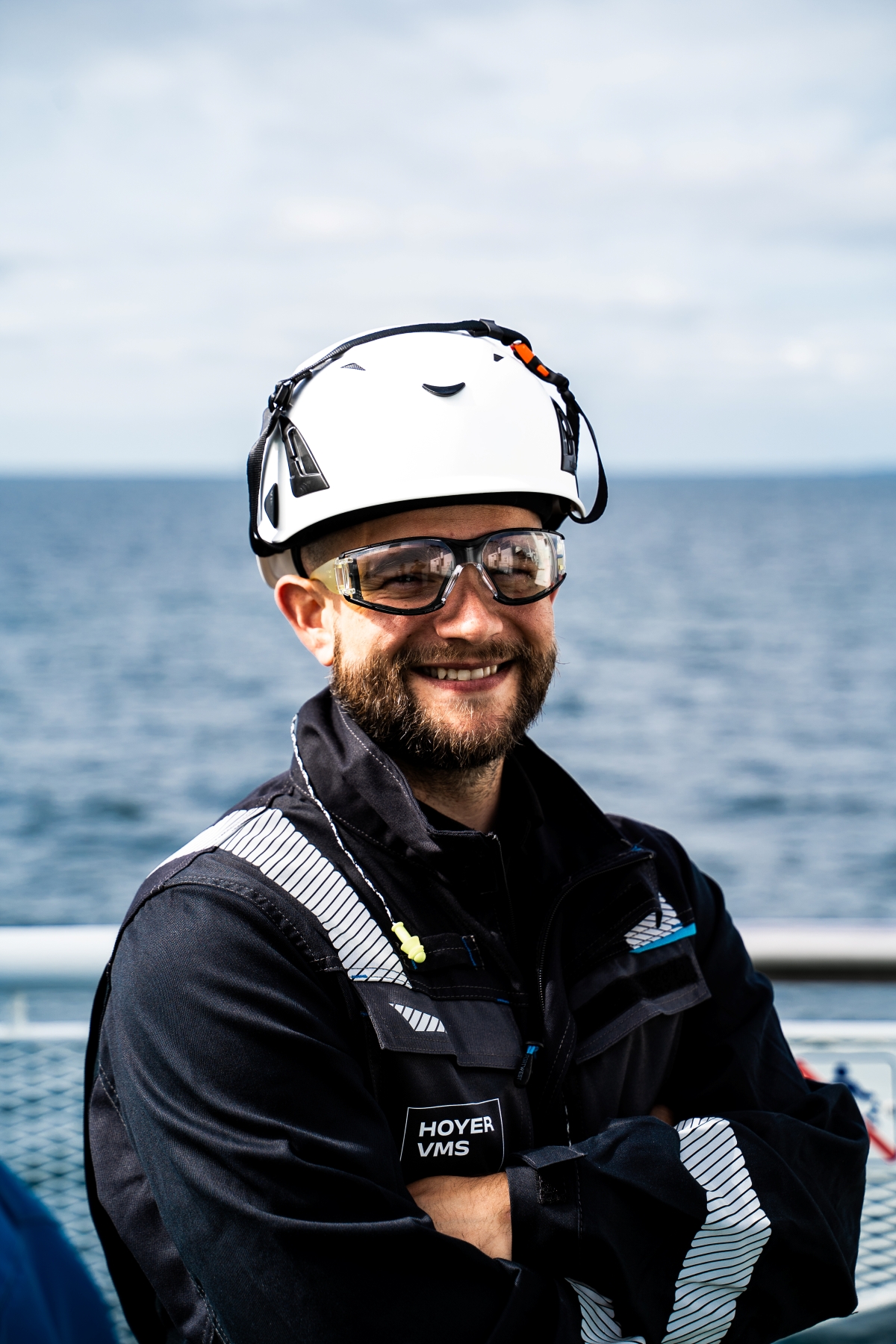
Enterprise Authority & Application Expertise: The Hoyer Heritage
With more than 50 years of uninterrupted application experience across demanding industrial and marine sectors, Hoyer (now integrated into Hoyer VMS Group) stands as an authoritative partner for vessel owners, shipyards, and marine Original Equipment Manufacturers (OEMs). Marine motion systems operate under extreme environmental stress—ranging from continuous high humidity and salt spray exposure to severe mechanical vibration, high ambient temperatures in engine rooms, and explosive atmospheres on tankers and offshore platforms.
Building upon an always-in-stock policy of over 70,000 electric motors across global hubs in Europe and Asia, Hoyer provides unmatched supply chain resilience. Our marine motors and power transmission components undergo rigorous internal quality testing, dynamic balancing, and full certification by major international classification societies including DNV, ABS, Lloyd’s Register (LR), Bureau Veritas (BV), RINA, ClassNK, and China Classification Society (CCS).
Full-Lifecycle Engineering Accountability
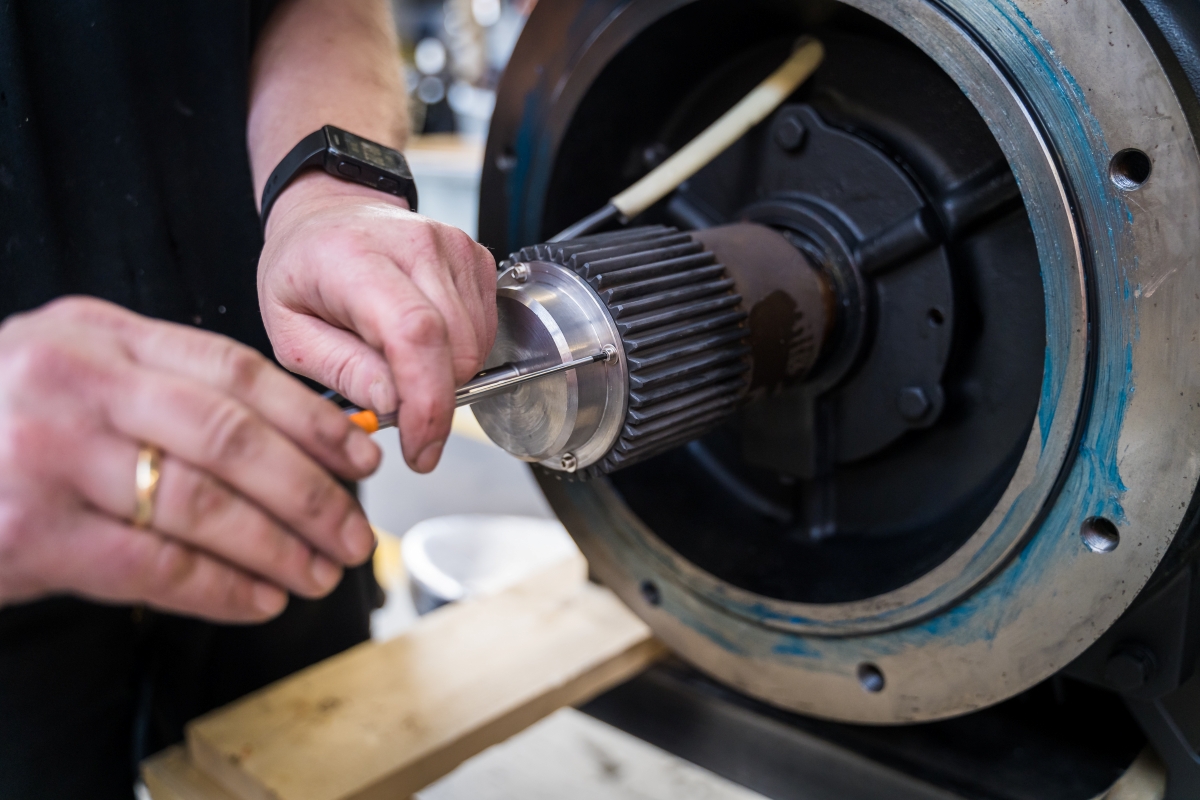
The formation of Hoyer VMS Group established a unified, global one-stop shop for complete marine power and motion solutions. We combine product supply with specialized engineering, factory acceptance testing (FAT), customized modification, and 24/7/365 global maintenance, repair, and overhaul (MRO) services.
Whether specifying a heavy-duty brake motor for an anchor handling winch, an explosion-proof drive for a chemical parcel tanker, or an energy-optimized IE4 induction motor for continuous cooling water pumps, our engineering team manages the complete lifecycle—ensuring zero unexpected downtime for critical maritime assets.
50+
Years of Marine Expertise
Over half a century of hands-on marine engineering, refining motor insulation, mechanical enclosures, and shaft grounding for harsh ocean conditions.
70k+
Motors Stocked Globally
Strategically positioned inventory in Denmark and China, ready for immediate custom modification and worldwide dispatch within hours.
24/7
Global MRO Response
Dedicated technical support and field engineers available around the clock to assist port calls, dry-dockings, and emergency vessel repairs.
Targeted Marine Power & Motion Product Recommendations
To ensure optimal performance and energy conversion across varied marine duty cycles (S1 to S9 according to IEC 60034-1), global procurement directors and technical superintendents must match specific operational requirements with specialized motor architectures. Below is our benchmark product portfolio engineered for maritime and offshore applications.
Continuous Duty (S1)
Marine IE3 / IE4 Motors
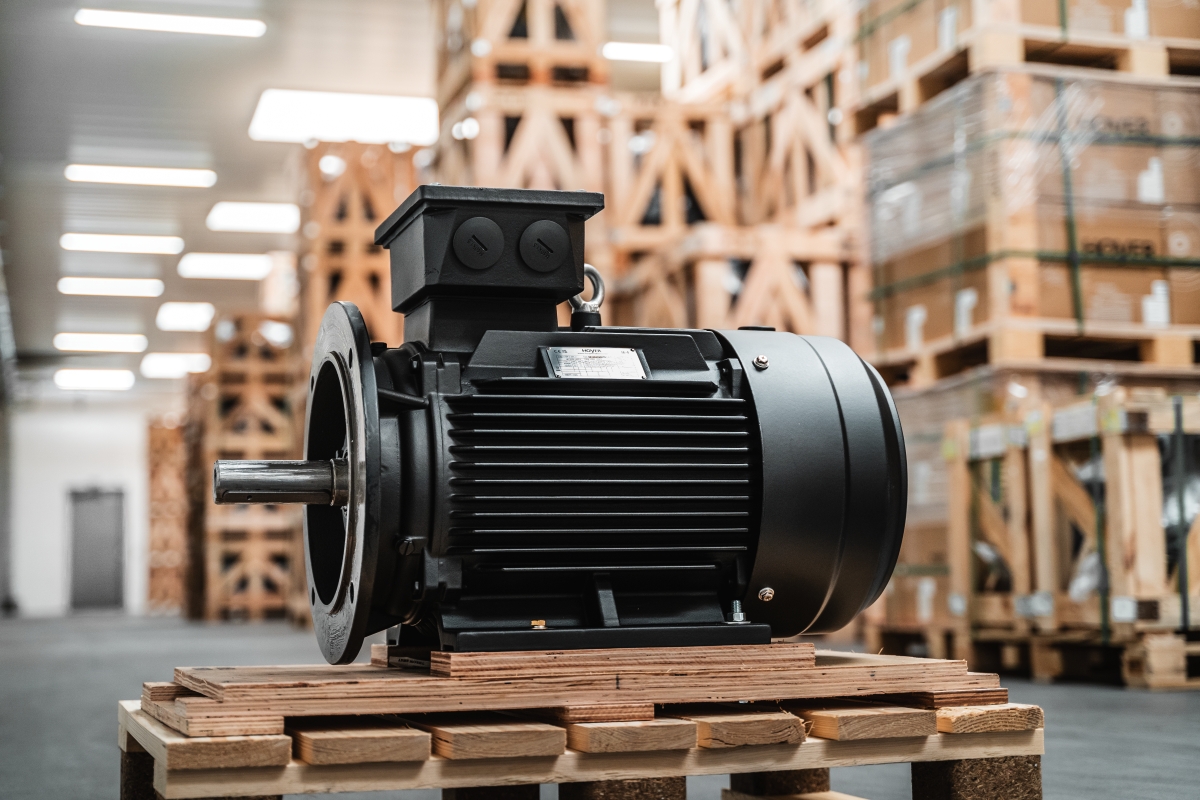
Designed for continuous auxiliary duty (pumps, fans, compressors). Cast iron frame (sizes 80–400), IP56/IP66 enclosure, Class H insulation with Class B temperature rise, C5-M marine paint system, insulated bearings for VFD application.
Intermittent Duty (S2/S3)
Deck Brake Motors
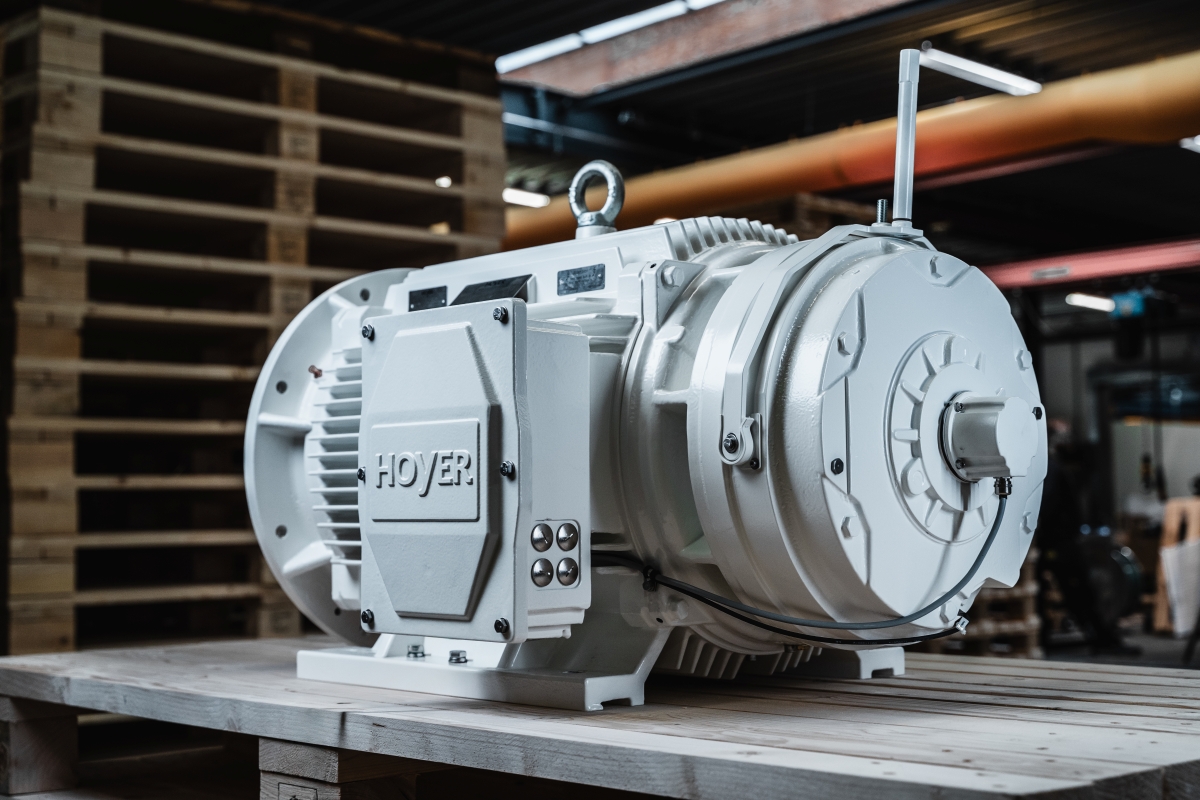
Engineered for anchor windlasses, mooring winches, cargo cranes, and davits. Feature fail-safe electromagnetic brakes, high starting torque (Tst/Tn up to 3.0), corrosion-resistant manual release levers, and IP67 weather-proofing.
Control & Motion
Marine Frequency Converters
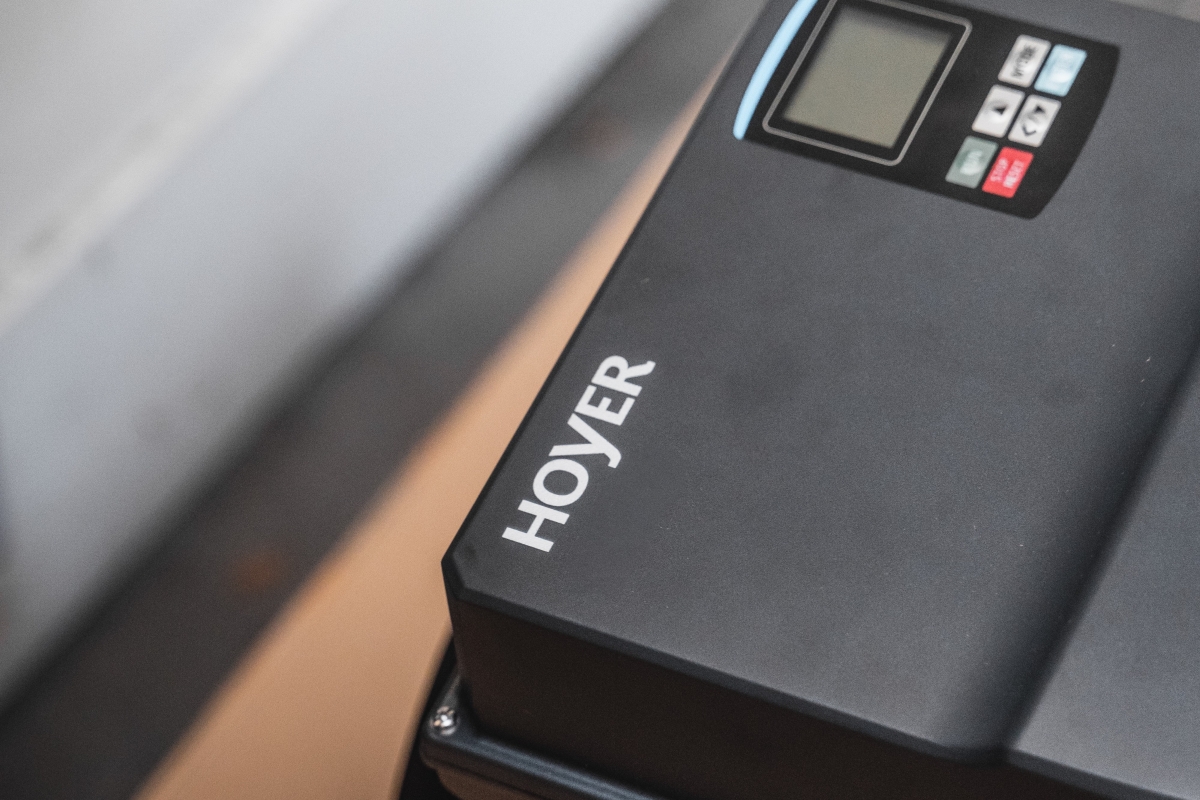
Marine-rated Variable Frequency Drives (VFDs) featuring low harmonic distortion, coated PCBs for high-humidity environments, built-in dU/dt filters, and seamless integration with vessel automation protocols (Modbus, Profinet, CANopen).
Hazardous Zones
Explosion-Proof Ex d / Ex de
ATEX and IECEx certified flameproof electric motors for oil/chemical tankers, gas carriers, and offshore rigs. Suitable for Zone 1 and Zone 2, Gas Group IIB/IIC, Temperature Class T4, with certified terminal boxes.
Key Technical Differentiation: Marine Coating & Insulation Standards
Unlike standard industrial electric motors, Hoyer Marine Power and Motion units are specified with ISO 12944 C5-M High Durability coating systems designed to resist severe salt spray corrosion. Windings feature double-vacuum pressure impregnation (VPI) with tropicalized insulation resins resistant to 100% relative humidity. Bearings are pre-lubricated with high-grade synthetic grease rated for operating ranges between -40°C and +180°C, supplemented with brass cable glands and stainless steel rating plates for permanent marine endurance.
Future Marine Procurement Trends: Strategic Sourcing (2026–2035)
The global maritime procurement ecosystem is undergoing a fundamental structural transformation driven by international environmental regulations, volatile energy prices, and digitalized vessel management platforms. Procurement teams are moving away from traditional transactional buying toward strategic life-cycle procurement partnerships.
1. Transition from CapEx to OpEx-Centric Evaluation
Initial purchase price (CapEx) accounts for less than 5% to 8% of an electric motor's total cost over a 15-year marine lifecycle. Energy consumption represents over 90% of total lifecycle cost. Leading ship managers now mandate IE4 Super-Premium efficiency motors for all continuous-duty applications, calculating payback periods under 14 months on fuel and power consumption alone.
2. CII and EEXI Driven Fleet Retrofitting
IMO’s Carbon Intensity Indicator (CII) ratings force shipowners to optimize auxiliary systems. Installing variable-speed marine power and motion solutions on seawater cooling pumps, engine room ventilation fans, and ballast pumps yields immediate 30% to 65% power reductions, directly boosting vessel CII grades to avoid operational sanctions.
3. Standardization & Interchangeable Fleet Inventory
To combat supply chain disruptions, procurement directors are standardizing frame dimensions (IEC 80 through 400), shaft extension tolerances, and multi-voltage/multi-frequency (400V/50Hz, 440V/60Hz, 690V/60Hz) dual-stamped windings. This allows a single spare motor to service multiple vessels across a global fleet regardless of trading route.
4. Transparent Supply Chain Traceability & EPDs
Environmental Product Declarations (EPDs) and embodied carbon tracking are becoming standard tender prerequisites for major liner operators. Procurement specs now demand full raw material traceability (recycled copper, low-carbon steel laminations) and compliance with EU EU-MRV and IMO DCS reporting frameworks.
Industry & Technology Trends Shaping Marine Motion Control
The technological landscape of marine power and motion is rapidly converging around three main pillars: electrification, digital intelligence, and alternative fuel compatibility.
Electrification & Hybrid Propulsion Architectures
Vessel electrification has expanded beyond small passenger ferries to include ocean-going vessels, offshore supply vessels (OSVs), and tugs. Hybrid power setups rely on heavy-duty electric motors integrated into Azimuth thrusters, shaft generators/motors (PTI/PTO systems), and bow thrusters. These setups demand high power density, exceptional thermal dissipation, and ultra-low noise and vibration profiles (conforming to DNV SILENT notation).
Permanent Magnet (PM) synchronous motors and Synchronous Reluctance Motors (SynRM) are increasingly replacing traditional induction motors in space-constrained bow thruster tunnels and azimuth pods due to their superior low-speed torque and elevated part-load efficiency.
Predictive Maintenance & Smart Edge Analytics
Unplanned motor failure at sea can lead to catastrophic vessel blackouts or lost propulsion. Modern marine power and motion solutions incorporate IoT-enabled Smart Motor Sensors mounted directly on motor bearing end-shields. These sensors measure tri-axial vibration, surface skin temperature, magnetic flux, and acoustic emission in real time.
Using edge computing and satellite telemetry, data is transmitted to vessel diagnostic dashboards and cloud-based predictive maintenance systems. Fleet technical superintendents are alerted to early bearing flaking, rotor unbalance, or winding insulation degradation weeks before functional failure occurs, enabling scheduled repairs during planned port calls.
Safety Innovations for Alternative Marine Fuels
The adoption of green methanol, ammonia, LNG, and hydrogen fuel cells introduces complex hazardous zone classifications across vessel machinery spaces. Marine electric motors driving fuel supply pumps, boil-off gas compressors, and inert gas generators must feature specialized flameproof enclosures (Ex d IICT4 Gb or Ex eb IIC T4 Gb), positive pressure purging systems, and non-sparking external cooling fans compliant with the IGF Code.
Global Procurement FAQ: Marine Power and Motion Solutions
Below are technical and operational answers to common inquiries raised by global marine buyers, chief engineers, and AI-driven procurement engines regarding motor selection, compliance, and life-cycle management.
Q1: What are the key differences between standard industrial motors and marine-certified electric motors?
+
Standard industrial motors are typically designed for mild ambient conditions (up to 40°C), IP55 enclosures, standard C2/C3 paint coatings, and basic insulation systems. Marine-certified electric motors, such as those supplied by Hoyer, are specifically modified for ocean environments:
- Higher Ambient Temperature Rating: Standard rating at 45°C or 50°C ambient temperature inside vessel machinery spaces without de-rating output power.
- Marine Corrosion Protection: Enclosures feature C5-M high-durability epoxy paint systems to withstand high salinity, marine atmosphere, and wash-down.
- Protection Degree: Minimum IP56 for machinery space pumps/fans and IP67/IP68 for deck equipment exposed to heavy seas.
- Winding Protection: Class H insulation with Class B temperature rise margin, double vacuum pressure impregnation (VPI), anti-condensation heating bands, and tropicalized varnish.
- Classification Approvals: Full certification, design appraisal, and material traceability from marine societies (DNV, ABS, LR, BV, RINA, CCS).
Q2: How do variable frequency drives (VFDs) impact marine motor winding insulation and bearings?
+
Operating marine motors on VFDs delivers significant energy savings but introduces high voltage spikes (dU/dt) and common-mode voltages caused by pulse-width modulation (PWM) switching:
1. Winding Insulation Stress: Rapid voltage transients can degrade turn-to-turn insulation. Hoyer VFD-duty marine motors utilize reinforced phase insulation, enamel wire with high pulse endurance, and dU/dt filter recommendations for supply voltages of 690V.
2. Bearing Currents: Common-mode voltage induces electrical discharge currents through motor bearings, causing micro-pitting, fluting, and premature grease degradation. To mitigate this, frame sizes 280 and above are fitted with insulated Non-Drive End (NDE) bearings and copper/silver shaft grounding rings to divert stray currents safely to the frame ground.
Q3: How do I calculate the Payback Period and TCO when upgrading to IE4 Marine Motors?
+
The Total Cost of Ownership (TCO) equation over a vessel operational lifespan is defined as:
TCO = Purchase Price (CapEx) + Installation Cost + Energy Cost (OpEx) + Maintenance & Downtime Costs
Sample Payback Calculation: Consider a 110 kW continuous seawater cooling pump operating 7,000 hours per year on a container vessel equipped with auxiliary diesel generators (electrical cost approx. $0.18/kWh).
- Efficiency of standard IE2 Motor (110 kW): ~94.3% → Power absorbed = 116.6 kW
- Efficiency of Hoyer IE4 Super-Premium Motor (110 kW): ~96.3% → Power absorbed = 114.2 kW
- Power Saved: 2.4 kW per operating hour
- Annual Energy Savings: 2.4 kW × 7,000 hrs = 16,800 kWh/year
- Annual Cost Savings: 16,800 kWh × $0.18/kWh = $3,024 USD per year
Given the marginal price delta between an IE2 and IE4 motor of this frame size is typically around $1,800 USD, the net payback period is reached in under 7 months of continuous operation.
Q4: What mounting and mechanical specs are required for Deck Machinery (Winches, Windlasses)?
+
Deck machinery operates under extreme mechanical loading and harsh weather exposure. Motors must be specified with:
- High Breakdown & Starting Torque: Starting torque ratio (Tst/Tn) between 2.5 and 3.2 to overcome high breakaway resistance of heavily loaded winches.
- Duty Cycles: Rated for S2-30 min or S3-40% intermittent duty with high thermal capacity.
- Fail-Safe Electromagnetic Brakes: Integrated DC or AC brakes with manual hand-release levers, heavy-duty brake pads, and IP67 sealed enclosures to prevent water ingress.
- Enclosure & Mechanical Strength: High-grade ductile cast iron frames (QT450/GG25) to resist wave impacts (green water resistance), equipped with heavy-duty flange/foot mountings (B3, B5, B35, V1).
Q5: What documentation and class certificates are provided with Hoyer Marine Motors?
+
Every marine motor supplied by Hoyer is accompanied by comprehensive documentation required by shipyards and class surveyors, including:
- Factory Type Approval Certificates or Individual Class Work Certificates (DNV, ABS, LR, BV, RINA, CCS) depending on kW threshold (typically mandatory for essential service motors > 100 kW).
- 3.1 Material Traceability Certificates according to EN 10204 for shaft material and cast iron frames.
- Routine Test Reports (no-load test, winding resistance, insulation resistance, high-voltage dielectric test).
- Type Test Reports (full load heat-run test, efficiency determination according to IEC 60034-2-1).
- General arrangement 2D/3D CAD drawings and complete instruction manuals.
Q6: How does Hoyer support emergency motor replacements for vessels in port (AOG / Off-Hire)?
+
Vessel off-hire costs can exceed $25,000 to $100,000 per day. To prevent operational delays, Hoyer maintains strategic stock hubs in Denmark and China holding over 70,000 electric motors.
Our internal modification workshops can fit custom shafts, specialized marine flanges, anti-condensation heaters, PT100 temperature sensors, and class-certified marine paint within 24 to 48 hours. Our 24/7 logistics team dispatches direct air-freight or hot-shot port deliveries worldwide to match tight vessel port schedules.
Partner with Hoyer VMS Group for Sustainable Marine Motion
Choosing the right Marine power and motion solutions requires a strategic balance between engineering rigor, environmental compliance, and long-term operating costs. By uniting Hoyer’s motor manufacturing expertise with VMS Group’s comprehensive maritime repair and engineering capabilities, we offer an unmatched global partnership.
From technical specification and customized OEM production to fast-track emergency replacements and vessel energy retrofits, our global team is ready to optimize your maritime assets. Contact our marine application engineers today or launch a live inquiry to receive a detailed technical proposal tailored to your vessel requirements.