Explore high-efficiency electric motors optimized for real-time wireless vibration telemetry and British industrial standards.
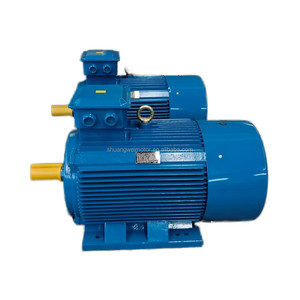
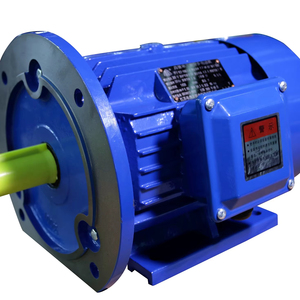
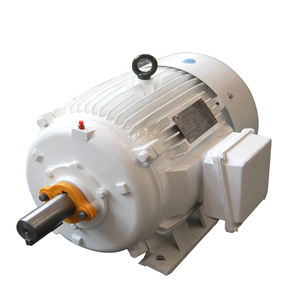
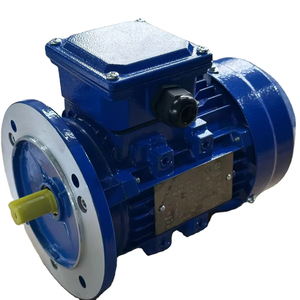
As the United Kingdom accelerates its drive toward Net Zero 2050 and navigating high UK grid electricity tariffs, industrial operators across England, Scotland, Wales, and Northern Ireland are transitioning aggressively from reactive or time-based maintenance models to continuous Predictive Maintenance (PdM) powered by Industrial Internet of Things (IIoT) Wireless Vibration Sensors.
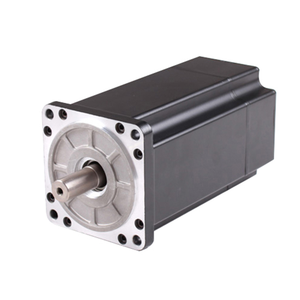
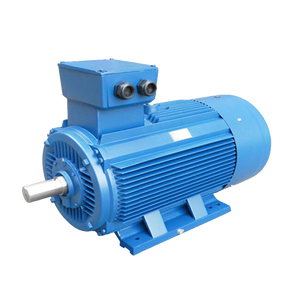
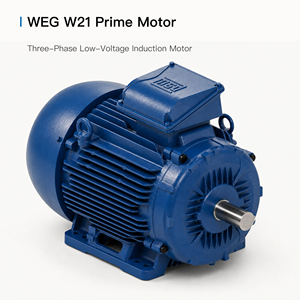
Rotating electrical equipment—such as 3-phase asynchronous induction motors, high-speed brushless DC drive systems, and medium-voltage heavy duty machinery—forms the backbone of British manufacturing, North Sea offshore platforms, and municipal water treatment plants. Unscheduled downtime caused by bearing breakdown, shaft misalignment, mechanical unbalance, or rotor bar degradation costs UK industry over £2.5 billion annually. Integrating tri-axial wireless vibration monitoring sensors natively onto premium energy efficiency motors (IE3, IE4, and IE5) creates a zero-downtime architecture aligned with British Smart Factory standards (Industry 4.0).
Modern wireless vibration sensors mounted on motor drive-end (DE) and non-drive-end (NDE) bearing housings utilize High-Fidelity Micro-Electro-Mechanical Systems (MEMS) or Piezoelectric Accelerometers. They capture overall acceleration (g), velocity (mm/s RMS), and high-frequency envelope acceleration (gE). By converting time-domain waveforms into frequency-domain spectrums via Fast Fourier Transform (FFT), maintenance engineers can isolate specific kinematic fault frequencies—such as Ball Pass Frequency Outer Race (BPFO), Ball Pass Frequency Inner Race (BPFI), 2X Shaft Speed (misalignment), and 1X Shaft Speed (unbalance)—weeks before audible degradation occurs.
Engineering parameters designed to withstand harsh British environments, coastal offshore humidity, and hazardous ATEX/UKEX zones.
| Parameter / Metric | Wireless Vibration Sensor Standard | Integrated Motor Specification | UK Regulatory & Compliance Target |
|---|---|---|---|
| Sensor Technology | Tri-Axial MEMS / Piezoelectric Accelerometer | Cast Iron / Aluminum Housing (Frames 63 to 450) | BS EN ISO 20816-3 (Mechanical Vibration) |
| Frequency Response Range | 10 Hz to 10,000 Hz (±3dB Envelope Detection) | 2-Pole to 8-Pole Speed Dynamic Range | ISO 10816 Velocity RMS Thresholds |
| Wireless Protocol & Band | LoRaWAN (868 MHz UK/EU), BLE 5.0, Wirepas Mesh | Insulated Bearings for VFD Harmonics Protection | UKCA Electrical Equipment Regulations |
| Hazardous Area Rating | Ex ia IIC T4 Ga / Ex db IIC T4 Gb | Explosion Proof & Flameproof Enclosure | UKEX & ATEX Zone 1 / Zone 2 Certified |
| Ingress Protection (IP) | IP68 / IP69K Submersible Stainless Housing | IP55 Standard, IP56/IP65 Marine Custom | BS EN 60529 Water/Dust Resistance |
| Energy Efficiency Class | Low-Power Sleep (10-Year Lithium Battery Life) | IE3 Premium / IE4 Super Premium / IE5 Ultra | BS EN 60034-30-1 UK Efficiency Standard |
Engineered specifically for critical infrastructure across Great Britain's industrial hubs.
Operating out of Aberdeen, Teesside, and the Humber estuary, offshore oil rigs, FPSOs, and offshore wind service vessels require IP68-rated wireless vibration sensors mounted on marine-certified IE4 electric motors. Continuous monitoring of seawater lift pumps, azimuth thrusters, and ballast pumps prevents sudden catastrophic failures in saline, high-vibration maritime environments.
Serving regional authorities such as Thames Water, United Utilities, and Scottish Water. Large submersible pumps and air blowers installed with Y3-series cast iron motors utilize LoRaWAN wireless sensors. Telemetry data penetrates deep concrete pits, sending vibration spectrums to central SCADA systems to prevent cavitation damage and bearing seize.
High-speed production lines in the West Midlands and Yorkshire require ultra-clean, stainless-steel or IP69K wireless sensors coupled with high-RPM NEMA/IEC brushless drives. Real-time vibration analysis eliminates micro-stoppages in automated robotic sorting, bottling lines, and continuous mixing processes under strict UK FSA hygienic standards.
With UK industrial energy prices ranking among the highest in Europe, motor efficiency is directly tied to operational profitability. Mechanical misalignment or bearing drag in a 200kW motor can degrade motor efficiency by 3% to 8%, costing thousands of pounds extra per annum. Wireless vibration sensors alert engineers to slight parasitic losses immediately, maintaining optimal energy consumption in alignment with the UK Climate Change Agreement (CCA).
Traditional maintenance relied on vibration technicians visiting plant floors once a month with handheld probes. UK manufacturing plants face engineering labor shortages, rendering manual routes impractical. Wireless sensor networks send 24/7 high-frequency spectral data straight to cloud dashboards, enabling lean maintenance teams across Great Britain to manage multi-site facilities remotely.
Backed by 50+ years of engineering heritage, global logistics, and total lifecycle accountability.
We don't just supply motors; we engineer fit-for-purpose drive systems equipped with precision-machined sensor mounting pads (M8/UNF tapped holes) at optimal vibration transfer locations for true structural frequency coupling.
Minimizing UK lead times via strategically located distribution hubs in Northern Europe. We provide rapid dispatch of IE3, IE4, brake motors, and explosion-proof motors directly to UK industrial sites and dockyards.
From initial motor selection, VFD harmonization, and wireless gateway pairing to emergency MRO replacement parts—our single-contact framework streamlines procurement for UK plant managers and OEM designers.
Common technical, regulatory, and procurement questions answered by our engineering team.
Our motors can be factory-prepared with precision-drilled and tapped flat surfaces (M8 x 1.25 or 1/4"-28 UNF thread) directly on the drive-end (DE) and non-drive-end (NDE) bearing shields. This mechanical stud mounting ensures linear frequency response transmission up to 10 kHz without high-frequency attenuation common in epoxy or magnetic mounts.
For wide-area industrial plants or water treatment facilities, LoRaWAN operating on the UK 868 MHz ISM band offers long transmission distances (up to 2 km through steel structures) and low power consumption. For dense machine clusters or automated food processing cells, BLE 5.0 Mesh or Wirepas 2.4 GHz protocols provide higher sample burst bandwidth for raw FFT waveform transmission.
Yes. All electric motors and associated wireless sensor equipment supplied to the United Kingdom fully carry UKCA (UK Conformity Assessed) marking and UKEX certification for explosive atmospheres (Zone 1 / Zone 2), alongside CE, ATEX, and IECEx global standards. Full technical dossiers and Declaration of Conformity documents are provided.
While vibration sensors excel at detecting mechanical faults (unbalance, bearing fluting, looseness, coupling misalignment), advanced spectral FFT analysis also identifies specific magnetic frequency harmonics. Electrical issues such as broken rotor bars, phase unbalance, or stator eccentricity manifest as sideband peaks around twice the line frequency (2x FL = 100 Hz in the UK 50Hz grid), enabling comprehensive mechanical and electrical health diagnostics.
Standard IE3/IE4 cast iron and aluminum motors up to 355kW, pre-fitted with vibration sensor mounting provisions, are available from stock with 3 to 5 business days delivery across the UK mainland. Customized OEM modifications or explosion-proof marine variants typically ship within 2 to 3 weeks.
Consult with our senior motor engineers and predictive vibration experts. Request technical datasheets, CAD models, or custom quotations tailored for your UK installation.
