Engineered for extreme North Atlantic sea states, commercial fishing vessels, offshore crew transfer vessels (CTVs), and naval defense ships across Irish ports including Cork, Killybegs, Dublin, and Shannon Foynes.
As Ireland accelerates its national marine space plan and offshore renewable energy targets across the Irish Sea and Atlantic seaboard, the demand for high-reliability, fault-tolerant vessel control systems has never been more critical. Operating in demanding waters characterized by volatile Beaufort scale wind regimes and extreme wave dynamics requires vessel control systems built with total redundancy, rapid-response industrial microprocessors, and military-grade EMC (Electromagnetic Compatibility) shielding.
Our comprehensive portfolio of Integrated Automation Systems (IAS), Alarm Monitoring Systems (AMS), Power Management Systems (PMS), and Dynamic Positioning (DP) interface nodes provides marine engineers, naval architects, and shipyard managers in Ireland with absolute operational command. By unifying isolated vessel subsystems—including main engine propulsion, auxiliary diesel generators, ballasting valves, heading controls, and navigation telemetry—into a unified IEC 60092-compliant fiber-optic backbone, our architectures eliminate single points of failure while driving down operational fuel consumption.
Modern ship control relies on scalable, distributed automation topologies. Rather than routing thousands of analog cables back to a central wheelhouse console, our systems deploy field-level marine PLC nodes, remote I/O units, and intelligent HMI screens directly adjacent to monitored machinery. This decentralization dramatically reduces installation weight, minimizes wiring complexity, and ensures continuous localized operation even in the unlikely event of main bridge telemetry interruption.
Utilizing hot-standby CPU configurations running ARM Cortex and Rockchip RK3568 industrial processors, our system provides seamless microsecond failover switching. Primary and secondary controller pairs synchronize status registers over dedicated optical ring networks.
All digital and analog I/O channels incorporate 2.5kV optical isolation to prevent ground loops and protect delicate microprocessors from transient high-voltage spikes generated by heavy marine switchgear and bow thrusters.
Native protocol support for NMEA 0183/2000, IEC 61162-450 Light Weight Ethernet (LWE), Modbus TCP/RTU, and CANopen ensures plug-and-play interoperability with third-party radar, ECDIS, GPS fluxgate compasses, and engine telemetry.
Engineered for Irish Maritime Compliance: All control panels and automated switchboards delivered to Irish shipowners adhere rigorously to European Marine Equipment Directive (MED 2014/90/EU) standards and carry classification certifications from DNV, CCS, Lloyd's Register, and Bureau Veritas.
The table below details the hardware specifications, operational tolerances, and communication protocol capabilities across our primary vessel automation modules supplied to Irish naval yards and vessel refit facilities.
| Module Classification | Primary Processor / Platform | Ingress & Environmental Rating | Communication Protocols | Marine Applications & Deployment |
|---|---|---|---|---|
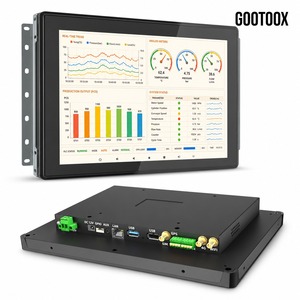
| Android Marine HMI Panel | RK3562 / RK3568 Quad-Core | IP65 Front / IP20 Rear | Modbus TCP, RS485, Ethernet, CANbus | Wheelhouse Navigation Consoles, Engine Control Rooms (ECR), Deck Winch Stations |
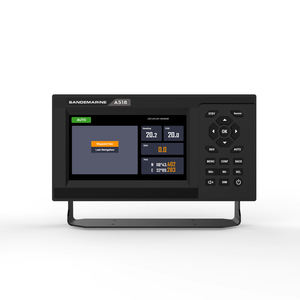
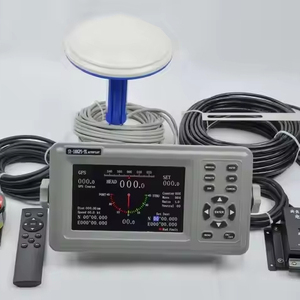
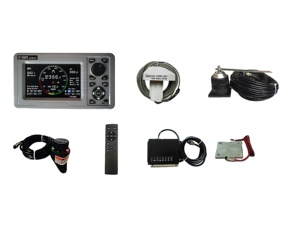
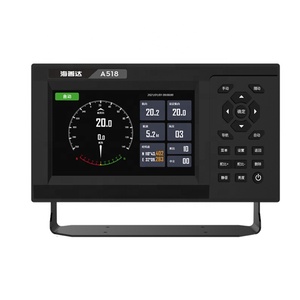
| CCS Autopilot Control Host | 32-Bit ARM Industrial MCU | IP65 Watertight Console | NMEA 0183, Fluxgate/Gyro Interface | Commercial Fishing Trawlers, Ferries, Offshore Supply Vessels, Motor Yachts |
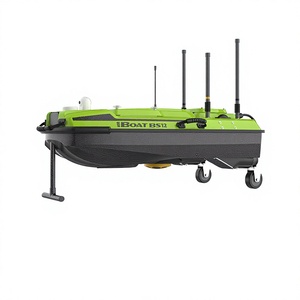
| Unmanned Vessel (USV) Controller | High-Performance Embedded Android/Linux | IP67 Submersible Rated | 4G/5G Telemetry, UHF Data Link, Satellite | Autonomous Hydrographic Surveying, Coastal Defense Patrols, Marine Research |
| FAS-452 Safety & Alarm PLC | Redundant Dual-Core Safety Controller | IEC 60068-2 Salt Mist | Dual CANbus, Industrial Ethernet Ring | Bilge Level Monitoring, Fire Damper Control, Engine Emergency Shutdown Systems |
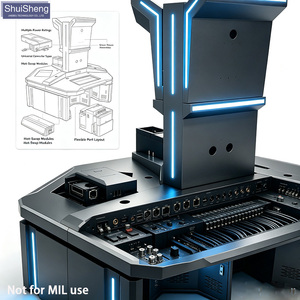
| Custom ODM Control Console | Modular Multi-PLC Rack System | Shock Tested IEC 60068-2-6 | Fiber Optic Backbone, Serial, Ethernet/IP | Custom Newbuild Tugs, Naval Patrol Vessels, Large Passenger Cruise Vessels |
Ireland’s maritime domain spans over 490,000 square kilometers of oceanic territory. Operating within this challenging hydrographic expanse demands specialized control solutions tailored to specific commercial and industrial vessel missions:
With extensive offshore wind developments planned across the Irish Sea (such as the Arklow Bank and Oriel Offshore projects), crew transfer vessels require ultra-precise dynamic steering and bow thruster interface control. Our automated systems integrate directly with DP1/DP2 positioning loops to ensure safe crew transfers to turbine foundations during heavy swells.
Ireland's fishing fleet relies heavily on reliable engine-room monitoring, automated refrigeration (RSW) control, and precision autopilot track-keeping. Our SY-188 and SY298D series provide rock-solid heading hold even during heavy trawling operations against North Atlantic gale forces, protecting gear and reducing fuel burn.
For seabed mapping, port dredging operations, and environmental monitoring near Dublin Port, Cork Harbour, and Shannon Foynes, our Hi-target USV intelligent control system offers dual-antenna RTK positioning, auto-return fail-safes, and high-bandwidth telemetry for sonar payload integration.
The Irish maritime industry is undergoing a profound digital and environmental transformation driven by stringent European Union environmental regulations and national decarbonization mandates. Key trends shaping vessel equipment procurement include:
Backed by over 50 years of engineering lineage, deep specialized application experience, and an extensive international distribution infrastructure, we are dedicated to keeping your vessel fleet safe, efficient, and fully operational.
From initial engineering design and PCB layout to Factory Acceptance Testing (FAT), delivery, and commissioning, we provide a unified workflow. You get one dedicated project management team for all automation, steering, and engine alarm hardware.
We maintain dedicated global spare parts warehousing for rapid dispatch to any port in Ireland. Critical replacement controllers, sensors, and touch-screen glass can be dispatched on a rapid-response timeline to minimize dockside turnaround times.
Whether you require bespoke console dimensions to fit restricted wheelhouse dimensions or custom firmware branding and signal mapping for proprietary marine sensors, our in-house software and hardware engineering teams deliver tailored solutions.
Detailed technical answers addressing common questions raised by Irish shipowners, superintendents, naval architects, and marine electro-technical officers (ETOs):
Partner with a proven global manufacturer delivering high-reliability vessel automation systems, autopilot consoles, and safety PLCs to the Irish maritime sector. Contact our engineering team for technical schematics, pricing, and system integration advice.
Contact Us