Engineered for Variable Speed Drive (VSD) integration, heavy industrial duty, and optimized power factor performance across New Zealand operating environments.
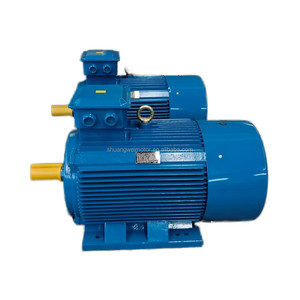
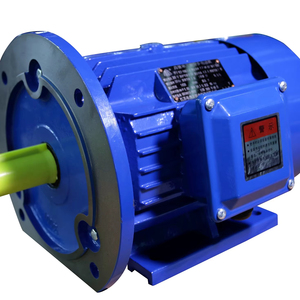
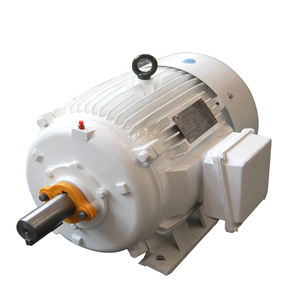
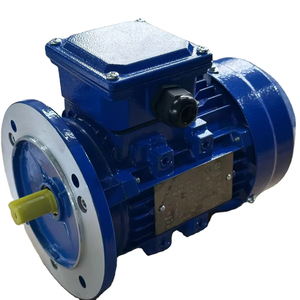
Combining 50+ years of application intelligence with agile worldwide logistics for critical industrial infrastructure.
With over five decades of specialized power transmission and motor control experience, we don't just supply off-the-shelf equipment. We customize motor-drive pairings to prevent insulation degradation, high dV/dt stress, and shaft voltage bearing erosion in pulse-width modulation (PWM) inverter systems.
Holding over 70,000 electric motors and complementary variable speed drives in centralized distribution hubs, we mitigate single-source risk and long factory lead times. We support scheduled OEM assembly lines and emergency breakdown maintenance throughout New Zealand and Oceania.
As part of the integrated Hoyer VMS Group ecosystem, our motors and drive automation assets are backed by end-to-end quality assurance, factory acceptance testing (FAT), and marine class approvals (DNV, ABS, LR, BV). We provide complete accountability from initial sizing to commissioning and overhaul.
New Zealand's industrial ecosystem is undergoing an aggressive transition toward decarbonization, energy efficiency compliance, and total electrification. Driven by stringent national climate targets and high electricity costs across both the North and South Islands, plant managers, consulting engineers, and procurement directors are re-evaluating their heavy power transmission assets. Variable Speed Drives (VSDs), also widely designated as Variable Frequency Drives (VFDs) or AC drives, sit at the absolute core of this operational evolution.
Technical Gain Insight: Pairing high-efficiency IE4 or IE5 permanent magnet / induction motors with optimized Variable Speed Drives yields average energy reductions of 30% to 50% in centrifugal pump, fan, and compressor applications across New Zealand dairy processing and timber plants.
The Energy Efficiency and Conservation Authority (EECA) of New Zealand actively promotes energy audit implementations and technology retrofits. Industrial electric motor systems account for over 60% of total electrical energy consumed within New Zealand's manufacturing, agricultural processing, and municipal sectors. Selecting the right VSD supplier requires understanding specific local market drivers:
A Variable Speed Drive cannot be evaluated in isolation. When driving high-efficiency asynchronous or synchronous motors, engineering teams must evaluate the electro-mechanical interaction between the drive output and the motor windings:
Insulation Voltage Stress ($dV/dt$ Spikes): Fast-switching IGBTs (Insulated Gate Bipolar Transistors) in modern VSDs deliver square wave PWM signals. Long cable runs between the drive cabinet and the motor (common in mining, quarrying, and agricultural irrigation lines in NZ) generate voltage reflections, producing peak $dV/dt$ stress over 1500V. Motors must feature reinforced phase insulation and inverter-duty magnet wire.
Bearing Current Mitigation: High-frequency common-mode voltages induce capacitive currents across motor bearings, causing micro-pitting, fluting, and early bearing destruction. High-power VSD systems (exceeding 75 kW) require insulated non-drive-end bearings combined with shaft grounding rings to guarantee long service life.
Thermal Derating at Low Frequencies: When drives reduce motor speed on constant torque loads (e.g., positive displacement pumps or conveyors), the shaft-mounted fan loses cooling efficacy. Qualified suppliers specify auxiliary force-cooling blowers or utilize thermal modeling to prevent stator overheating.
Below is a technical evaluation of the primary drive suppliers, system integrators, and global motor-drive partners servicing the New Zealand industrial automation market:
Specializes in ultra-high efficiency (IE4/IE5) cast iron motor systems, marine-duty specialized motors, and custom VSD parameter matching for heavy-duty industrial processing.
Provides ACS880 and ACS580 industrial series drives with extensive local engineering hubs in Auckland and Christchurch. Strong footprint in HVAC and municipal water.
Famous for VLT and VACON drive series. Highly dominant in dairy refrigeration, food processing, and HVAC air handling systems across NZ.
Supplies Altivar Process VFDs featuring embedded intelligence, energy monitoring, and direct integration into EcoStruxure plant architectures.
Delivers heavy industrial cast-iron motor solutions alongside CFW series variable frequency drives tailored for mining, forestry, and pumping.
Offers SINAMICS drive architectures ranging from compact micro-drives to complex multi-axis motion control setups in advanced manufacturing.
Known for matrix drives and extreme operational durability in demanding high-torque crane, elevator, and winch applications.
Dominant in large enterprise timber mills, paper production, and continuous processing plants requiring CIP (EtherNet/IP) connectivity.
Delivers compact Frenic series drives suitable for small-to-medium agricultural irrigation pump skids and conveyor systems.
Offers cost-effective standard vector drives for commercial building control, light OEM machinery, and solar-pump integration.
Deploying Variable Speed Drives in New Zealand requires targeted customization aligned with geographic and industrial operating conditions:
Dairy Processing Plants (Waikato, Taranaki, Southland): Milk powder spray drying towers demand multi-pump VSD synchronization. Drives operate under continuous feedback loops via 4-20mA pressure transmitters to maintain exact nozzle spray pressure. Energy-saving drive algorithms prevent process disruption while reducing kilowatt-hour consumption during milk peak harvest periods.
Marine & Port Infrastructure (Auckland, Lyttelton, Tauranga): Onshore shore-power converters, shipboard thruster drives, and deck winch controls require marine-certified components. High humidity, salt spray, and mechanical vibration dictate class-approved (DNV/GL) drive panels with anti-condensation space heaters and stainless steel hardware.
Timber Mills & Forestry Processing (Bay of Plenty): Debarkers, headrig saws, and kiln exhaust fans present high peak shock loads and dusty environments. VSDs deployed here require high overload capacity (150% for 60 seconds), heavy-duty brake choppers with external resistors, and dust-tight IP54 enclosures.
Irrigation & Agricultural Water Schemes (Canterbury Plains): Deep-well submersible pumps require VSD soft-starting to prevent water hammer damaging long underground PVC piping networks. Integrated solar-pump drive algorithms allow direct DC power input from photovoltaic arrays during daylight hours.
Key technical considerations when sourcing Variable Speed Drives and compatible electric motors for New Zealand facilities.
New Zealand operates on a standard 400V 3-phase, 230V single-phase grid at 50Hz. Variable Speed Drives supplied to NZ must be rated for nominal 380V-480V grid tolerances (+/- 10%) and handle potential supply voltage sags in rural agricultural lines.
All Variable Speed Drives sold or installed in New Zealand must comply with Radiocommunications (Electromagnetic Compatibility) Standards. Drives must carry the Regulatory Compliance Mark (RCM) and include internal or external Class A/B EMC filters to prevent radio frequency interference on shared power lines.
While technically possible, retrofitting legacy motors with VSDs carries risk. Older motor winding insulation may break down under modern drive $dV/dt$ voltage spikes. Additionally, running older motors at low RPMs causes thermal buildup. Upgrading to an inverter-rated IE4 motor ensures long-term reliability and maximum energy savings.
The terms are used interchangeably in New Zealand industry. VSD (Variable Speed Drive) is the broader engineering term covering both mechanical and electronic velocity controllers. VFD (Variable Frequency Drive) specifically refers to electronic AC drives that alter frequency and voltage to control AC induction or permanent magnet motors.
Inverter switching creates common-mode voltage across the motor stator. If ungrounded, this voltage discharges through the bearing grease film, causing electrical discharge machining (EDM), micro-pitting, and rapid bearing breakdown. Insulated bearings break this discharge path.
