Explore our CE and CCS-certified marine automation units, touch-panel PLCs, autopilot system hosts, and intelligent USV control systems optimized for West African vessel deployments.
As the West African maritime ecosystem expands—driven by deepwater offshore exploration in the Gulf of Guinea, port modernization in Lagos (Apapa and Lekki Deep Sea Port), and intense riverine transport across the Niger Delta—the operational demands placed on vessel control systems have reached an unprecedented peak.
Modern vessel automation systems are no longer passive monitoring arrangements; they form the nerve center of dynamic positioning (DP), steering control, main engine safety shutdown, auxiliary power management, and remote telemetry. Operating commercial vessels in Nigerian tropical waters exposes electronic hardware to extreme ambient temperatures, salt mist corrosion, high relative humidity (up to 95%), and severe electrical voltage fluctuations caused by heavy onboard generator switching.
This technical document outlines the architectural criteria, certification mandates, localization engineering, and procurement considerations required by Nigerian shipowners, offshore service providers (OSVs), naval architects, and maintenance engineers seeking high-reliability, CE-certified vessel automation control systems.
To comply with European Conformity (CE) directives—specifically Electromagnetic Compatibility (EMC 2014/30/EU) and Low Voltage (LVD 2014/35/EU)—as well as Marine IEC 60945 testing standards, automated marine controls must incorporate multi-layered hardware redundancy and ruggedization protocols.
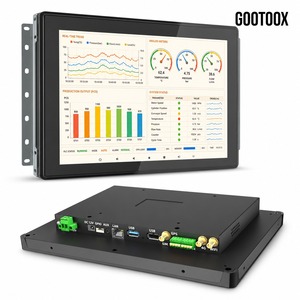
Our FAS-452 and embedded RK3568 process units utilize hot-standby PLC processing architecture. In the event of a primary processor fault, control switches to the secondary unit within 50 milliseconds without loss of steering or throttle control.
To withstand severe diesel-generator voltage spikes common on West African coastal vessels, all digital and analog inputs are galvanic/optically isolated up to 2.5kV, preventing transient voltage destruction of main process ICs.
Enclosures feature IP65 to IP67 ingress protection with conformal-coated PCB assemblies (Polyurethane/Acrylic) capable of operating in non-condensing continuous relative humidity up to 95% at 55°C engine room temperatures.
The Nigerian maritime economy demands purpose-engineered control integration tailored to distinct vessel classes operating out of strategic ports like Port Harcourt, Onne, Warri, Calabar, and Lagos.
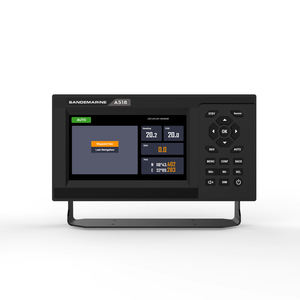
Offshore oil platforms operating in the Bonny offshore sector require high-precision station-keeping and engine safety monitoring. Our integrated marine automation consoles provide complete control over main propulsion, bow thrusters, cargo fuel pumping, and bilge ballast monitoring.
The inclusion of NMEA 2000 and Modbus TCP interfaces allows seamless interfacing with Dynamic Positioning (DP-1 and DP-2) setups, guaranteeing operational uptime during offshore supply transfers.
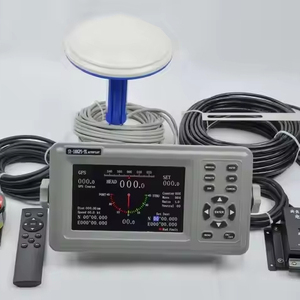
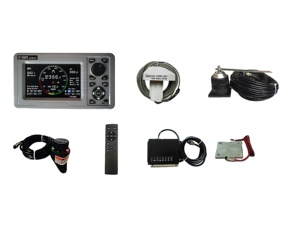
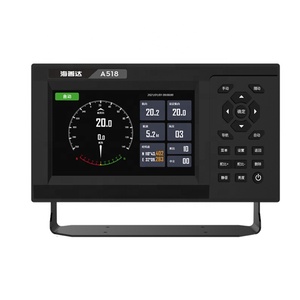
Port tugs operated under the Nigerian Ports Authority (NPA) service framework undergo continuous rapid maneuvering and reverse thrusting. The SY-188 and SY298D Autopilot & Steering Control Systems incorporate adaptive PID algorithms that calculate wave action and rudder response forces in real time.
This minimizes unnecessary rudder movement, reducing steering hydraulic pump wear by over 30% and conserving valuable marine gas oil (MGO).
Navigating shallow inland waterways from Warri up the River Niger demands rugged, simplified process control interfaces. Our 7-inch to 21.5-inch Android-powered Embedded PLC systems (RK3568/RK3562) feature high-brightness multi-touch displays readable under direct tropical sunlight.
Captains gain centralized visibility into engine RPM, cooling water temperatures, oil pressure safety interlocks, and tank level alarms on a single unified console.
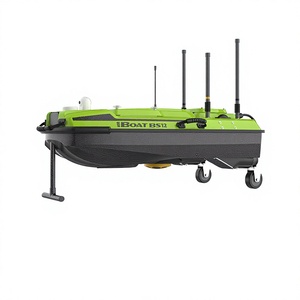
For coastal defense, illegal bunkering surveillance, and offshore bathymetric surveys, our Hi-Target Android-powered USV Intelligent Vessel Control Systems provide remote telemetry over RF and SATCOM channels.
Equipped with autonomous waypoint navigation, obstacle detection fallback, and high-frequency compass integration, these units deliver mission reliability across the Gulf of Guinea.
Procuring marine technology for Nigeria requires strict alignment with local content frameworks and regulatory mandates enforced by the Nigerian Maritime Administration and Safety Agency (NIMASA), the Nigerian Content Development and Monitoring Board (NCDMB), and international standard organizations.
Under the Coastal and Inland Shipping (Cabotage) Act, vessel operators must increase local crew employment and local maintenance capabilities. Our control systems feature modular plug-and-play architecture, allowing local marine engineers in Lagos and Port Harcourt to perform maintenance without specialized overseas technician intervention.
Forward-thinking fleet operators in Nigeria are replacing mechanical engine controls with digital telemetry consoles. Our systems support VSAT/4G cloud data streaming, enabling onshore technical superintendents to monitor real-time vessel health metrics from headquarters in Victoria Island or Port Harcourt.
Fuel efficiency is a critical driver due to bunker fuel cost variations in West Africa. By integrating our precise heading control magnetic/gyro compass sensors and automated throttle mapping, operators reduce total vessel fuel consumption by 5% to 8% during transit trips.
As a premier global manufacturer and direct supplier of CE-certified vessel automation systems serving the Nigerian market, we provide comprehensive OEM/ODM engineering capabilities backed by rigorous quality control.
Every control console, autopilot host, and PLC cabinet undergoes full-scale FAT prior to export dispatch. Our state-of-the-art testing facility simulates extreme ocean wave motion, power brownouts, ambient heat stress up to 60°C, and electrostatic discharge (ESD) to verify system resilience.
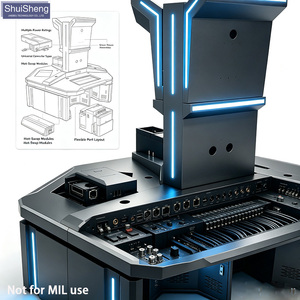
We partner with local Nigerian shipyards (such as Snake Island Integrated Free Zone and LADOL) to supply fully integrated, custom-branded wheelhouse consoles. From custom physical layout dimensions to specific language localized GUI software, our engineering team handles end-to-end design.
Technical guidance for vessel owners, fleet managers, and marine engineers procuring control systems for Nigerian deployments.
Our marine control hardware incorporates internal isolated DC-DC power converters (accepting wide-range 18V-36V DC inputs) combined with heavy-duty transient voltage suppression (TVS) diodes and noise filters. This ensures continuous operation even when switching heavy winches or main engine starters.
Yes. All units carry official European CE certification and select components hold CCS (China Classification Society) type approvals adhering to standard IMO/SOLAS conventions. Documentation packages are provided to facilitate smooth NIMASA and class inspection surveys (such as Bureau Veritas, DNV, or ABS).
We maintain an expedited direct air-freight channel for critical control modules, ensuring components reach Lagos (LOS) or Port Harcourt (PHC) international airports within 3 to 5 business days. Modular card-swap designs allow ship crew to replace failed components immediately.
Absolutely. We provide marine signal converter modules that transform traditional mechanical sensor outputs (analog 4-20mA, 0-10V, resistive sender inputs, magnetic pickups) into digital Modbus/CANbus telemetry compatible with our touch-screen IPC consoles.
Our SY-188 and SY298D systems utilize digital fluxgate sensor compasses combined with 6-axis MEMS inertial gyro sensors. The adaptive software automatically compensates for current drift and wave action, preventing rudder hunting and over-steering.
Yes. Every automation deployment is supported by our senior marine automation engineering desk via 24/7 direct video/telemetry support, detailed wiring schematics, pinout guides, and step-by-step diagnostic software tools.
Consult with our marine automation engineers to request technical specifications, custom console drawings, or factory-direct price quotations tailored for your Nigerian vessel operations.
Inquire Now