Explore our top-tier industrial electric motors and variable frequency drive matched systems designed for extreme durability, energy optimization, and precise speed regulation.
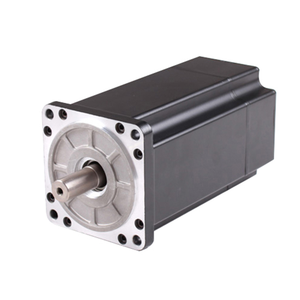
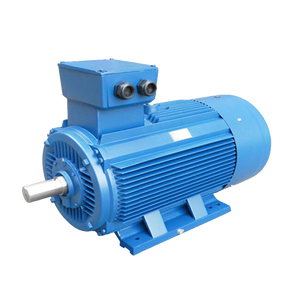
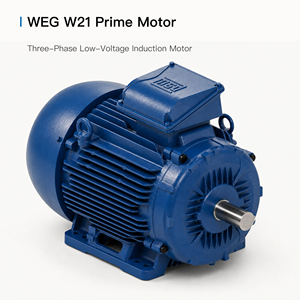
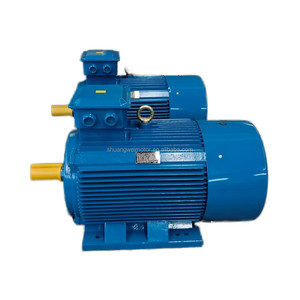
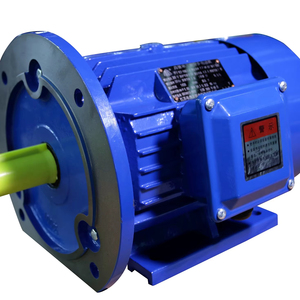
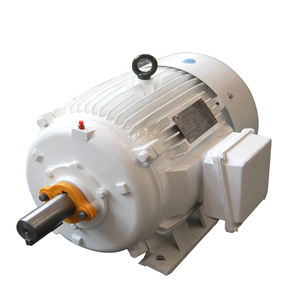
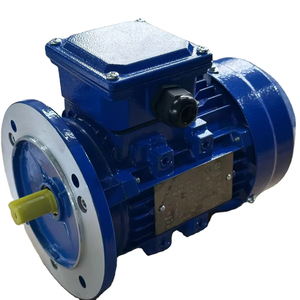
In modern industrial automation, electric motor control systems account for over 65% of global industrial electricity consumption. Low Voltage Variable Frequency Drives (LV VFDs)—operating predominantly in range matrices between 110V, 220V, 380V, 440V, and 690V AC—stand as the primary technological vector for achieving deep energy savings, dynamic speed adjustment, and mechanical shock mitigation. As leading global factories and specialized exporters, top-tier manufacturers design these AC inverters to dynamically transform fixed-frequency grid input into precise variable voltage and variable frequency outputs utilizing advanced Insulated Gate Bipolar Transistors (IGBTs).
The core topology of a modern Low Voltage Variable Frequency Drive comprises three primary stages: the uncontrolled or controlled Diode Rectifier Bridge, the DC Intermediate Bus Filter, and the Pulse Width Modulation (PWM) Inverter Stage. By leveraging high-speed vector control algorithms—such as Direct Torque Control (DTC) and Sensorless Vector Control (SVC)—LV VFDs enable continuous torque performance down to zero speed, optimal voltage-to-frequency (V/Hz) linearity, and instantaneous compensation for fluctuating mechanical loads. Procurement teams and systems integrators seeking high reliability must analyze factory-level engineering metrics, thermal management structures, and electrical compliance standardizations when selecting drive systems for heavy-duty industrial environments.
Engineering Gain Insight: Integrating high-frequency pulse-width modulation with optimized flux-vector algorithms reduces operational motor heat dissipation by up to 35% while suppressing line-side total harmonic distortion (THD), directly prolonging winding insulation life expectancy.
When selecting low voltage variable frequency drives from OEM manufacturing partners, engineering directors must delineate the operational requirements between Scalar (V/f) Control, Sensorless Vector Control (SVC), and Closed-Loop Vector Control (CLVC):
Ideal for centrifugal pumps, HVAC fans, and multi-motor applications where load dynamics are predictable and continuous high starting torque is non-critical.
Utilizes real-time mathematical motor models to estimate speed and rotor position, delivering up to 150% rated torque at 0.5 Hz without physical encoder feedback.
Integrates physical encoder feedback for ultra-precise speed accuracy (<0.02%), zero-speed full torque holding, and precise positioning in heavy cranes, winches, and robotics.
To assist industrial buyers, systems integrators, and OEM procurement managers in selecting the ideal drive topology, the technical matrix below presents standard operating parameters across major low voltage industrial drive tiers exported globally:
| Drive Class Tiers | Voltage & Power Range | Control Topology | Overload Capacity | Primary Industrial Applications |
|---|---|---|---|---|
| Micro Low Voltage Drives | 1-Phase 220V / 3-Phase 380V (0.4kW - 5.5kW) |
V/f, Basic SVC | 150% for 60s, 180% for 3s | Conveyors, Packaging Machines, Small Blowers, Food Processing |
| General Heavy-Duty Drives | 3-Phase 380V - 480V (7.5kW - 355kW) |
SVC, Advanced Vector | 150% for 60s, 200% for 2s | Extruders, Crushers, Mixers, Industrial Pumps, CNC Spindles |
| High-Power Industrial Inverters | 3-Phase 380V - 690V (110kW - 1200kW) |
DTC, CLVC, Active Front End | 160% for 60s, 200% Instantaneous | Marine Propulsion, Mining Hoists, Heavy Ball Mills, Compressors |
| Ultra-Low Harmonic Drives | 3-Phase 400V - 690V (15kW - 800kW) |
AFE Dual Inverter Bridge | 150% for 60s | Offshore Oil & Gas, Critical Hospitals, Cleanroom HVAC Facilities |
As globally exported drive technologies evolve under stringent international eco-design directives (such as EU Stage 2 Efficiency Rules and IEC 61800-9-2), manufacturing facilities are advancing beyond simple frequency regulation toward intelligent, interconnected power management hubs. Understanding these global procurement trends enables enterprise buyers to make future-proof capital investments.
The industry transition from traditional Silicon-based IGBT switches to Silicon Carbide (SiC) and Gallium Nitride (GaN) field-effect transistors represents a monumental performance jump. Next-generation low voltage variable frequency drive factories are embedding SiC modules to achieve switching frequencies upwards of 20 kHz to 50 kHz without thermal derating. This dramatically decreases the physical footprint of output chokes, reduces heat generation by over 40%, and eliminates audible motor noise completely.
Modern industrial procurement prioritizes drives equipped with embedded microcontrollers capable of real-time edge processing. Rather than serving purely as electrical speed control units, modern VFDs measure micro-variations in motor winding current, vibration signals, phase unbalance, and thermal resistance. By executing machine learning models directly on the drive's control board, the VFD predicts bearing wear, mechanical unbalance, and pump cavitation weeks before structural failure occurs, transmitting actionable telemetry via Modbus TCP, Profinet, or Ethernet/IP.
With global industrial energy costs volatile and decarbonization mandates intensifying, global exporters are experiencing surging demand for Active Front End (AFE) low voltage drives. Unlike traditional 6-pulse diode rectifiers that dump braking energy into massive resistor banks as wasted heat, AFE inverters utilize an active IGBT rectifier bridge to feed clean electrical energy back into the facility’s AC power grid. Furthermore, AFE drives suppress total harmonic current distortion ($THDi$) to under 3-5%, comfortably exceeding strict IEEE 519 and IEC 61000-3-12 harmonic standards without auxiliary passive filters.
Electric motors and variable frequency drives can no longer be evaluated in isolation. Global standards now mandate Power Drive Systems (PDS) efficiency ratings (IES0 to IES2). As global industrial factories phase out legacy IE1 and IE2 induction motors, Low Voltage VFD manufacturers are tuning control software to seamlessly operate Permanent Magnet Synchronous Motors (PMSM), Synchronous Reluctance Motors (SynRM), and Brushless DC Motors (BLDC). This drive-motor pairing achieves peak torque-to-ampere ratios, unlocking unmatchable system efficiency across fluctuating speed profiles.
When selecting a primary export partner for low voltage variable frequency drives and industrial electric motors, technical reliability, custom engineering capabilities, and supply chain resiliency form the cornerstone of enterprise success. Backed by over 50 years of combined application experience and world-class testing facilities, our manufacturing infrastructure delivers unparalleled value to international buyers.
Decades of field experience in marine, mining, oil & gas, and heavy manufacturing enable precise drive adaptation for grueling operating environments.
Massive inventory of standard frame motors, VFD units, spare IGBT modules, and control cards ensures immediate dispatch for critical emergency repair (MRO).
Every exported drive undergoes 100% full-load thermal endurance run-in, dynamic load testing, high-voltage insulation tests, and EMC compliance screening.
We recognize that standard off-the-shelf drive enclosures do not fit every OEM machinery design. Our engineering team specializes in custom software firmware (specialized lift macros, winding machine tension control, solar pump MPPT tracking), customized IP54/IP66 stainless-steel cabinet assemblies, conformal coated circuit boards for corrosive atmospheres (Class 3C3/3S3), and localized multi-lingual human-machine interface (HMI) displays.
Below are authoritative responses to the most critical technical and purchasing inquiries handled by our engineering team:
Optimize your manufacturing efficiency, lower operational energy overhead, and secure guaranteed global delivery timelines with our custom drive engineering and motor solutions.
