Explore our heavy-duty motor series optimized for continuous operational availability, severe duty environments, and high-torque machinery.
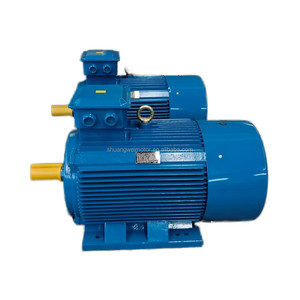
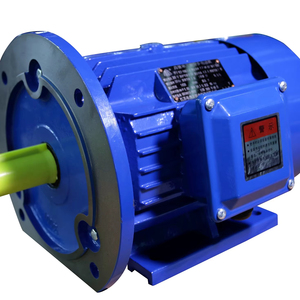
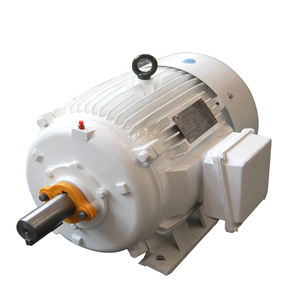
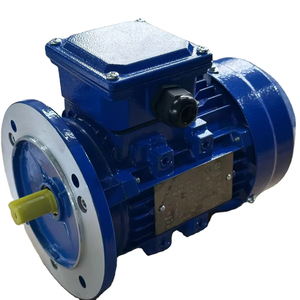
Unrivaled supply chain resilience, application expertise, and certified compliance across marine and heavy industrial ecosystems.
In modern process industries, heavy manufacturing, offshore engineering, and maritime operations, electric motors are not merely commodities—they are the foundational heartbeat of continuous operational capability. As a global manufacturer and trusted supplier operating under decades of specialized power transmission experience, we deliver tailored electromechanical solutions engineered specifically for extreme operating conditions.
Over 50 years of hands-on experience designing motors to withstand high ambient temperatures, aggressive chemical atmospheres, heavy mechanical shock loads, and high-vibration marine environments.
With an active inventory exceeding 70,000 electric motors across global hub locations, we ensure immediate availability for standard IE2, IE3, IE4, and brake motor variants, reducing lead times to zero.
From custom shaft extensions, special flange dimensions, SPM vibration monitoring sensors, and PTC thermistors to specialized IP66 sealing and marine classification approvals (DNV, ABS, LR, BV).
The industrial motor ecosystem is undergoing a dramatic shift driven by decarbonization mandates, electrical grid efficiency regulations (such as EU Commission Regulation 2019/1781), and the integration of smart predictive maintenance architecture. Understanding these technology vectors is crucial for engineers and procurement directors selecting long-term assets.
Induction motors have traditionally relied on standard squirrel-cage rotor designs. However, achieving IE4 (Super-Premium) and IE5 (Ultra-Premium) efficiency levels requires engineering breakthroughs in electromagnetic design:
| Efficiency Class | Typical Efficiency (11kW, 4-Pole) | Energy Loss Reduction vs IE2 | Primary Industrial Use Case |
|---|---|---|---|
| IE2 High Efficiency | 89.8% | Baseline | Legacy installations, non-continuous duty cycles |
| IE3 Premium Efficiency | 91.4% | ~15% Loss Reduction | Global standard for continuous pumps, fans, compressors |
| IE4 Super Premium | 93.3% | ~33% Loss Reduction | Heavy industrial process plants, high-duty mining & steel mills |
| IE5 Ultra Premium | 94.8%+ | ~50% Loss Reduction | Greenfield smart factories, VFD-driven critical motion platforms |
While pairing electric motors with VFDs significantly cuts energy consumption in centrifugal applications, it introduces high-frequency common-mode voltage spikes. Left unmanaged, capacitive discharge currents flow through the motor bearings, causing electrical discharge machining (EDM), microscopic pitting, micro-welding fluting, and premature bearing destruction.
Modern heavy-duty motors incorporate targeted protective countermeasures:
Strategic sourcing of heavy-duty industrial electric motors has transitioned from evaluating purchase price (CapEx) to total life-cycle cost analysis (TCO). Procurement managers operating across chemical processing, wastewater, mining, and shipbuilding sectors must adapt to four macro-trends shaping supplier selection:
Over a 15-year operational lifespan, electrical energy accounts for 90% to 95% of a heavy-duty motor's total cost, while initial purchase price accounts for under 5%. Procuring IE4 or IE5 machinery delivers immediate ROI via reduced kilowatt-hour power draw.
Global OEMs prefer standardized supplier networks capable of providing multi-norm compliance (IEC, NEMA, CSA, CCC, Marine Class DNV/ABS) under a single point of contact to simplify logistics and warranty claims.
Procurement contracts increasingly require motors pre-configured with mounting pads for wireless tri-axial vibration, surface temperature, and acoustic emission sensors for cloud-based health monitoring.
Duty cycles define the mechanical load profile over time according to IEC 60034-1. Standard continuous duty (S1) allows the motor to reach thermal equilibrium. Intermittent duty cycles (S2-S9), such as heavy crane lifting or frequent starting/braking, produce intense thermal spikes. Sizing for S2-S9 requires custom thermal evaluation, derating, or forced-ventilation cooling fans (IC416) to prevent insulation degradation.
Ex d (Flameproof) enclosures are built to contain an internal explosion without allowing flames to escape into surrounding hazardous atmospheres (ATEX Zone 1/21). Ex e (Increased Safety) prevents internal arcs, sparks, or excessive temperatures through enhanced mechanical/electrical safety margins. Ex d is specified for extreme volatile environments like refineries, whereas Ex e offers lightweight efficiency in lower-risk zones.
IP55 protects against harmful dust accumulation and low-pressure water jets from any direction—ideal for indoor plant environments. IP66 features complete dust ingress protection and resistance to heavy seas or high-pressure water washdowns, making it essential for deck-mounted marine winches, outdoor mining conveyors, and food-processing washdown zones.
Class F insulation is rated for a maximum operating temperature of 155°C, while Class H is rated for 180°C. Designing a motor with Class H insulation materials but operating it at Class F temperature limits creates a 25°C thermal safety margin. As a rule of thumb in electrical engineering, operating a motor 10°C below its maximum thermal threshold effectively doubles the insulation system's operational life.
Every custom motor undergoes routine testing including winding resistance, insulation resistance (megger test), no-load current/power balance, and high-potential dielectric breakdown tests. Marine orders include type approvals and individual witness testing certification from major classification societies including DNV, ABS, Lloyd’s Register (LR), Bureau Veritas (BV), and RINA.
Cast iron (such as EN-GJL-200 grade) possesses superior mechanical damping properties compared to aluminum housings. High mass density absorbs structural vibrations induced by pump impellers or fan unbalance, maintaining low overall vibration velocity levels (compliant with ISO 10816 Grade A) and preserving bearing life.
