Industrial-grade marine touch panels, CCS-certified autopilot hosts, USV telemetry controllers, and safety PLC platforms built for rugged ocean environments.
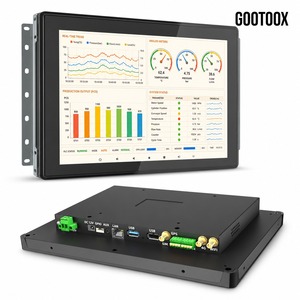
Industrial RK3562 / RK3568 SoC powered human-machine interface designed for integrated vessel monitoring, main engine monitoring, and process navigation automation.
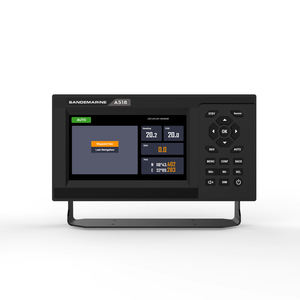
Commercial-grade electro-hydraulic steering interface with adaptive rudder control algorithms for ocean-going vessels, tugs, and workboats.
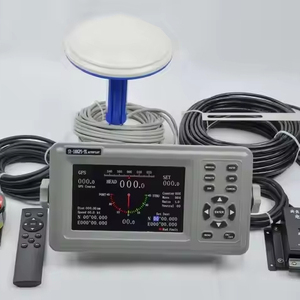
China Classification Society (CCS) certified navigation controller with fluxgate and gyrocompass sensor telemetry for marine vessels and harbor craft.
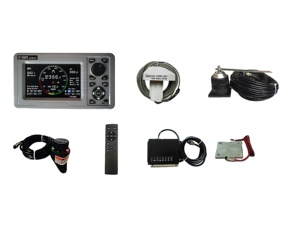
High-precision heading reference sensor combined with solid-state rate gyro technology designed for fast motor yachts and commercial fishing vessels.
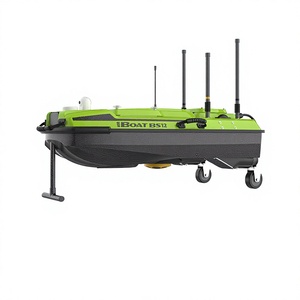
Autonomous surface vehicle guidance processor with waypoint navigation, multi-beam sonar integration, and remote 4G/5G radio telemetry links.
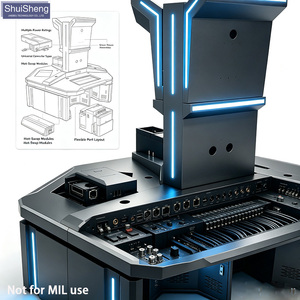
Tailor-made engine control room (ECR) main consoles and bridge navigation desks built to shipyard specifications with full OEM/ODM integration flexibility.
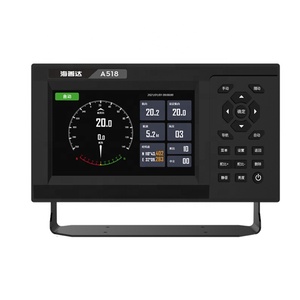
Next-generation sailing autopilot unit offering dynamic drift compensation, weather adaptive steering, and fuel-saving optimal course algorithms.
Fault-tolerant programmable logic safety controller for real-time monitoring of shipboard alarm points, bilge level safety, and fire suppression systems.
Navigating the complex landscape of ship automation engineering requires deep application domain expertise, full lifecycle support, and uncompromising quality assurance.
With over 50 years of combined engineering background via the Hoyer VMS technical alliance model, Chinese manufacturing ecosystems have evolved from basic electrical panel assemblers to premier tier-1 innovators in vessel automation control systems (VACS).
Every controller, HMI unit, and safety PLC is designed to withstand extreme marine environments—enduring thermal shock (-25°C to +70°C), constant hull vibration, and salt-mist corrosion.
Managing multiple sub-vendors for propulsion motors, steering pumps, alarm monitoring systems (AMS), and main engine controllers introduces severe interface risks during shipyard commissioning.
Leading Chinese exporters offer turnkey integrated bridge systems (IBS) and integrated automation systems (IAS), acting as a unified point of contact for software, hardware, classification approval, and lifecycle servicing.
Modern commercial fleet operations cannot afford unexpected vessel downtime. Top China vessel automation exporters maintain aggressive inventory policies—storing over 70,000 active components, sensor modules, and replacement controller boards globally.
Combined with 24/7/365 emergency dispatch teams, replacement PLC units can reach major commercial ports across Asia, Europe, and the Americas within 24 to 48 hours.
An in-depth analysis of architectural shifts, cyber-resilience directives, and intelligent telemetry transforming shipboard process control systems.
Historically, marine Operational Technology (OT)—such as main engine governors, steering gear actuators, and ballast water controllers—operated in physical isolation. Today, the demand for fleet-wide operational efficiency requires seamless cloud connectivity.
Modern vessel automation factories in China are embedding advanced zero-trust cyber-resilience frameworks natively into their hardware. In compliance with IACS Unified Requirements E26 and E27, next-generation PLCs feature secure boot routines, hardware-level encryption keys (TPM 2.0 modules), and encrypted fieldbus communications to safeguard against cyber threats.
| Parameter | Legacy Vessel Systems | Next-Gen China Systems |
|---|---|---|
| Security Standard | Unencrypted Serial / Modbus | IACS E26 / E27 & IEC 62443 |
| Bus Redundancy | Single Channel RS485 | Dual Redundant Ring Ethernet / CAN |
| Diagnostics | Local LED Status | Edge-AI Predictive Health Monitoring |
| MTBF Rating | ~35,000 Hours | >100,000 Hours (Industrial Grade) |
Autonomous Surface Vessel (USV) Swarm Telemetry
The rapid commercialization of hydrographic survey USVs, autonomous harbor tugs, and remote-controlled offshore supply vessels (OSVs) has driven massive innovation in Android and Linux-embedded marine controllers. China factories are pioneering ultra-low latency direct-drive actuators combined with multi-constellation GNSS (Beidou-3, GPS, GLONASS) fusion sensors.
As the International Maritime Organization (IMO) enforces strict Carbon Intensity Indicator (CII) and Energy Efficiency Existing Ship Index (EEXI) regulations, vessel propulsion systems are transitioning to LNG dual-fuel, methanol, and lithium-ion battery hybrid configurations.
Automation systems must evolve beyond basic engine monitoring. Modern China vessel control systems now integrate sophisticated Energy Management Systems (EMS) that dynamically shift loads between main shaft generators, auxiliary diesel generator sets, and battery banks—reducing vessel fuel consumption by up to 18% during dynamic positioning (DP) maneuvers.
How global procurement directors are re-engineering supply chain strategies to optimize Total Cost of Ownership (TCO) and ensure long-term class compliance.
Procurement teams are shifting away from proprietary, closed-architecture control systems that lock shipowners into expensive single-source replacement parts.
The emerging trend prioritizes modular COMe (Computer-on-Module Express) micro-architectures running standard IEC 61131-3 programming languages. This allows shipowners to source plug-and-compatible replacement modules from qualified China exporters without re-writing core vessel control software.
To eliminate costly delay penalties during shipyard sea trials, shipowners now demand Hardware-in-the-Loop (HIL) simulation testing from control system manufacturers prior to physical delivery.
Leading China automation factories build digital twin models of the vessel’s hydrodynamic hull, thrusters, and power grid—simulating failure modes, blackout recovery, and severe sea states in a virtual environment before shipping control consoles to the shipyard.
Procurement specifications increasingly mandate multi-class type approval certificates as a baseline requirement. Export-oriented Chinese factories maintain active certification lines with major IACS members.
By procuring control systems pre-certified by CCS, DNV, ABS, Lloyd’s Register (LR), and Bureau Veritas (BV), shipbuilders avoid delays during vessel surveys and classification sign-offs.
| Evaluation Dimension | Legacy European OEM Approach | Strategic China Exporter Model | Procurement Impact |
|---|---|---|---|
| Initial Hardware Cost | High Premium (Brand Markup) | Competitive Factory-Direct Pricing | 30% - 45% Reduction in CAPEX |
| Customization Flexibility | Rigid Standard Options | Full OEM/ODM Tailored Engineering | Perfect Fit for Unique Hull Designs |
| Spare Parts Delivery | 8 - 16 Weeks Lead Time | Global Forward Hubs (24-48 Hours) | Drastically Reduced OPEX & Downtime |
| System Architecture | Proprietary Closed System | Open Protocol (Modbus/CAN/NMEA) | Simplified Future Retrofits |
Expert insights covering technical integration, classification compliance, signal isolation, and international warranty terms.
Leading Chinese vessel automation factories provide type approval certificates from major International Association of Classification Societies (IACS) members. The baseline standard includes China Classification Society (CCS) certification, with options for DNV, ABS, Lloyd’s Register (LR), Bureau Veritas (BV), and RINA based on project requirements. Products undergo rigorous environmental, EMC (Electromagnetic Compatibility), flame retardancy, and vibration testing prior to approval.
Shipboard electrical grids experience heavy inductive switching noise, frequency spikes from variable speed motor drives, and radio-frequency interference. Industrial marine controllers utilize multi-stage galvanic signal isolation (typically 2.5kV to 4kV rating) across all digital and analog IO channels, differential RS422/RS485 transceivers, shielded twisted-pair fieldbus wiring, and heavy aluminum alloy chassis acting as Faraday shields to ensure zero signal loss.
Yes. Chinese autopilot systems (such as the Yida SY-188 and SY298D series) are built on flexible, open NMEA communication protocols. They natively support NMEA 0183 and NMEA 2000 sentence inputs for HDT, HDG, and THS data formats. They seamlessly interface with traditional mechanical, hydraulic, or electro-hydraulic steering solenoid drivers, as well as modern digital gyrocompasses, fluxgate sensors, and GPS compass platforms.
Standard off-the-shelf control displays and standalone autopilot controllers are typically dispatched from factory inventory within 3 to 7 business days. For customized marine automation consoles (Engine Control Room main desks or Integrated Bridge Consoles), engineering design and CAD approval take 1 to 2 weeks, while structural fabrication, wiring, HIL testing, and class inspector sign-off take approximately 4 to 6 weeks.
Exporting manufacturers maintain a dual-layer support mechanism: 24/7 remote diagnostic support via encrypted satellite telemetry units, combined with a global network of field service engineers located near key maritime hubs (Shanghai, Singapore, Rotterdam, Dubai, Houston). Standard warranties cover 12 to 24 months, with optional extended global replacement warranties supported by overseas forward-warehousing hubs.
Every system shipment includes complete engineering documentation packages: Class-approved schematic wiring diagrams (AutoCAD / EPLAN), I/O assignment lists, system loop diagrams, operation and maintenance manuals, and factory acceptance test (FAT) reports. Diagnostic software suits are pre-loaded on HMI units, providing clear fault-tree visualizations and event logging for shipboard crew troubleshooting.
Consult with our senior marine automation application engineers today. Receive tailor-made OEM/ODM technical proposals, class compliance documentation, and factory-direct pricing within 24 hours.
