Verified low voltage AC & DC electric motors engineered for industrial pumps, fans, compressors, robotics, and marine machinery.
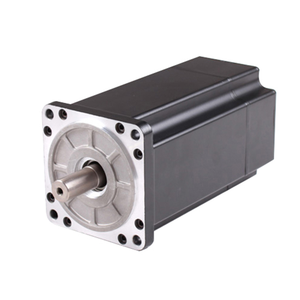
Precision 1kW–3kW BLDC servo-grade motor optimized for automated robotics, AGVs, and high-dynamic motion control systems requiring stable 310V/48V bus inputs.
Get Catalog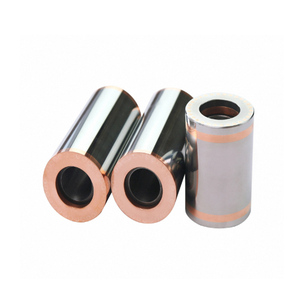
Premium Korean-engineered brushless induction motor elements. Exceptional efficiency and ultra-low noise design tailored for precision manufacturing lines.
Get Catalog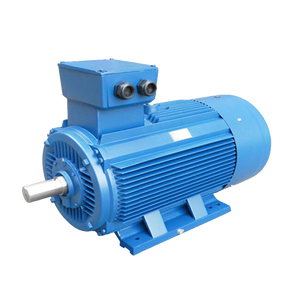
Heavy-duty cast iron frame built for continuous S1 operation. Superior thermal dissipation for municipal water pumps, mining blowers, and large industrial fans.
Get Catalog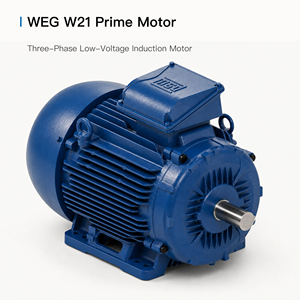
World-class energy-saving low voltage motor designed for extreme operating conditions across marine, oil & gas, process industries, and HVAC systems.
Get Catalog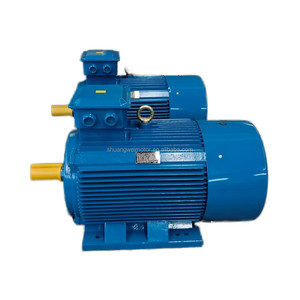
100% electrolytic copper winding, dual pole (1450/2800 RPM), Class H insulation with Class B temperature rise. Built for harsh processing facilities.
Get Catalog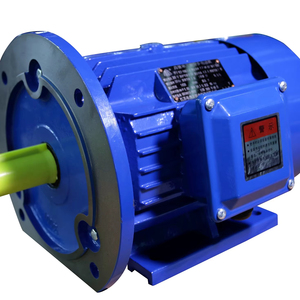
Factory-direct IEC standard 3-phase asynchronous motor featuring standardized mounting dimensions, low vibration levels, and optimized power factor.
Get Catalog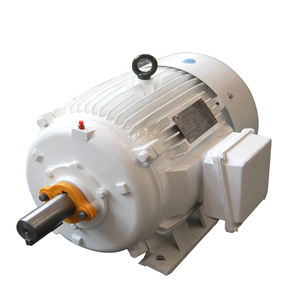
Fully compliant with IEEE 841 and NEMA MG-1 standards. Heavy-duty cast iron construction designed for North American industrial infrastructure.
Get Catalog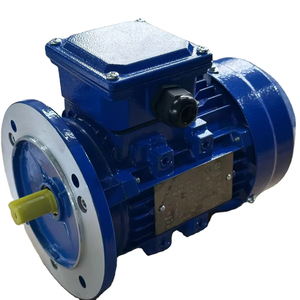
Versatile foot/flange mounted AC motor engineered for OEM equipment, hydraulic power packs, and continuous automated assembly lines.
Get CatalogDecades of operational excellence in low voltage motor manufacturing, customization, and global distribution.
Over half a century of practical application experience allows us to customize mechanical shafts, special flanges, custom voltages, and surface coatings for aggressive offshore or mining environments.
With over 70,000 standardized electric motors maintained across key logistics hubs in Europe and Asia, we eliminate supply chain bottlenecks and minimize operational downtime for original equipment manufacturers (OEMs).
From engineering specification, factory acceptance testing (FAT), and international marine classification approvals (DNV, ABS, BV, Lloyd’s) to post-commissioning maintenance and retrofits.
The global industrial low voltage (LV) electric motor landscape is experiencing a paradigm shift driven by stringent decarbonization mandates, rising energy tariffs, and digital automation requirements. Low voltage electric motors—typically defined as AC induction or DC motors operating below 1,000V—consume over 70% of total electrical energy utilized within industrial manufacturing facilities globally. Consequently, procurement strategies have evolved from evaluating upfront capital expenditures (CAPEX) to calculating Total Cost of Ownership (TCO), where operational energy expenses account for upwards of 95% of a motor's lifetime financial footprint.
Modern procurement directors must navigate a complex regulatory ecosystem dominated by global efficiency standards. IEC 60034-30-1 defines energy efficiency classes from IE1 (Standard Efficiency) up to IE5 (Ultra-Premium Efficiency). Regional regulations, such as the European Union’s EcoDesign Directive (EU) 2019/1781 and North America's NEMA MG-1 Part 31, have effectively banned the sale of lower-efficiency motors for continuous duty applications, making IE3 mandatory for medium-range motors and accelerating transitions toward IE4 and IE5 technologies.
TCO Formula: $TCO = CAPEX + Operating Energy Cost (OPEX) + Maintenance Cost + Downtime Risk Losses$
An IE4 Super Premium motor operating continuously for 8,000 hours per year typically amortizes its initial procurement price difference within 6 to 14 months purely through electricity savings compared to standard IE2/IE3 units.
To achieve IE4 and emerging IE5 efficiency standards without excessively enlarging physical frame sizes, leading suppliers have revolutionized rotor and stator design. Key technical innovations include:
The table below provides a detailed evaluation of top low voltage electric motor exporters and suppliers based on efficiency compliance, customization agility, global service coverage, and manufacturing capabilities.
| Supplier / Exporter Segment | Efficiency Standards Supported | Key Target Applications | Customization Capability | Global Warehousing & Lead Time |
|---|---|---|---|---|
| Hoyer VMS Group | IE2, IE3, IE4, IE5, NEMA Premium | Marine, Offshore, Industrial Pumps, Fans, Compressors | Extensive (Custom Shafts, Special Coatings, Marine FAT) | 70,000+ Units Stocked; 24-48 Hr Fast Delivery |
| WEG Electric | IE1 through IE5, NEMA Premium | Heavy Mining, Processing, Municipal Utilities | High (Standardized Industrial Platform Modifications) | Global Logistic Centers; Standard Lead Times |
| ABB Motors & Generators | IE3, IE4, IE5 SynRM | Automated Manufacturing, Chemical, Oil & Gas | High (Premium Modular Configurations) | Global Hubs; Strategic OEM Supply Chains |
| Siemens Process Drives | IE3, IE4, NEMA Premium | Motion Control, Robotics, Heavy Machinery | High (Integrated Inverter & Motor Packages) | Global Distribution Network |
| Specialized Chinese Exporters (YE3/YE4) | IE2, IE3, IE4 | General Machinery, OEM Equipment, Water Treatment | Moderate to High (Cost-Effective Volume OEM) | Factory Direct Export; Containerized Shipping |
As industrial automation expands, procurement teams must align their vendor selection with three overarching technological trends:
A. Condition Monitoring & Smart Motor Sensors: Modern low voltage motors are rapidly transforming into edge-connected smart sensors. Integration of low-cost tri-axial vibration, temperature, and acoustic sensors directly onto NDE (Non-Drive End) bearing housings enables predictive maintenance platforms. Procurement specifications now increasingly require pre-drilled sensor mounting pads or integrated IoT modules to avoid unplanned catastrophic outages.
B. Inverter-Duty Standardization: With variable frequency drives becoming the standard for speed control, standard mains-fed motors are frequently failing due to partial discharge (corona effect) within stator windings. Procurement guidelines demand winding insulation systems engineered to comply with IEC 60034-18-41 (Type A insulation) to guarantee long lifespan under high $dV/dt$ voltage transients.
C. Resilient Supply Chains & Regional Buffer Stock: Geopolitical risks and global shipping disruptions have demonstrated the vulnerability of just-in-time (JIT) manufacturing. Tier-1 buyers are prioritizing motor suppliers that maintain local buffer inventory, certified testing labs, and multi-hub export capabilities to guarantee zero operational interruption.
Critical engineering and procurement considerations for low voltage electric motor sourcing.
Low Voltage electric motors operate at rated voltages up to 1,000V AC (typically 220V, 380V, 400V, 460V, 660V, or 690V at 50Hz/60Hz) or up to 1,500V DC. Medium Voltage (MV) motors operate above 1,000V up to 13.8kV. LV motors represent the vast majority of industrial pump, fan, conveyor, and compressor drives globally.
Each upgrade in IE class (e.g., from IE3 to IE4) reduces internal energy losses by approximately 15% to 20%. Because an electric motor operating continuously will consume its initial purchase price in electrical energy within a few months, upgrading to IE4 or IE5 delivers a substantial Return on Investment (ROI) over a typical 10 to 15-year motor operational lifespan.
Cast iron housings offer maximum mechanical rigidity, superior vibration damping, and outstanding corrosion resistance, making them ideal for heavy industrial, mining, and marine applications. Aluminum housings provide lightweight construction and excellent thermal conductivity, making them preferred for fan drives, light industrial OEM machinery, and weight-sensitive installations.
Variable Frequency Drives (VFDs) adjust motor speed to process demand, unlocking up to 50% energy savings in centrifugal pump and fan applications. However, VFDs subject motor windings to high voltage harmonics and voltage spikes ($dV/dt$). Inverter-duty motors feature reinforced phase insulation, insulated bearings to prevent shaft currents, and VPI treatment to ensure long-term durability.
Low voltage marine electric motors operating on commercial ships or offshore platforms require type approval certificates from major classification societies, including DNV, ABS (American Bureau of Shipping), Bureau Veritas (BV), Lloyd’s Register (LR), and CCS. These certificates verify compliance with stringent ambient temperature limits, tilt angles, vibration resilience, and IP55/IP56 ingress protection.
Connect directly with our senior technical engineering team to obtain comprehensive engineering documentation, CAD drawings, marine certificates, and instant export quotes.
Get Catalog