Engineered for extreme duty cycles, high radial/axial loads, and continuous operation in demanding marine and industrial environments. Fully certified to ISO, IEC, NEMA, and IE3/IE4/IE5 energy efficiency standards.
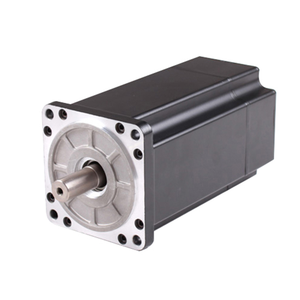
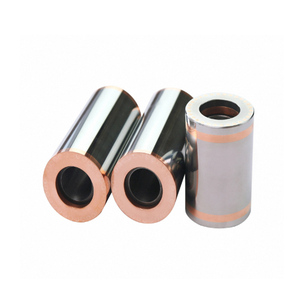
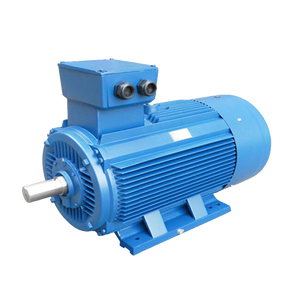
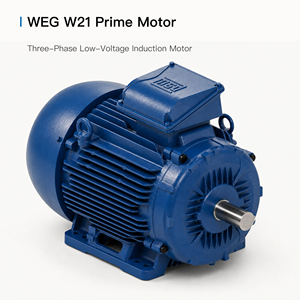
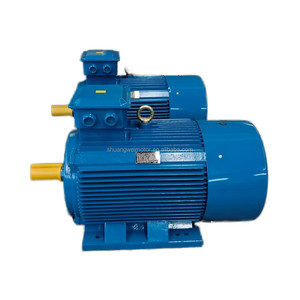
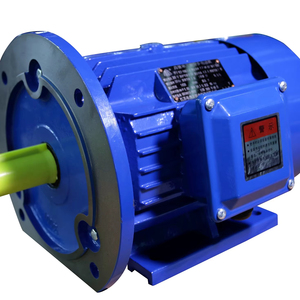
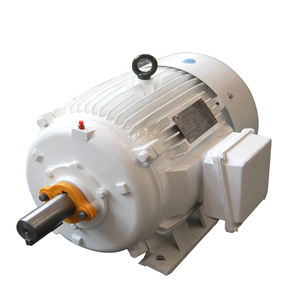
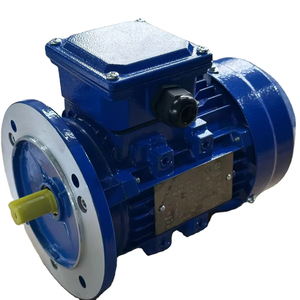
Integrating high-grade electric motors with precision bearings requires more than standard catalog distribution. It demands total lifecycle accountability, custom engineering, and agile forward logistics.
Over 50 years of specialized application engineering. We calculate dynamic radial and axial thrust loads to select exact bearing clearances (C2 to C4) and high-temperature synthetic lubricants tailored to your thermal operating profile.
Buffer inventory risks with our massive multi-hub warehouse deployment across Europe and Asia. We maintain vast stock holding of standard, marine, explosion-proof, and medium-voltage electric motors ready for immediate dispatches.
As part of the Hoyer VMS Group ecosystem, we provide end-to-end coverage: from initial CAD specification and customized shaft/bearing modifications to on-site laser alignment, vibration diagnostics, and 24/7 overhaul service.
Variable Frequency Drives create high-frequency shaft currents causing electrical discharge machining (EDM) fluting. We supply custom ceramic hybrid and insulated bearing configurations that eliminate micro-arcing and bearing failure.
Streamline your procurement. Replace dozens of disparate component vendors with a single accountable partner handling mechanical electric drive systems, bearing assemblies, thermal sensors, and global compliance documentation.
Every motor assembly undergoes rigorous testing: dynamic balancing (ISO 21940), noise spectrum analysis, high-potential stator insulation checks, and full load temperature rise validation prior to global export packaging.
Bearings represent the primary mechanical interface in rotating machinery. Over 51% of electric motor operational failures originate directly from bearing distress, lubrication breakdown, or shaft current erosion. Sourcing optimal bearing-motor assemblies requires analyzing basic rating life, dynamic load capacities, and thermal dissipation metrics.
Selecting industrial motor bearings starts with evaluating basic rating life ($L_{10h}$) under actual field conditions. Standard ISO 281 equations define $L_{10h}$ as the operational hours that 90% of a sufficiently large group of identical bearings will achieve before initial flaking occurs.
For electric motors driving belt pulleys, heavy impellers, or multi-stage pumps, radial load ($F_r$) and axial load ($F_a$) must be transformed into an equivalent dynamic bearing load ($P$):
ISO 281 Life Equation: $L_{10h} = \frac{10^6}{60 \cdot n} \cdot \left( \frac{C}{P} \right)^p$
Where: C = Basic Dynamic Load Rating (kN); P = Equivalent Dynamic Bearing Load (kN); n = Rotational Speed (RPM); p = Exponent (3.0 for deep groove ball bearings, 10/3 for cylindrical roller bearings).
When specifying motors for heavy industrial duty (such as our 800kW Y3 Series), cylindrical roller bearings (e.g., NU330 series) are installed at the drive end (DE) to handle heavy radial belt tension, while deep groove ball bearings (6330 series) lock the non-drive end (NDE) axially.
Modern industrial automation relies heavily on Variable Frequency Drives (VFDs) utilizing high-speed IGBT switching. However, pulse-width modulation (PWM) introduces high-frequency common-mode voltage ($V_{com}$) across the motor windings. This voltage capacitively couples onto the rotor shaft, creating shaft voltage build-up.
When shaft voltage exceeds the dielectric breakdown strength of the thin bearing grease film (typically 10 to 30 Volts peak), micro-sparks discharge through the bearing rolling elements. This phenomenon, known as Electrical Discharge Machining (EDM), causes severe micro-pitting, grease carbonization, and eventual rotational "fluting" ridges across the raceway.
| Protection Strategy | Mechanism | Ideal Power Rating | Bearing System Cost Impact |
|---|---|---|---|
| Insulated Coated Bearings | Al2O3 plasma ceramic coating on outer ring (>3 kV insulation resistance) | Frame Size 280 to 450 (110kW – 800kW) | Moderate (+20% to +35%) |
| Hybrid Ceramic Bearings | Silicon Nitride (Si3N4) ceramic balls; non-conductive, low density | High-speed BLDC, NEMA 42, up to 110kW | High (+50% to +90%) |
| Shaft Grounding Rings (SGR) | Micro-fiber conductive bristles channels current harmlessly to motor frame | Low-voltage AC motors (< 90kW) on VFDs | Economical (+5% to +12%) |
| Insulated NDE End-Shield | Polymer insulating sleeve integrated directly into motor cast iron shield | Large marine & medium voltage motors | Integrated OEM Engineering |
Bearing longevity depends directly on maintaining an elastohydrodynamic (EHD) oil film thickness between rolling elements and raceways. Operating temperatures above 90°C drastically reduce base oil viscosity, accelerating metallic contact and surface fatigue.
For IE4 and IE5 super premium efficiency motors, suppliers must select greases with high Viscosity Index (VI) synthetic ester or PAO (polyalphaolefin) base oils compounded with Polyurea or Lithium-Complex thickeners. Regreasing intervals ($t_q$) must follow precise empirical metrics:
Log(t_q) = 14.83 - (0.005 * n) - (1.57 * 10^-5 * n * d)
Where $d$ is bore diameter (mm) and $n$ is speed (RPM). High ambient temperature operating environments (e.g., steel rolling mills or marine engine rooms) require reducing re-lubrication cycles by 50% for every 15°C rise above 70°C.
Procurement teams and industrial OEMs must adapt to evolving energy regulations, IoT smart diagnostic integration, and green supply chain standards over the next decade.
Future motor bearing procurement is shifting from reactive maintenance to wireless IoT condition monitoring. Modern motor end-shields now feature integrated tri-axial vibration sensors and surface temperature transmitters. Real-time fast Fourier transform (FFT) vibration analysis identifies early bearing inner/outer race defect frequencies (BPFI/BPFO) months before catastrophic failure.
Global regulatory frameworks (such as EU Ecodesign 2019/1781 and US DOE standards) mandate higher system efficiency. Because bearing friction accounts for up to 15% of total mechanical motor losses in smaller frames, low-friction seal designs, optimized cage geometries (e.g., PEEK cages), and synthetic low-drag greases are becoming mandatory specs for global suppliers.
Counterfeit bearings cost the industrial manufacturing sector billions annually in unplanned downtime. Leading exporters now implement blockchain-backed digital product passports (DPP) and laser-etched QR codes on bearing rings. Procurement strategies are diversifying toward verified stocking partners capable of guaranteeing origin compliance, ISO certification, and rapid regional dispatch.
Comparing tier-1 manufacturers and specialized global exporters based on engineering customization, inventory depth, VFD protection capabilities, and lifecycle support setups.
| Supplier Category | Core Strength | Bearing Protection Tech | Stock Inventory Depth | Lead Time / Logistics | Ideal Procurement Scope |
|---|---|---|---|---|---|
| Hoyer Motors / Integrated Partners | Custom OEM engineering, full lifecycle MRO, marine certification | Insulated NDE, Hybrid Ceramic, SGR pre-installed | 70,000+ Units (IE2–IE5) | Rapid Dispatch (24-48 Hours) | Global OEMs, Marine Fleet, Heavy Industrial EPCs |
| Global Tier-1 Motor Manufacturers | Mass production standardization, high brand equity | Standard steel ball bearings (Insulated optional) | Regional Distributor Dependent | Standard (6 – 16 Weeks) | Standard industrial high-volume catalog sourcing |
| Specialized Bearing Exporters | Loose component distribution (SKF, NSK, FAG) | Loose Ceramic/Insulated stock | High component inventory | Variable Component Shipping | Component replacement & overhaul workshops |
| Low-Cost Regional Suppliers | Budget purchase price focus | Standard unground ball bearings | Low buffer holding | Unpredictable freight windows | Non-critical light-duty intermittent application |
Technical answers to common questions faced by sourcing managers, plant engineers, and OEM buyers when specifying electric motor bearings.
Premature failure usually stems from four main root causes: (1) Inadequate or contaminated lubrication (44%), (2) VFD-induced EDM fluting shaft currents (20%), (3) Mechanical misalignment or unbalance causing excessive radial/axial overload (17%), and (4) Improper installation tolerances leading to brinell indentations or improper internal radial clearance (10%).
Insulated bearings (such as aluminum oxide coated outer rings) or hybrid ceramic bearings (silicon nitride balls) should always be specified when electric motors are powered by Variable Frequency Drives (VFDs) with frame sizes 280 and larger, or when operated above 460V where common-mode shaft voltages exceed 10V to 30V peak thresholds.
Radial internal clearance refers to the total distance one bearing ring can move relative to the other radially. C2 clearance is smaller than normal (used for ultra-low vibration/noise); Normal clearance is standard; C3 is greater than normal (essential for electric motors to accommodate thermal expansion of the rotor shaft and press-fit housing expansion); C4 is extra large for severe high-temperature or heavy impact applications.
Marine motor bearings must withstand continuous angular tilting, high humidity, salt-mist corrosion, and severe structural vibration. They typically require IP56 or IP66 labyrinths or special contact seals (such as Lab-Tite or Viton lip seals), marine-grade synthetic thickener grease, stainless steel hardware, and class-society certifications (e.g., DNV, ABS, BV, Lloyd's Register).
By maintaining a centralized buffer inventory of over 70,000 electric motor units and precision bearing components across strategic global logistics hubs. Combined with our dedicated modification workshops, we can customize shafts, fit specialized insulated bearings, install thermal sensors, and dispatch certified units within 24 to 48 hours to minimize client plant downtime.
Consult with our application engineers today. We provide technical load calculations, custom VFD protection solutions, and guaranteed stock availability for your global operations.
