
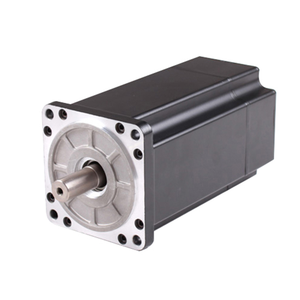
Direct-from-factory custom electric motors, precision-engineered stators, high-torque brushless DC architectures, and IE3–IE5 efficiency class induction systems tailored for global OEM machinery integrations.
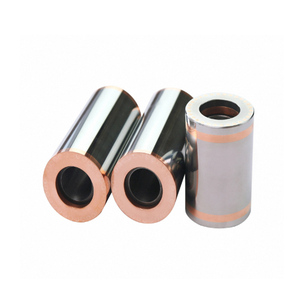
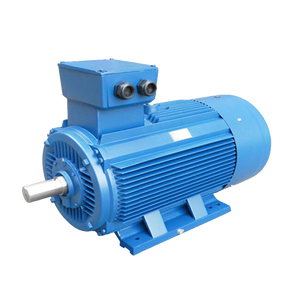
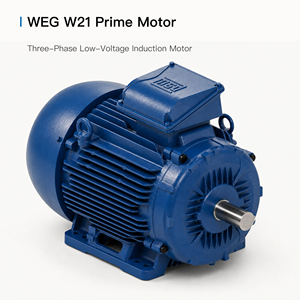
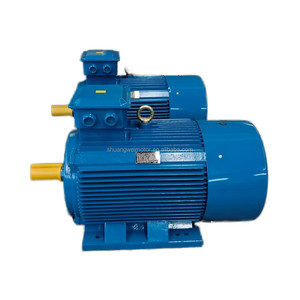
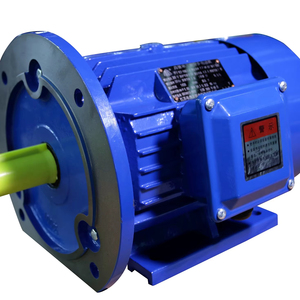
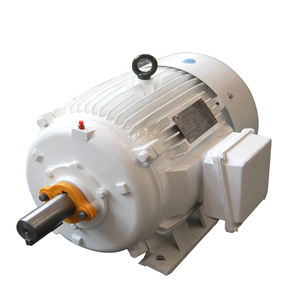
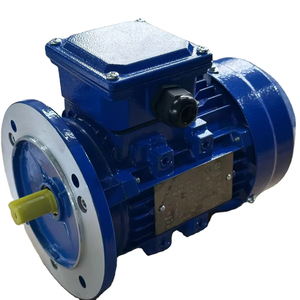
Selecting a tier-1 OEM motor component supplier requires rigorous technical evaluation beyond simple unit pricing. Modern electromechanical engineering demands stringent tolerances, advanced electromagnetic slot fill density, thermal dissipation longevity, and compliant certification for global marine and hazardous environments.
Original Equipment Manufacturers (OEMs) building heavy industrial pumps, marine thrusters, commercial HVAC compressors, and robotic motion controls face escalating energy efficiency mandates (such as EU Stage V regulations and NEMA Premium requirements). Achieving optimal System Total Cost of Ownership (TCO) necessitates sourcing custom stators, rotors, frame castings, and shaft assemblies engineered precisely for specific torque-speed envelopes.
| Evaluation Parameter | Tier-1 OEM Supplier Standard | Commodity / Standard Exporter | Strategic Operational Impact |
|---|---|---|---|
| Stator Lamination Grade | M270-35A / Cold-Rolled Silicon Steel | Standard M470 Grade Steel | Reduces core hysteresis losses by up to 28%, significantly elevating motor efficiency to IE4/IE5 standards. |
| Copper Winding Slot Fill Factor | 82% – 88% (Automated Precision Insertion) | 60% – 70% (Manual Winding) | Higher slot fill maximizes thermal dissipation, increases continuous torque output, and eliminates air gaps. |
| Insulation Class & VPI | Class H (180°C) + Full VPI Impregnation | Class F (155°C) Standard Dip Coating | VPI eliminates moisture absorption and internal corona discharge, ensuring reliable 100,000+ operating hours. |
| Rotor Dynamic Balancing | ISO 1940-1 Grade G1.0 Precision | ISO 1940-1 Grade G2.5 Standard | Ultra-low vibration amplitudes safeguard drive bearings, reducing operational acoustic noise below 68 dBA. |
| Customization Versatility | Full custom shaft alloys, tailored windings, dual flange standards | Fixed dimensional catalog specs only | Enables drop-in mechanical replacement and custom power curve tuning for specific pump and fan impellers. |
| Global Logistics Infrastructure | 70,000+ units stocked, 24/7 emergency dispatch, global MRO | Build-to-order only (12–16 week lead time) | Mitigates costly assembly line downtime and supports just-in-time (JIT) OEM production lines globally. |
To achieve maximum motor energy density and continuous reliability, custom component engineering must optimize the three core sub-assemblies of the induction or brushless motor architecture.
Stator core design dictates the magnetic flux distribution within an AC asynchronous or PMSM motor. Top OEM suppliers utilize high-grade, low-loss electrical silicon steel laminations with non-grained orientation. Through high-speed precision stamping and automated inter-lamination insulation, iron losses (eddy current and hysteresis losses) are minimized, ensuring peak performance under Variable Frequency Drive (VFD) carrier frequencies.
Rotor bar casting technology heavily influences starting torque characteristics and stray load losses. Leading exporters supply both high-purity die-cast aluminum rotors and premium oxygen-free copper bar rotors. Precise rotor slot skewing reduces high-frequency spatial harmonics, virtually eliminating cogging torque and delivering smooth velocity control at low RPM operating spectrums.
Thermal dissipation limits total continuous power output. Premium OEM suppliers employ cast-iron housings (FC200-FC300 grade) engineered with aerodynamically optimized cooling fins. Custom surface coatings, double-lip radial shaft seals, and IP55 to IP66 ingress protection shield internal components against saltwater spray, conductive industrial dust, and high humidity.
The global industrial drive landscape is undergoing a structural paradigm shift driven by decarbonization targets, smart industrial automation (Industry 4.0), and severe energy efficiency mandates.
As global procurement teams re-evaluate their supply chain vulnerability and technical specifications, several critical technology trends are defining the next decade of OEM motor component sourcing:
While IE3 remains common, global buyers are rapidly shifting to IE4 (Super Premium) and IE5 (Ultra-Premium) efficiency standards. Synchronous Reluctance Motors (SynRM) and Permanent Magnet Assisted Reluctance drives are taking center stage, eliminating rotor copper losses without relying heavily on expensive rare-earth permanent magnets.
Future OEM motor components are designed with pre-machined sensor pockets and integrated digital telemetry. Vibration sensors, bearing temperature probes (PT100/PTC), and acoustic emission monitors allow real-time predictive maintenance via cloud analytics, eliminating unscheduled industrial downtime.
Instead of completely bespoke engineering from scratch, leading component suppliers provide modular shaft designs, multi-voltage windings (380V/440V/690V at 50/60Hz), and multi-mounting flange options (B3, B5, B14, B35). This modularity reduces prototype lead times from months to days.
Backing global industry leaders for over half a century with unmatched engineering expertise, relentless quality assurance, and robust supply chain infrastructure.
Decades of field experience in marine propulsion, offshore wind, heavy industrial mining, and HVAC systems allow us to engineer custom motor components that excel in harsh operating environments.
Our expansive global warehousing strategy ensures key motor components and standard assemblies are immediately available, protecting your production schedule against global supply chain bottlenecks.
From initial design specification to field testing, marine class approval (DNV, ABS, BV, Lloyd's), retrofits, and 24/7/365 emergency aftermarket repair, we offer total lifecycle accountability.
Eliminate procurement friction. Enjoy dedicated engineering contact, transparent documentation, custom labeling, and tailored packaging solutions aligned with your exact factory workflows.
Essential technical and commercial insights for procurement managers, electromechanical engineers, and OEM decision-makers.
OEM customization covers complete electromagnetic, mechanical, and environmental parameters. Mechanical shaft options include modified shaft extensions (keyed, splined, hollow, or dual-tapered), custom stainless steel grades (316L, 42CrMo4), and special flange dimensions (NEMA, IEC, or custom pitch diameters). Electromagnetically, windings can be customized for specific VFD frequencies, non-standard system voltages (24V to 690V), and specialized Class H/N insulation for high-ambient thermal environments.
According to IEC 60034-30-1 standard guidelines, IE3 represents Premium Efficiency, IE4 represents Super Premium Efficiency (reducing energy losses by approximately 15% compared to IE3), and IE5 represents Ultra-Premium Efficiency (reducing losses by a further 20%). Sourcing IE4 or IE5 motor components substantially reduces operational lifecycle costs, lowers heat dissipation demands in enclosed spaces, and assists machinery manufacturers in meeting stringent global environmental directives.
Vacuum Pressure Impregnation (VPI) is a process where the fully wound stator core is subjected to a deep vacuum followed by high pressure to inject solventless epoxy resin deep into all winding voids. VPI seals the winding assembly against moisture, chemical vapors, aggressive vibration, and electrical corona breakdown, resulting in vastly superior heat transfer and a extended operational lifespan under harsh industrial conditions.
For marine and offshore installations, components must comply with major classification societies including DNV, ABS, Bureau Veritas (BV), Lloyd's Register (LR), and RINA. For hazardous environment applications, components require ATEX (Europe), IECEx (Global), or UL/CSA (North America) certification for Zone 1, Zone 2, Zone 21, or Zone 22 ambient dust and gas classifications.
With established OEM manufacturing pipelines, initial engineering samples and prototype assemblies are typically delivered within 3 to 5 weeks. Mass serial production lead times range between 6 to 10 weeks depending on custom casting requirements, alloy availability, and specialized testing protocols. Stocking programs can also be arranged to support immediate release for scheduled manufacturing runs.