Explore our export-ready, OEM/ODM customizable electric motors engineered for smart vibration monitoring, harsh environments, and maximum operational efficiency.
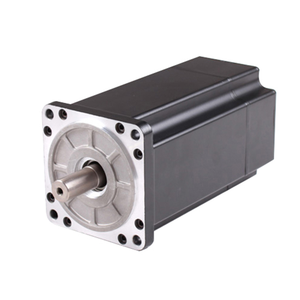
Designed for robotics and precision AGVs with integrated low-latency telemetry mounts and high torque density.
Contact Us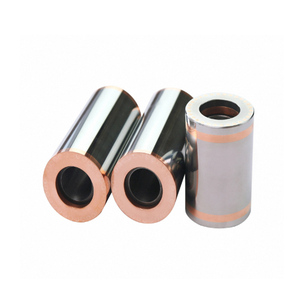
Precision-balanced rotor assembly engineered for high RPM applications, featuring vibration-isolated casing slots.
Contact Us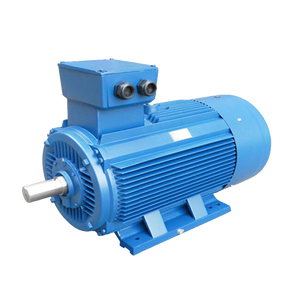
Built for massive blowers and pumps. Features dedicated structural nodes for wireless tri-axial accelerometers.
Contact Us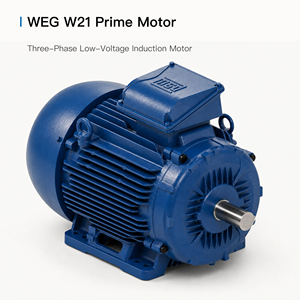
Ultra-efficient energy-saving cast iron chassis optimized for continuous severe duty fan and compressor installations.
Contact Us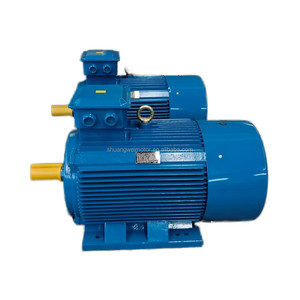
100% copper windings, IP55 enclosure, dynamic thermal and mechanical vibration resistance for marine and plant processing.
Contact Us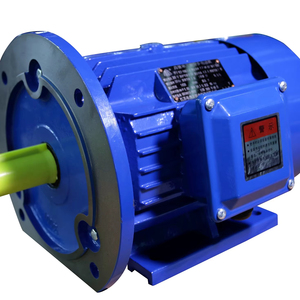
Factory-direct global standard motor designed to accommodate embedded wireless monitoring nodes out of the box.
Contact Us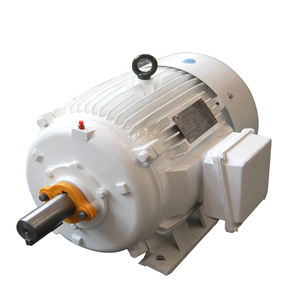
North American market compliant motor featuring low harmonic distortion and robust vibration parameter tolerance.
Contact Us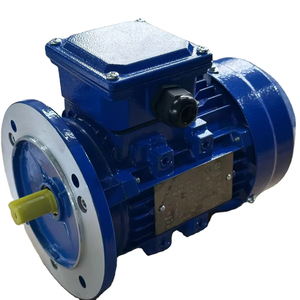
Versatile B3/B35/B5 multi-mount configuration with pre-drilled M8/M12 dynamic sensor mounting ports.
Contact UsDecades of electro-mechanical heritage integrated with smart wireless condition monitoring technology.
From custom mechanical flanges, specialized shaft extensions, to internal winding temperature probes and embedded vibration sensor enclosures, we deliver tailored electro-mechanical solutions built for your precise specifications.
Every motor leaves our facilities fully tested for vibration spectrum profile (FFT analysis), noise limits, dielectric strength, and thermal efficiency. Certified to ISO 9001, CE, ATEX, IECEx, and NEMA standards.
Through our global logistics hubs and MRO service network, we guarantee swift delivery, spare parts availability, retrofitting capabilities, and 24/7 technical assistance across marine and land industries.
In modern industrial operations, unexpected machinery downtime represents one of the largest controllable expenses. Rotating machinery—such as heavy pumps, industrial blowers, compressors, marine thrusters, and automated conveyor systems—relies heavily on three-phase electric induction and brushless DC motors. Traditionally, motor health was assessed through periodic manual inspection or wired accelerometer systems. However, the rise of Industry 4.0 and Smart Manufacturing has elevated OEM/ODM electric motors integrated with wireless vibration sensors into a strategic imperative for global industrial buyers.
Core Engineering Insight: Embedding wireless MEMS accelerometers directly into the bearing housing of an electric motor eliminates signal distortion caused by secondary enclosure interfaces, allowing early detection of inner/outer race bearing fatigue, rotor imbalance, shaft misalignment, and soft foot conditions up to 6 months before catastrophic failure.
Mechanical vibration is the direct physical indicator of dynamic forces occurring within an electric motor. When magnetic flux irregularities, mechanical imbalances, or tribological friction occur, they express themselves as specific frequency signatures. By embedding high-bandwidth (up to 10 kHz) tri-axial piezoelectric or capacitive MEMS wireless sensors directly into key structural nodes (Drive End and Non-Drive End bearing locations), engineers can continuously measure:
As an established OEM/ODM manufacturer, custom engineering extends far beyond color options or nameplate branding. Our engineering team works directly with equipment integrators to co-design motors that intrinsically support IoT ecosystems:
Global procurement teams are fundamentally shifting their evaluation matrices when sourcing industrial motors. Purchasing decisions are no longer governed solely by upfront Capital Expenditure (CAPEX); instead, Operational Expenditure (OPEX) and Total Cost of Ownership (TCO) dominate contract negotiations.
A. Mandated IE4 and IE5 Efficiency Metrics: With global energy regulations tightening across Europe, North America, and Asia-Pacific, IE3 is rapidly becoming the absolute baseline. Procurement trends indicate a massive acceleration toward IE4 Super Premium and IE5 Ultra Premium Efficiency motors. The energy consumed by an industrial motor over its 15–20 year operational lifespan typically accounts for over 95% of its total cost. Combining IE4/IE5 synchronous reluctance or permanent magnet architectures with smart sensors maximizes both energy conversion and operational continuity.
B. Hybrid Edge-Cloud Predictive Maintenance Architectures: Modern enterprise buyers demand motors that speak native digital protocols. Emerging procurement specifications routinely mandate Edge-AI capabilities, where the wireless vibration sensor executes real-time Fast Fourier Transform (FFT) calculations locally on the sensor node, transmitting only processed anomaly flags and spectral peaks via wireless networks. This dramatically reduces RF bandwidth congestion in dense smart factories.
C. Supply Chain Standardization and Modular OEM Engineering: Industrial buyers are actively consolidating vendor lists. Suppliers that can provide turnkey solutions—supplying the core electric motor, variable frequency drive (VFD), integrated wireless telemetry, and global certification support—are gaining significant market share over single-component vendors.
Navigating the convergence of electro-mechanical engineering, sensor miniaturization, and machine learning.
Future development moves beyond surface-mounted external sensors. Next-generation OEM motors embed MEMS vibration and magnetic flux sensors directly into the stator lamination stacks and inner bearing retention rings during primary factory assembly. This provides direct mechanical coupling to internal stress points without thermal insulation delays.
Industry standards are transitioning from "Predictive Maintenance" (knowing *when* a motor will fail) to "Prescriptive Maintenance" (knowing *what action* to take). Integrated vibration algorithms correlate rotational harmonics with VFD electrical data to automatically adjust motor operating frequencies or warn operators to adjust load parameters, preserving asset integrity until scheduled turnarounds.
Comprehensive answers regarding custom manufacturing, sensor integration, order logistics, and technical specifications.
Yes. As a full-service OEM/ODM manufacturer, we design and cast custom motor housings with dedicated flat machined mounting bosses, embedded internal sensor pockets, or pre-threaded M8/M12 ports. This guarantees optimal mechanical coupling for high-frequency vibration signal transmission without compromising IP65/IP66/IP68 ingress protection.
Our wireless vibration sensing modules support standard industrial IoT protocols including LoRaWAN, Bluetooth Low Energy (BLE 5.0 Mesh), Zigbee, WirelessHART, and NB-IoT. We also support custom proprietary RF protocols for secure closed-loop military or high-security industrial installations.
Industrial electric motors often run at Class F (155°C) or Class H (180°C) thermal limits. Our sensor modules feature thermally isolated ceramic mounting studs, high-temperature lithium-thionyl chloride (LiSOCl2) power cells, and industrial-grade MEMS components rated for operation in ambient temperatures from -40°C up to +125°C.
We manufacture a complete range of low and medium voltage motors conforming to IEC standards (IE2, IE3 High Efficiency, IE4 Super Premium Efficiency, and IE5 Ultra Premium Efficiency) as well as NEMA Premium standards for the Americas, operating across 50Hz and 60Hz frequencies.
Absolutely. We offer complete ATEX and IECEx explosive atmosphere motor lines (Ex d, Ex eb, Ex ec). The integrated wireless vibration sensor packages are certified as intrinsically safe (Ex ia / Ex ib), allowing safe deployment in oil refineries, grain elevators, and chemical processing plants.
Depending on the configurable sampling interval (e.g., sending raw FFT spectra twice daily versus sending overall RMS alerts hourly), the internal industrial lithium batteries last between 5 to 8 years. Optional vibration energy harvesters can further extend node life indefinitely under continuous operation.
Standard stocked base motors (from our 70,000+ motor inventory) can be retrofitted and dispatched within 5–10 business days. Full custom OEM/ODM production runs (custom windings, specialized shafts, and housing modifications) typically require 3 to 6 weeks depending on batch volume. Minimum Order Quantities (MOQ) are flexible based on frame size and complexity.
We provide open JSON/MQTT data streams and RESTful APIs, allowing seamless integration into third-party SCADA, MES, SAP, or cloud platforms (AWS IoT, Azure IoT). Alternatively, we offer turnkey software dashboards for enterprise machine health management.
Connect directly with our senior application engineering team to discuss technical specifications, CAD models, sample requests, or custom OEM manufacturing agreements.
