Explore our rigorous selection of stock and custom-built electric motors engineered for industrial fans, marine pumps, blowers, heavy automation, and dual-rpm machinery.
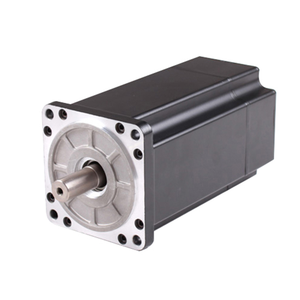
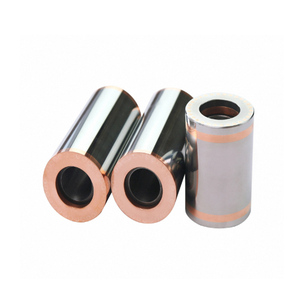
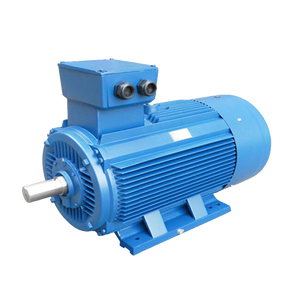
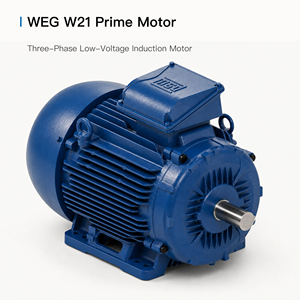
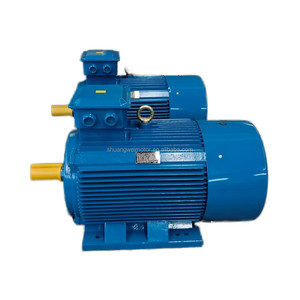
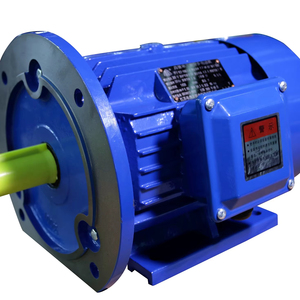
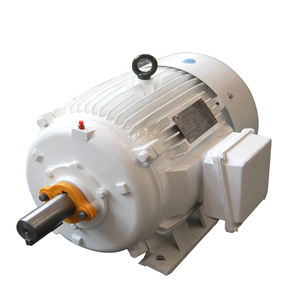
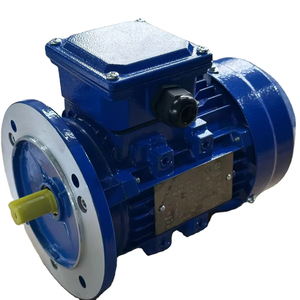
Operating at the intersection of high-tier manufacturing and custom application engineering, we provide comprehensive, fit-for-purpose motor architectures for critical infrastructure, marine vessels, and automated industrial plants.
With half a century of hands-on mechanical and electrical design, we engineer motors tailored to exact spatial, duty-cycle, and environmental parameters. From specialized mounting flanges (B3, B5, B14, B35) to specific shaft extensions and modified insulation schemes, we match your blueprint without compromise.
Global supply chain volatility requires instant fulfillment. Our massive buffer inventory across strategic hubs in Europe and Asia enables rapid shipping of standard IEC/NEMA frames, reducing lead times from months to days for emergency replacement or urgent OEM production assembly lines.
As part of the unified Hoyer VMS Group, our accountability extends beyond delivery. We provide full marine class testing (ABS, DNV, ClassNK, BV, Lloyd's Register), ambient temperature testing up to 60°C, and complete 24/7/365 MRO and retrofit field execution capability worldwide.
Dual-speed electric motors represent a cornerstone of operational efficiency in mechanical drive systems requiring step-change velocity adjustments without relying entirely on complex external variable frequency drives (VFDs). The fundamental relationship governing the synchronous speed ($n_s$) of an AC induction motor is defined by the line frequency ($f$) and the number of magnetic poles ($P$):
By structurally altering the stator winding configuration to change the effective number of magnetic pole pairs ($P$), dual-speed motors deliver discrete rotational speeds—such as 1500/3000 RPM (2/4 Pole at 50Hz) or 750/1500 RPM (4/8 Pole at 50Hz)—with maximum electrical efficiency and exceptional mechanical durability.
When selecting or specifying an OEM/ODM dual-speed motor, mechanical engineers must evaluate two primary stator winding topologies: Dahlander (Tapped Winding) topology and Separate Winding topology.
Designing a dual-speed motor requires alignment between the motor's mechanical output curve and the driven load profile:
| Load Category | Typical Application | Torque Curve Behavior | Typical Winding Connection |
|---|---|---|---|
| Variable Torque (VT) | Centrifugal Pumps, HVAC Fans, Marine Blowers | Torque increases quadratically with speed ($T \propto n^2$); Power increases cubically ($P \propto n^3$). | Dahlander Low Speed: Star ($Y$) / High Speed: Double Star ($YY$) |
| Constant Torque (CT) | Conveyors, Machine Tools, Reciprocating Compressors | Torque remains constant regardless of RPM; Power increases linearly with speed ($P \propto n$). | Dahlander Low Speed: Delta ($\Delta$) / High Speed: Double Star ($YY$) |
| Constant Power (CP) | Machine Tool Spindles, Coilers, Winding Machines | Torque decreases inversely as speed increases; Power output remains static across speeds. | Custom Tapped Winding / Double Star to Single Star switchover |
The industrial motor market is undergoing massive structural shifts driven by energy regulations, digital monitoring, and total lifecycle costs.
Modern enterprise procurement directors are pivoting away from initial capital expenditure (CAPEX) toward Total Cost of Ownership (TCO) evaluations. Over a typical 15-year operational lifespan for heavy-duty industrial motors, electricity consumption accounts for approximately 92% to 96% of total lifecycle expenditure, while initial purchase cost represents under 3%.
Key technological and market trends shaping dual-speed motor manufacturing include:
Integrating IoT vibration sensors, thermal thermocouples (PT100/PTC), and acoustic emission diagnostics directly into the stator frame. This enables predictive maintenance, preventing catastrophic bearing or insulation failures during high-to-low speed transition spikes.
European Union EcoDesign Directive (EU 2019/1781) and global energy mandates require motors to reach IE3/IE4 efficiencies. Premium OEM manufacturers are deploying low-loss cold-rolled silicon steel laminations and high-density copper winding topologies to achieve high dual-speed efficiency ratings.
Dual-speed motors operating alongside soft starters or emergency bypass VFD systems require Class H insulation with Class B temperature rise headroom, utilizing corona-resistant enamel wire to withstand transient voltage spikes ($dV/dt$) during speed switching.
Understand when to specify a OEM/ODM dual-speed motor versus an inverter-driven single-speed motor.
| Evaluation Vector | Dahlander Dual-Speed Motor | Separate Winding Motor | Single-Speed Motor + VFD Drive |
|---|---|---|---|
| Initial System CAPEX | Low (Standard contactor switching) | Moderate (Dual contactor circuits) | High (Cost of high-power VFD panel) |
| EMC / THD Harmonic Noise | Zero Harmonics (Pure sinusoidal grid) | Zero Harmonics (Pure sinusoidal grid) | High (Requires harmonic filters / shielded cable) |
| Harsh Environment Reliability | Extreme (Robust mechanical components) | Extreme (No sensitive electronics in field) | Moderate (VFD sensitive to heat/dust/vibration) |
| Speed Flexibility | Fixed 2 Discrete Speeds (Ratio 1:2) | Fixed 2 Discrete Speeds (Custom Ratios) | Infinite Stepless Speed Control |
| Maintenance Complexity | Minimal (Standard industrial maintenance) | Minimal (Standard electrician skillset) | High (Requires specialized electronic diagnostics) |
Technical clarity for engineering specialists and procurement teams specifying dual-speed and custom induction motors.
Request custom engineering drawings, technical CAD models, or immediate pricing for stock and customized dual-speed motors today.
