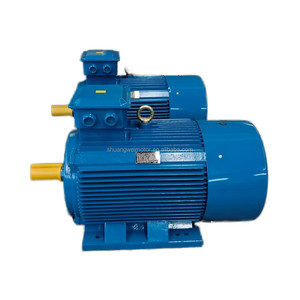
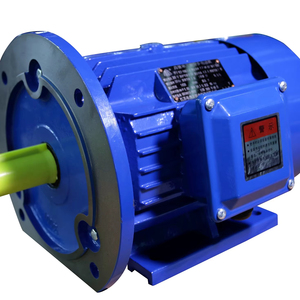
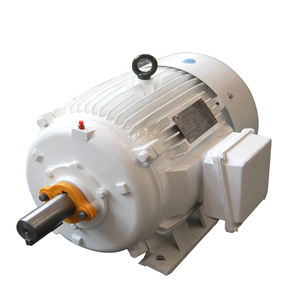
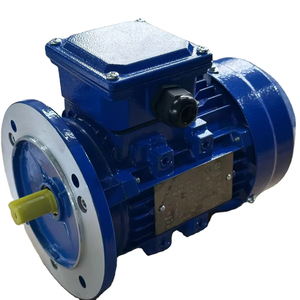
Explore our engineered portfolio of brushless DC, asynchronous 3-phase, and specialized industrial motors compliant with IE3, IE4, and IE5 energy efficiency standards.
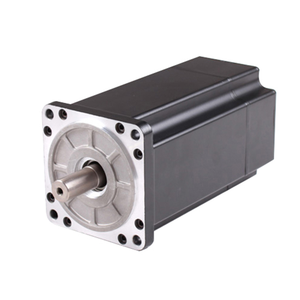
High Speed 3 Phase 48v 310v 3000rpm 1kw-3kw 110mm Nema 42 Brushless DC Motor for Robot
OEM/ODM Brushless Servo Motor Manufacturing & Specification Architecture
In high-precision industrial automation, robotic joint actuation, AGVs (Automated Guided Vehicles), and severe-duty marine machinery, selecting the optimal electromechanical actuation system directly determines system dynamic response, operational efficiency, and mean-time-between-failures (MTBF). As a leading global OEM/ODM Brushless Servo Motors Factory and Supplier, our manufacturing facility specializes in custom electromagnetic design, field-oriented control (FOC) alignment, high-density stator winding, and robust mechanical integration.
Core Technical Value: Unlike standard off-the-shelf electric motors, enterprise OEM/ODM servo customization delivers tailored rotor inertia ratios, custom back-EMF constants (Ke), specialized winding inductance optimization, and thermal dissipation channels tailored to specific duty cycles (S1 to S9 performance classes).
1. Electromechanical Design Considerations for Custom Brushless Servo Motors
Brushless Permanent Magnet Synchronous Motors (PMSM) and Brushless DC (BLDC) servo systems rely on complex interaction between rotor magnet topologies, stator slot configurations, and closed-loop feedback resolution. Our factory engineering team deploys advanced Finite Element Analysis (FEA) software to simulate magnetic flux paths, cogging torque reduction, and thermal rise under transient peak torque conditions.
Permanent Magnet Topologies: Utilizing high-coercivity NdFeB (Neodymium Iron Boron) permanent magnets rated up to N45UH or N52SH to maintain structural magnetization without demagnetization risk at elevated operating temperatures (up to 180°C).
Stator Lamination Materials: Ultra-thin 0.2mm to 0.35mm silicon steel laminations (e.g., 35WW300 grade) engineered to minimize eddy current losses during high-rpm switching frequencies driven by modern SiC/GaN frequency converters.
Cogging Torque Minimization: Optimized stator slot skewing, fractional-slot concentrated winding (FSCW), and pole-slot ratio matching (e.g., 12-slot 10-pole or 18-slot 16-pole configurations) to achieve cogging torque levels below 1% of nominal rated torque.
Feedback Sensor Integration: Custom mechanical flanges designed to accommodate 17-bit to 23-bit absolute optical encoders, magnetic incremental encoders, or rugged resolver feedback mechanisms for extreme vibration environments.
2. Comparative Analysis: BLDC Servo Motors vs. Standard Induction AC Motors
Understanding the operational trade-offs between permanent magnet brushless technology and standard three-phase asynchronous induction motors is critical for system architects and procurement teams.
Future Global Procurement Trends in Industrial Servo Motors (2025–2030)
The global motion control landscape is undergoing structural transitions driven by industrial decarbonization, factory digital transformation (Industry 4.0), and tight energy efficiency mandates. Enterprise buyers, OEMs, and system integrators must align their procurement strategies with four key emerging industry trends:
1. Transition to IE4 & IE5 Efficiency Mandates
Global regulatory bodies (EU EcoDesign, US DOE, China GB18613) are progressively restricting IE2/IE3 motors. Modern plant specifications demand IE4 (Super Premium) and IE5 (Ultra Premium) efficiencies to lower total cost of ownership (TCO).
2. Wide Bandgap (GaN/SiC) Inverter Integration
Next-generation brushless servo drives utilize Silicon Carbide (SiC) and Gallium Nitride (GaN) switching components. High switching frequencies (up to 100 kHz) enable smaller motor inductance and reduce harmonic motor heating.
3. Smart Telemetry & Edge Sensors
Embedded thermal sensors (PT100, PTC thermistors), tri-axial vibration telemetry, and magnetic encoders allow predictive maintenance directly integrated into cloud-based SCADA systems.
4. Supply Chain Resilience & Modular OEM Kits
Procurement departments favor suppliers providing modular mechanical flange adaptations (NEMA 23/34/42, IEC 56 to IEC 450), rapid sample turnarounds, and localized buffer stock availability to minimize production bottlenecks.
Rooted in over 50 years of combined application engineering heritage, our production facilities and partnership networks provide complete lifecycle security for mission-critical industrial setups. From custom motor winding design to global MRO support, our infrastructure guarantees performance consistency.
Global Stock Capabilities: Over 70,000 motor units and finished sub-assemblies continuously maintained across global logistics hubs, ensuring rapid dispatch for time-critical replacement needs.
Comprehensive Quality Assurance Labs: In-house dyno testing benches capable of full-load performance verification, thermal rise logging, high-voltage breakdown insulation testing, dynamic balancing to ISO 1940 Grade G1.0, and acoustic noise spectrum analysis.
International Certification Compliance: Product portfolios fully certified to ISO 9001:2015 quality control, ISO 14001 environmental safety, CE, UL, CSA, RoHS, REACH, ATEX explosion-proof guidelines, and major marine classification societies (DNV, ABS, LR, BV, RINA).
B2B Buyer Knowledge Base
Frequently Asked Questions for OEM/ODM Brushless Servo Motor Procurement
Find authoritative answers regarding custom manufacturing protocols, electrical parameters, delivery timelines, and technical support services.
What is the distinction between OEM and ODM brushless motor manufacturing?
OEM (Original Equipment Manufacturer) services involve manufacturing brushless motors strictly according to your provided engineering drawings, electrical specs, and bill-of-materials (BOM). ODM (Original Design Manufacturer) services involve complete end-to-end design: our engineering team takes your operational parameters (target torque, speed, space envelope, supply voltage, environmental conditions) and develops the electromagnetic topology, CAD mechanical design, rotor-stator layout, and testing verification from scratch.
How do you ensure thermal management in high-torque-density brushless servo motors?
Thermal control is achieved through high-thermal-conductivity slot insulation (Class H or Class S materials rated up to 180°C–200°C), specialized vacuum pressure impregnation (VPI) resins that eliminate air pockets, and aluminum extrusions with integrated cooling fins or liquid cooling jackets for heavy-duty industrial cycles. Integrated thermistors (PT100, KTY84, PTC) provide real-time thermal data feedback to the drive inverter.
What encoder feedback options can be integrated into custom servo motors?
We support complete feedback customization including absolute optical encoders (BISS-C, EnDat 2.2, SSI protocols), magnetic incremental encoders (A, B, Z channels with UVW commutation signals), multi-turn battery-backed or gear-based encoders, and heavy-duty electromagnetic resolvers suited for high-temperature and high-vibration applications.
What are the typical lead times for custom OEM prototype samples versus mass production?
Standard prototype customization (shaft modifications, custom winding turns, mounting flange adaptations) typically takes 2 to 3 weeks. Complete ODM custom motor developments requiring specialized lamination stamping dies take approximately 4 to 6 weeks for initial sample verification. Mass production lead times range from 3 to 5 weeks depending on order batch size and continuous component staging.
Can your factory supply explosion-proof or harsh environment certified motors?
Yes. We produce specialized explosion-proof brushless motors adhering to ATEX and IECEx standards for Zone 1, Zone 2, Zone 21, and Zone 22 hazardous environments. Furthermore, we offer stainless steel (316L) motor housings, IP67/IP68 submersible sealing, and specialized marine-grade epoxy coatings capable of withstanding salt spray exposure exceeding 1,000 hours under ASTM B117 testing.
What voltage ranges and power ratings do your brushless servo lines support?
Our low-voltage DC brushless servo motors operate from 12V DC, 24V DC, 48V DC, up to 96V DC with power outputs from 50W to 5kW (popular in robotics, AGVs, and battery-powered automation). Our high-voltage AC servo and induction series operate at 220V, 380V, 400V, 460V, and 690V AC, reaching power outputs from 1kW up to 800kW for heavy industry, marine propulsion, and large centrifugal pump/blower systems.
Request Custom Motor Engineering & Factory Quotation
Partner with an industry-leading OEM/ODM brushless servo motor manufacturer. Access comprehensive CAD models, datasheets, custom winding design consultations, and competitive tier-one pricing.