
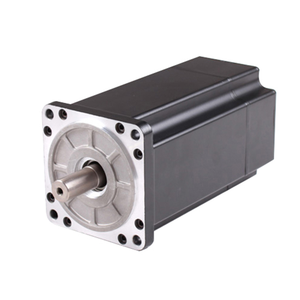
Explore our factory-direct super premium efficiency (IE3, IE4, IE5, NEMA Premium) electric motors engineered for heavy industry, marine propulsion, automated robotics, and municipal fluid handling.
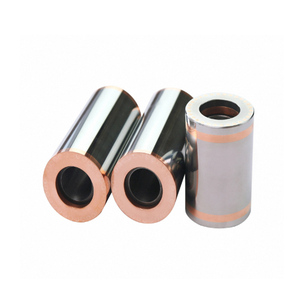
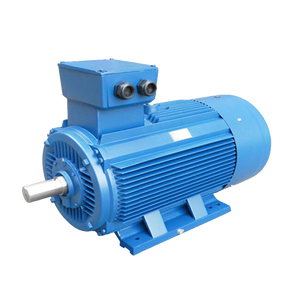
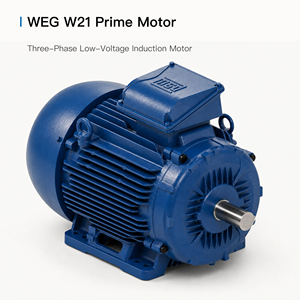
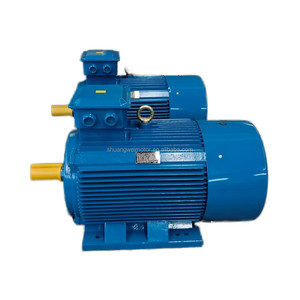
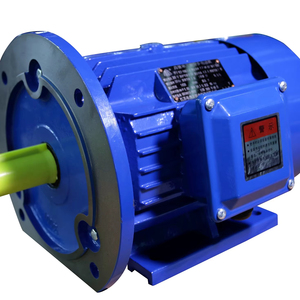
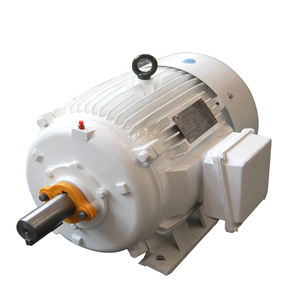
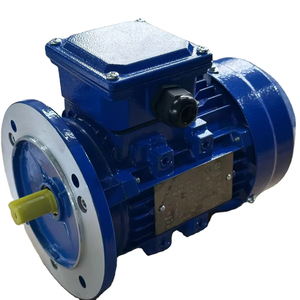
As a key cornerstone of the Hoyer VMS Group ecosystem, our manufacturing facilities and global technical hubs specialize in engineering, co-developing, and supplying high-performance electric motors designed to withstand the world's most unforgiving operational environments.
From extreme marine engine rooms requiring Class C5M corrosion resistance to heavy manufacturing plants aiming for net-zero carbon compliance, we deliver fit-for-purpose motor technology. Our single-source approach reduces supply chain complexity for global OEMs, offering seamless integration from early design prototypes to full-scale mass production.
Standard motors often fail under non-standard industrial strains. We provide tailor-made mechanical shaft modifications (stainless steel 316L, splined, double-ended), custom electrical winding designs tuned for specific VFD frequencies, special flange dimensions (B3, B5, B14, V1), and reinforced IP66/IP69K sealing systems.
Achieving Super Premium Efficiency is not merely a matter of adding extra copper wire; it demands a fundamental overhaul of electromagnetic flux management, thermal dissipation pathways, and core material physics.
Total losses in an asynchronous motor consist of Stator Copper Loss ($P_{s1}$), Rotor Aluminum/Copper Loss ($P_{r2}$), Core Hysteresis & Eddy Current Loss ($P_{fe}$), Friction & Windage ($P_{f+w}$), and Stray Load Loss ($P_{LL}$). IE4 and IE5 engineering focuses on reducing $P_{s1}$ and $P_{fe}$ by up to 40% compared to standard IE2 designs.
To eliminate eddy current heat generation within the stator core, our OEM factories utilize ultra-thin, cold-rolled, non-grain-oriented (CRNGO) electrical steel laminations down to 0.35mm and 0.20mm thickness, coated with high-temperature organic C-5 insulation.
By implementing automated high-density slot packing technologies, stator copper fill factors are elevated from the industry-standard 65% to over 82%. This drastic reduction in electrical resistance minimizes $I^2R$ thermal dissipation, directly improving thermal lifetime.
While traditional induction motors (IM) rely on induced rotor current—inherently producing rotor losses—Synchronous Reluctance Motors (SynRM) eliminate rotor electrical losses completely by pulling the rotor along the magnetic reluctance path. When augmented with ferrite or rare-earth permanent magnets (PMa-SynRM), efficiency curves reach IE5 levels while maintaining cooler operation across variable speed ratios.
| Efficiency Standard Class | IEC Standard Reference | Average Nominal Efficiency (15kW / 4-Pole) | Rotor Loss Reduction vs IE1 | Primary Electromagnetic Architecture | Ideal Industrial Duty Cycle |
|---|---|---|---|---|---|
| IE2 High Efficiency | IEC 60034-30-1 | 90.6% | Baseline Reference | Standard Cast Aluminum Cage Induction | Intermittent (S2/S3 Duty) |
| IE3 Premium Efficiency | IEC 60034-30-1 / NEMA Premium | 92.6% | ~15% Loss Reduction | High Copper Volume / Die-cast Copper Rotor | Continuous Heavy Duty (S1) |
| IE4 Super Premium | IEC 60034-30-1 | 93.9% | ~30% Loss Reduction | Advanced Induction / SynRM hybrid | 24/7 Continuous Process Plants |
| IE5 Ultra Premium | IEC 60034-30-2 (VFD) | 95.2%+ | ~50%+ Loss Reduction | Permanent Magnet (PMM) / PMa-SynRM | Variable Speed Drives & Clean Energy Systems |
In heavy industrial continuous duty applications (24/7 operation, 8,000 hours per year), the initial capital acquisition purchase price of an electric motor represents only 3% to 5% of its total operating lifecycle cost over a 10-year lifespan. Electrical energy consumption accounts for a staggering 95% of total expenditure, while maintenance accounts for the remaining fraction.
Transitioning an entire factory fleet from standard IE2 or aging legacy motors to OEM IE4 Super Premium Efficiency motors typically yields complete capital payback (ROI) within 6 to 14 months, followed by exponential energy cost savings for the remainder of the machine's operating life.
S = P_n * L * C_e * h * ( (1 / \eta_old) - (1 / \eta_new) )
As global industrial energy mandates tighten and supply chains evolve, procurement directors and original equipment manufacturers (OEMs) must navigate fundamental shifts in technology and international compliance.
Europe (EU Ecodesign Regulation 2019/1781 Stage 2) and North American US DOE mandates strictly enforce IE4 Super Premium ratings for motors between 75kW and 200kW. Global buyers are proactively updating specs to avoid regulatory import bans.
Procurement teams are moving away from fragmented spot-buying toward strategic OEM alliances. Partners like Hoyer VMS Group offer multi-region manufacturing hubs, unified certification (ATEX, IECEx, DNV, ABS, UL/CSA), and dual-location logistics buffers.
Scope 2 and Scope 3 emissions reporting requires industrial plant operators to calculate embodied carbon. Super-efficient motors lower operational carbon taxes significantly across global operations.
Due to price volatility and geopolitics surrounding rare-earth elements (Neodymium/Dysprosium), motor development is accelerating toward Ferrite-assisted SynRM and advanced copper rotor induction architectures that achieve IE5 without rare earth metals.
Modern OEM motors feature built-in vibration, bearing temperature, and magnetic flux sensors. Integrated IO-Link and Modbus RTU communications communicate with cloud predictive maintenance dashboards to eliminate unplanned downtime.
With Silicon Carbide (SiC) and Gallium Nitride (GaN) variable frequency drives generating ultra-fast $dV/dt$ voltage spikes, OEM insulation systems now employ Class H corona-resistant wire and reinforced phase separators.
Direct technical answers to common queries raised by industrial machinery designers, procurement officers, and plant engineers.