Explore our heavy-duty three-phase induction and custom wound rotor motors designed for superior torque performance, continuous reliability, and maximum thermal efficiency.
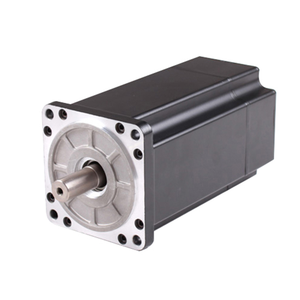
Compact high-torque execution designed for precise automated drives, robotics, and auxiliary slip ring control actuators.
Inquire Now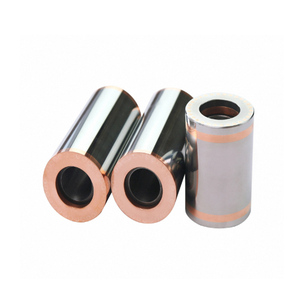
Advanced stator-rotor laminations delivering extreme power density for demanding heavy-industry continuous duties.
Inquire Now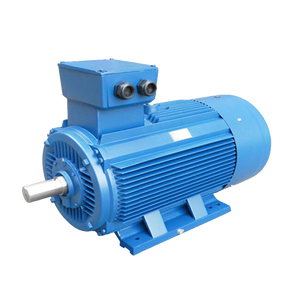
Heavy-cast steel frame execution featuring superior thermal dissipation for large industrial water pumps and mine blowers.
Inquire Now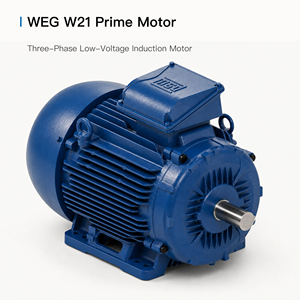
Severe-duty cast iron construction for pumps, compressors, and high-inertia mechanical equipment operating in harsh environments.
Inquire Now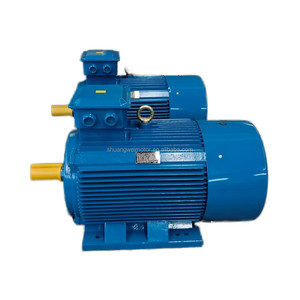
100% electrolytic copper winding with IP55 ingress protection, optimized for continuous efficiency and low lifecycle cost.
Inquire Now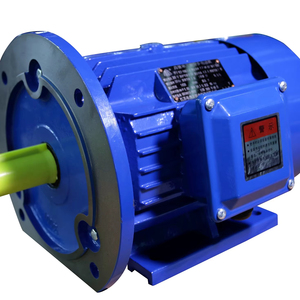
Custom OEM base configuration engineered to withstand fluctuating grid voltages and severe duty cycles across overseas projects.
Inquire Now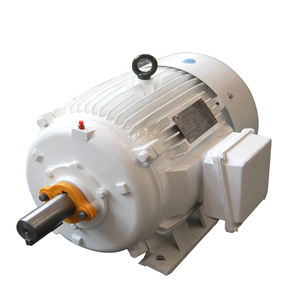
Standardized NEMA dimensioning paired with reinforced bearing housings for high radial shaft load operations.
Inquire Now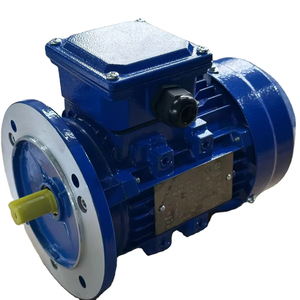
Versatile mounting configuration featuring reinforced endshields and low-friction carbon/brush brush-box alignment readiness.
Inquire NowIn heavy industrial applications where machinery must start under extreme mechanical loads—such as cement ball mills, jaw crushers, port cranes, and mine hoists—standard squirrel-cage induction motors frequently fail to provide sufficient starting torque without drawing catastrophic line surge currents. **Custom OEM Slip Ring Motors (Wound Rotor Induction Motors - WRIM)** provide the ultimate electro-mechanical solution by allowing external rotor resistance insertion during startup.
Unlike fixed-resistance aluminum or copper rotor bars found in squirrel cage designs, a slip ring motor features a three-phase phase-wound rotor connected via heavy-duty copper collector rings (slip rings) and electro-graphite carbon brushes to an external liquid or resistor starter.
By adjusting the external rotor resistance ($R_2$), the slip ($s$) at which maximum torque ($T_{max}$) occurs can be shifted directly to locked-rotor startup ($s = 1$). This unique electrical control allows the engine to achieve up to **250% of full-load torque while keeping starting currents below 1.5 to 2.5 times nominal current**, protecting local power grids and transformers from severe voltage drops.
The primary point of operational friction in traditional slip ring motors lies within the brush-collector interface. As a premier OEM manufacturer, our engineering team utilizes vacuum-pressure impregnated (VPI) rotor windings paired with high-grade non-ferrous slip rings made from cupronickel alloys or silver-plated forged bronze.
We match these rings with custom-formulated **metal-graphite carbon brushes** operating under constant-force spring holders (18–22 kPa pressure density). This configuration virtually eliminates brush chatter, minimizes electrical arcing, and extends wear cycles to over 15,000 continuous operation hours before maintenance.
While Variable Frequency Drives (VFDs) have dominated light-to-medium industrial drive setups, high-voltage slip ring motors combined with liquid resistance starters (LRS) remain the **most cost-effective, thermally robust, and electrically clean option** for ultra-high power applications (up to 10,000 kW). Slip ring motors avoid harmonic distortion, high-frequency bearing fluting currents, and high capital investment associated with massive megawatt-class VFD installations.
We build tailored slip ring electric motors across medium and high voltage platforms to meet exact mounting, environmental, and mechanical load specifications.
| Specification Parameter | Standard Low Voltage Range | High Voltage OEM Range | Custom Heavy-Duty Options |
|---|---|---|---|
| Rated Power Output | 75 kW to 315 kW | 355 kW to 10,000 kW | Custom frame scaling up to 12 MW |
| Rated Operating Voltage | 380V / 400V / 440V / 660V | 3.3 kV / 6.6 kV / 10 kV / 11 kV | Non-standard customer dual voltages |
| Stator & Rotor Insulation | Class F (Temp Rise Class B) | Class H (VPI Resin Impregnated) | Tropicalized anti-fungal Class H+ |
| Ingress Protection Rating | IP55 (Motor) / IP23 (Brush Box) | IP55 (Totally Enclosed) | IP66 brush housing with positive pressure air purge |
| Cooling Configurations | IC411 (Self-Ventilated) | IC611 (Air-to-Air exchanger) | IC81W (Air-to-Water heat exchanger) |
| Duty Cycle Classifications | S1 Continuous | S1 Continuous / S3 Intermittent | S4 Crane Duty (High start/stop frequency) |
| Brush Lifting System | Manual Short-Circuiting | Automatic Electromechanical Shorting | Pneumatic brush lift with feedback sensors |
The industrial electric motor sector is evolving rapidly under dual pressures of global carbon reduction mandates and Industry 4.0 digitalization. Procurement leaders must evaluate these key emerging trends when specifying custom OEM slip ring motors.
Modern plant operators are abandoning reactive maintenance. Future-ready slip ring motors are now specified with integrated IoT sensor arrays that measure real-time brush temperature, brush height wear, ring chamber humidity, and carbon dust concentrations, streaming health data via Modbus/MQTT to plant SCADA systems.
To eliminate friction loss during continuous running conditions, advanced OEM slip ring motors utilize short-circuiting and brush-lifting mechanisms. Once the rotor reaches full synchronous speed, the mechanism short-circuits the rotor windings internally and lifts the brushes off the slip rings, reducing wear and improving running efficiency by up to 1.5%.
With mining and cement facilities expanding into extreme climatic zones, demand for specialized enclosures has surged. Modern procurement guidelines prioritize separate IP66 enclosed brush chambers isolated from stator windings to prevent conductive carbon dust from contaminating main motor insulation.
Leveraging over 50 years of heavy electric motor engineering, we solve complex power transmission challenges for global original equipment manufacturers (OEMs) and EPC contractors.
Our combined operational footprint gives industrial plants a single accountable partner for specification, custom rotor design, severe-duty manufacturing, and lifetime aftermarket MRO service.
Unrivaled forward logistics inventory enabling rapid delivery of standard frames, spare brush gear, and custom rotor assemblies globally.
In-house high voltage testing rigs, dynamic balancing to ISO 21940 Grade G1.0, thermal rise validation, and complete marine classification approval (ABS, DNV, BV, LR).
Rapid response engineering units available around the clock to support installation, commissioning, retrofits, and emergency field repairs across 5 continents.
Hoyer VMS (Admin & Motors)
Over Hadstenvej 42, 8370 Hadsten, Denmark
Direct Engineering & European Stock Hub
Hoyer VMS (APAC)
No. 338 Anju Road, Beilun District, Ningbo, China
Precision Manufacturing & Regional Testing Center
Hoyer VMS (Aftermarket & Services)
Nordhavnsvej 1, 9900 Frederikshavn, Denmark
24/7 Emergency Support & Retrofit Division
Expert engineering answers to common technical and commercial queries raised by plant managers, design engineers, and procurement specialists.
You should specify a slip ring motor when your operational application requires extremely high starting torque (up to 250% of rated torque) combined with low inrush current constraints, or when the drive must accelerate massive inertia loads under continuous heavy friction. Typical examples include ball mills, sag mills, crushers, heavy hoist winches, and shredders. Standard squirrel cage motors drawing 6x to 8x nominal current during star-delta or direct-on-line starting would cause severe line voltage drops or thermal burnout under such conditions.
Sizing an LRS requires matching the motor's open-circuit rotor voltage ($E_{20}$) and rated rotor current ($I_2$) with the electrolyte thermal capacity and stepping resistance range. Our engineering team calculates the required starting energy (in megajoules) based on machine moment of inertia ($J$), motor torque-speed curves, and desired start duration (typically 15 to 45 seconds). We deliver complete integrated motor-and-LRS package solutions tailored to your load profile.
Regular maintenance includes inspecting carbon brush wear indicators, cleaning conductive carbon dust from the brush chamber using dry compressed air or vacuum systems, and measuring brush spring tension (maintained between 18–22 kPa). Slip rings should be checked for concentricity, scoring, or patina discoloration. Utilizing our optional short-circuiting and automatic brush lifting mechanism reduces brush wear maintenance intervals by over 70%.
As a specialized OEM manufacturer, we offer comprehensive modifications: custom shaft extensions (tapered, dual-ended, splined), specialized mounting dimensions (B3, B5, V1), forced air or water cooling modules (IC611 / IC81W), anti-condensation space heaters, embedded RTD thermal sensors (Pt100 for windings and bearings), vibration monitoring probes, non-standard voltage configurations, and tropicalized anti-corrosion C5-M paint systems.
While standard frame three-phase motors are dispatched immediately from our 70,000+ motor stock footprint, custom engineered high-voltage slip ring motors typically carry a production schedule of 8 to 14 weeks, depending on frame size, power rating, and marine/industrial certification requirements. Fast-track production lines are available for urgent breakdown replacements.
Speak directly with our heavy drive application engineers. We evaluate your load curves, starting constraints, and spatial drawings to deliver an optimized OEM motor quotation within 24 hours.
