Fit-for-purpose drive units pre-configured for continuous condition monitoring and smart factory integration
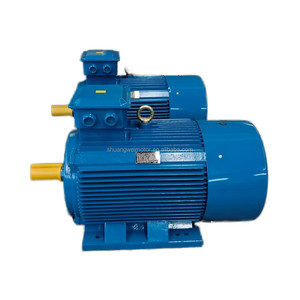
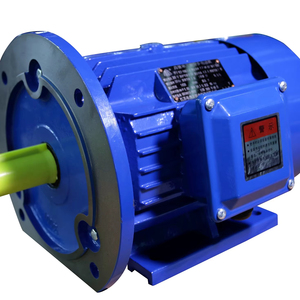
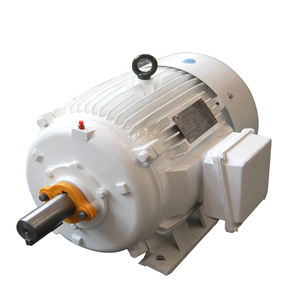
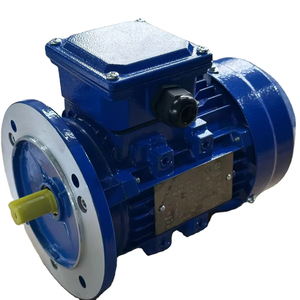
Modern industrial processing plants, marine vessels, and automated OEM equipment operate under increasingly stringent uptime protocols and sustainability frameworks. As heavy machinery transitions toward Industry 4.0 standards, relying on calendar-based preventive maintenance is no longer economically viable. Custom Original Equipment Manufacturer (OEM) Motor Condition Monitoring Systems (CMS) have transformed from high-end optional add-ons into critical core infrastructure for electric drive systems globally.
Condition Monitoring Systems evaluate the physical integrity of rotating machinery by acquiring, processing, and analyzing real-time sensor data. By capturing subtle phase variations in vibration spectra, thermal drift, transient current surges, and acoustic emissions, integrated CMS solutions empower engineers to identify mechanical and electrical degradation weeks before catastrophic failure occurs. Integrating custom monitoring directly into OEM motor housings ensures native sensor coupling, optimized signal-to-noise ratios, and streamlined factory acceptance testing (FAT).
Information Gain Insight: Modern OEM motor condition monitoring transcends basic vibration thresholds. By deploying multi-modal fusion telemetry—combining Motor Current Signature Analysis (MCSA), high-frequency tri-axial accelerometers, flux sensors, and transient thermal profiling—reliability managers achieve up to 98% accuracy in fault isolation across ISO 20816 vibration severity zones.
When custom-engineering electric motors for pumps, compressors, blowers, marine thrusters, and robotic drives, OEM suppliers must integrate four foundational diagnostic parameters into the motor architecture:
Continuous tracking of radial, axial, and tangential acceleration vectors to isolate unbalance, misalignment, bearing race flaking, and structural resonance according to ISO 10816 standards.
Embedded duplex PT100 RTD micro-sensors embedded directly within winding end-turns and bearing housings to catch insulation degradation and lubrication shear breakdown.
Non-intrusive current transformer capture evaluating sideband harmonics to detect broken rotor bars, air gap eccentricity, and power quality degradation without opening motor frames.
Integrating these sensor clusters directly during OEM motor manufacturing eliminates mounting compliance issues associated with aftermarket magnetic pickups. Factory-drilled sensor taps, internal wiring channels through cast-iron terminal boxes, and pre-calibrated baseline vibration signatures guarantee seamless physical and digital coupling with plant-wide SCADA and Distributed Control Systems (DCS).
The global procurement market for custom OEM motors equipped with condition monitoring systems is undergoing a rapid evolution. Industrial buyers, original equipment manufacturers, and system integrators are recalibrating their vendor selection matrices away from initial capital expenditure (CAPEX) toward total cost of ownership (TCO) and long-term lifecycle support. Key market trends shaping global supply chains include:
Historical procurement involved sourcing standard electric motors and installing third-party vibration pucks post-installation. Future-focused procurement specifications now demand OEM factory integration of micro-edge processing nodes. These onboard processing units run Fast Fourier Transform (FFT) spectral analytics directly at the motor terminal box, reducing raw telemetry data volumes by 99% while streaming actionable health metrics via MQTT, OPC UA, or IO-Link to enterprise cloud environments.
Regulatory mandates across Europe, North America, and Asia-Pacific (such as EU Commission Regulation 2019/1781) stipulate strict efficiency floors. Integrating condition monitoring directly protects high-efficiency IE4 and IE5 motors from operating outside design parameters. Thermal overload, unbalance, or bad power quality can erode a motor's efficiency class by 3% to 5% within months. Modern procurement frameworks prioritize motor manufacturers who bundle condition monitoring as a native safeguard for energy compliance guarantees.
Global OEMs are standardizing on suppliers capable of delivering physical motor assets alongside serialized Digital Twin models. These software replicas incorporate factory baseline vibration spectra, bearing clearance certificates, thermal dissipation constants, and CAD dimensions. When selecting a custom OEM supplier, buyers demand unified single-source accountability—eliminating friction between motor body manufacturers, sensor suppliers, and diagnostic software developers.
Procurement Strategic Outlook: By 2028, over 80% of global industrial OEM pump, fan, and compressor tenders will explicitly mandate factory-integrated, ATEX/IECEx-certified condition monitoring telemetry as a prerequisite for bid eligibility.
To maintain peak operating performance under extreme ambient conditions—such as marine offshore salt-spray, high-humidity mining shafts, or explosive chemical atmospheres—condition monitoring technology is advancing along several critical technological fronts:
While high-frequency piezoelectric accelerometers remain the gold standard for heavy industrial medium-voltage motors, high-bandwidth tri-axial MEMS sensors have achieved parity in low-voltage custom OEM motor applications. MEMS technology enables compact sensor form factors integrated inside cast-iron motor end-shields, offering lower power consumption and resistance to shock impacts up to 10,000g.
Next-generation diagnostic systems feature tri-axial magnetic flux coils surface-mounted within stator frames. By measuring leakage flux variations around the frame perimeter, these sensors detect localized stator turn-to-turn short circuits, inter-phase insulation breakdown, and rotor cage asymmetry prior to any observable rise in temperature or vibration.
Deploying extensive cable networks for sensors on rotating platforms or sprawling production lines introduces significant installation costs and points of failure. Modern OEM condition monitoring incorporates WirelessHART, ISA100.11a, and Bluetooth Low Energy (BLE) 5.3 mesh networks utilizing energy-harvesting thermopiles. Sensor nodes draw thermal energy directly from operating motor frames, powering continuous wireless data transmission without external battery replacements.
As a globally recognized motor manufacturer and supply chain partner with over 50 years of engineering excellence, our operational model is optimized to deliver fit-for-purpose electric motors and customized condition monitoring integration for leading OEMs worldwide.
Decades of hands-on marine, offshore, and industrial experience. We customize mechanical frame dimensions, winding configurations, and monitoring taps tailored exactly to your equipment footprint.
Unmatched logistics capabilities with tens of thousands of motors in global distribution hubs across Europe and Asia, guaranteeing rapid customization and minimal lead-times for time-critical projects.
Part of Hoyer VMS Group—delivering a one-stop global setup for power, motion, and MRO services. From initial specification to remote diagnostic support and field overhauls, accountability is absolute.
Our engineering facilities offer end-to-end customization services, including customized shaft dimensions, marine classification society approvals (ABS, DNV, BV, Lloyd’s Register), specialized IP56/IP66 sealing solutions, custom paint coatings for corrosive environments (C4/C5M), and integrated smart sensor platforms. Every motor undergoing custom diagnostic integration undergoes rigorous bench testing, dynamic balancing to ISO 21940 Grade G1.0, and sensor calibration before dispatch.
Below are authoritative responses to common technical inquiries raised by reliability engineers, OEM procurement directors, and plant maintenance specialists regarding custom condition monitoring motor systems:
