
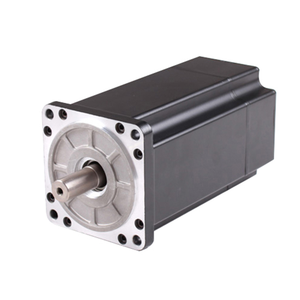
Explore our flagship stator and rotor configurations engineered for robotics, industrial pumps, marine propulsion, and super-premium IE3/IE4/IE5 efficiency electric motors.
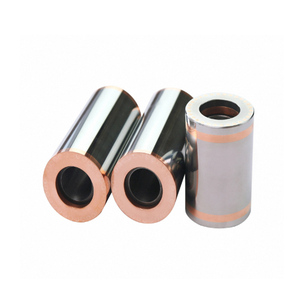
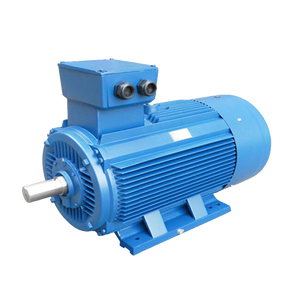
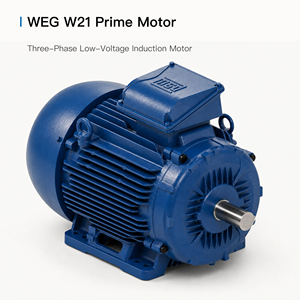
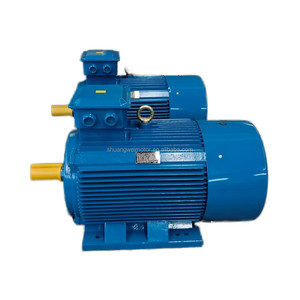
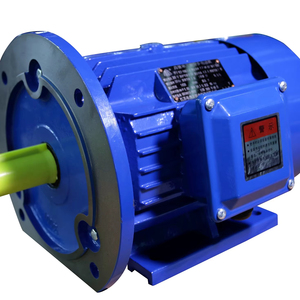
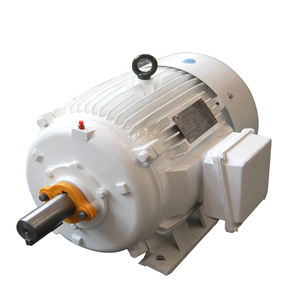
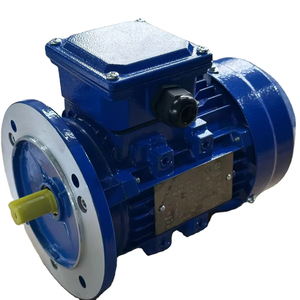
Backed by over 50 years of combined engineering lineage, advanced high-speed progressive stamping tooling, and continuous metallurgical research, we provide global OEMs with precision motor core components engineered for peak electromechanical performance.
We source premium Cold-Rolled Non-Grain-Oriented (CRNGO) silicon steel coils from top-tier mills (Baosteel, WISCO, POSCO). From 0.1mm to 0.5mm laminations, our materials are tailored to maximize magnetic permeability and minimize hysteresis and eddy-current losses.
Equipped with Swiss-made Bruderer high-speed precision presses operating up to 1,500 strokes per minute, we manufacture complex multi-slot stators and rotors with micro-meter tolerances (±0.005mm), ensuring flawless concentricity and slot alignment.
Every batch undergoes stringent testing: Epstein frame core loss testing, 3D Coordinate Measuring Machine (CMM) dimensional verification, rotor dynamic balancing (ISO 1940 G1.0 standard), vacuum pressure impregnation (VPI), and slot insulation breakdown voltage testing.
In modern electromechanical conversion systems, the magnetic core stack—comprising the stator and rotor—is the primary determinant of motor efficiency, power density, thermal performance, and Acoustic Noise/Vibration/Harshness (NVH) profiles. As global industrial regulations shift toward mandatory IE4 (Super Premium) and IE5 (Ultra Premium) efficiency benchmarks under IEC 60034-30-1 standards, selecting a premier lamination manufacturer in China has transitioned from a cost-reduction play to a critical engineering partnership.
The total core loss ($P_{core}$) in an electric motor lamination pack consists of three primary physical components: Hysteresis Loss ($P_h$), Eddy Current Loss ($P_e$), and Anomalous (Excess) Loss ($P_a$). The mathematical relationship is expressed as:
Pcore = Ph + Pe + Pa = kh · f · Bmn + ke · d2 · f2 · Bm2 + ka · f1.5 · Bm1.5
Where $d$ represents the individual lamination sheet thickness, $f$ represents frequency, and $B_m$ is the peak flux density. As clearly indicated by the $d^2$ dependence in the eddy current component, decreasing lamination thickness dramatically slashes energy dissipation at elevated operating frequencies—making ultra-thin 0.10mm to 0.35mm electrical steels essential for high-RPM brushless DC (BLDC) motors, EV traction units, and high-frequency spindle motors.
The following technical reference matrix details the electrical steel grades routinely processed in our Ningbo and Guangdong manufacturing facilities for international OEM supply:
| Steel Grade (AISI / IEC) | Nominal Thickness (mm) | Max Core Loss @ 1.5T 50Hz (W/kg) | Min. Magnetic Induction @ 5000 A/m (T) | Stacking Factor (%) | Primary Application Target |
|---|---|---|---|---|---|
| B14AV1200 / 10V27 | 0.10 – 0.15 | ≤ 0.65 | 1.62 | ≥ 94.5% | Robotic Actuators, High-Speed Spindles (>20,000 RPM) |
| 20W1300 / B20AT1300 | 0.20 | ≤ 1.30 | 1.64 | ≥ 96.0% | EV Traction Motors, High-Frequency Servo Systems |
| 35W270 / M270-35A | 0.35 | ≤ 2.70 | 1.68 | ≥ 96.5% | IE4 / IE5 Industrial Motors, Premium HVAC Compressors |
| 50W470 / M470-50A | 0.50 | ≤ 4.70 | 1.71 | ≥ 97.0% | Standard IE3 Industrial AC Motors, Large Pumps & Blowers |
| 50W800 / M800-50A | 0.50 | ≤ 8.00 | 1.73 | ≥ 97.5% | General-Purpose Low-Cost AC Motors, Appliance Motors |
The structural integrity of the laminated core stack impacts both magnetic performance and mechanical acoustic behavior. Our production lines employ four distinct lamination joining techniques based on customer design requirements:
For squirrel-cage induction motors, our automated high-pressure aluminum die-casting machines (using 99.7% pure electrical-grade aluminum or high-conductivity copper rotor bars) ensure zero porosity, uniform bar conductivity, and perfect dynamic balance. For Permanent Magnet Synchronous Motors (PMSM) and Interior Permanent Magnet (IPM) designs, magnet slots are wire-EDM cut or high-speed stamped, followed by automated magnet insertion, gluing, and carbon-fiber rotor wrapping for ultra-high RPM operation.
Navigating the next decade of electric motor manufacturing requires alignment with technological shifts in decarbonization, ultra-high efficiency standards, and smart manufacturing integration.
With the rapid growth of EV powertrains, eVTOL aviation, and humanoid robotics, the demand for ultra-thin silicon steel laminations operating above 400Hz to 2,000Hz has skyrocketed. Factories in China are heavily investing in sub-0.2mm carbide progressive dies to support high-power-density motor designs.
To eliminate high-frequency acoustic noise and eddy current short circuits caused by mechanical interlocks, premium OEM motor brands are mandating self-bonding steel technology. This provides superior thermal dissipation, allowing motors to run 10°C to 15°C cooler under full load.
Advanced stator slot skewing and rotor pole shaping techniques are being integrated directly into progressive stamping tools to reduce cogging torque and torque ripple to under 1.5%. This is critical for medical equipment, precision CNC servo systems, and quiet marine electric drives.
Key answers for sourcing directors, electrical engineers, and OEM project managers evaluating China's leading motor lamination factory.
A: Using custom Swiss carbide tooling, our standard production line achieves outer/inner diameter tolerances within ±0.005mm to ±0.01mm. Stacking height tolerance is held within ±0.10mm, and total indicator reading (TIR) concentricity is maintained under 0.02mm for precision balance.
A: Burr height is strictly controlled to ≤ 0.02mm (<0.01mm for high-frequency EV laminations) through continuous tool sharpening schedules every 500,000 to 1,000,000 strokes. Additionally, post-stamping deburring and inline optical inspection ensure insulation integrity between adjacent sheets.
A: Yes. We offer rapid prototyping services utilizing high-speed precision laser cutting or wire EDM (Electrical Discharge Machining) combined with single-slot punching. Prototyping lead times typically range from 5 to 10 working days, allowing full electromagnetic testing prior to tooling freeze.
A: Our manufacturing plants are fully certified under IATF 16949 (Automotive Quality Standard), ISO 9001:2015, and ISO 14001:2015. Raw materials comply strictly with RoHS 3.0 and REACH environmental regulations, with full mill test certificates (MTC) provided for every coil batch.
A: Finished stator and rotor stacks undergo vacuum VCI (Vapor Corrosion Inhibitor) packaging with desiccant packs, followed by custom shock-absorbing foam lining in heavy-duty wooden crates (fumigation-free ISPM 15 compliant). This guarantees up to 24 months of corrosion resistance during ocean freight.
A: Yes, we provide full contract assembly services. This includes stator needle winding, automated slot paper insertion, trickling/VPI varnish impregnation, precision rotor shaft hydraulic insertion, magnet positioning, and dynamic rotor balancing prior to final shipment.