Explore China's premier heavy-duty soft starter control panels, asynchronous motors, and integrated automation platforms optimized for demanding industrial environments.
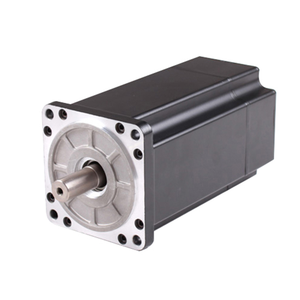
Engineered with solid-state soft-start dynamics, minimal initial inrush current, and precise digital closed-loop feedback for automated robotics.
Inquire Now
High-speed motor elements featuring advanced thermal dissipation alloys, optimized SCR voltage control interfaces, and continuous-duty ratings.
Inquire Now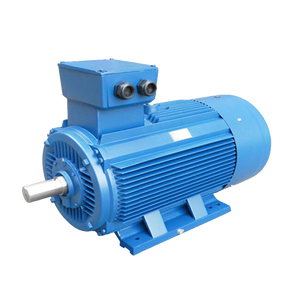
Specifically tailored for large-scale municipal pumps, heavy mining blowers, and high-inertia loads requiring step-down ramp torque control.
Inquire Now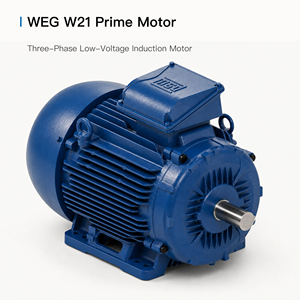
Features low harmonic distortion interfaces, structural cast-iron casing, and integrated bypass contactor support for energy-saving industrial applications.
Inquire Now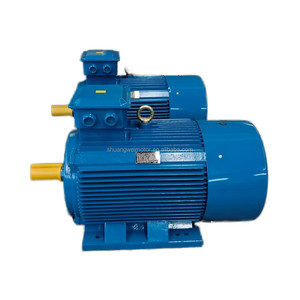
100% electrolytic copper winding, dual-voltage flexibility, fully compatible with solid-state SCR soft starters for extreme grid stabilization.
Inquire Now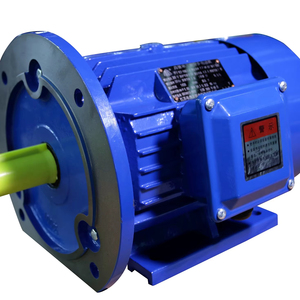
Export-grade industrial motor optimized to prevent hydraulic water hammer effects when coupled with electronic digital soft start cabinets.
Inquire Now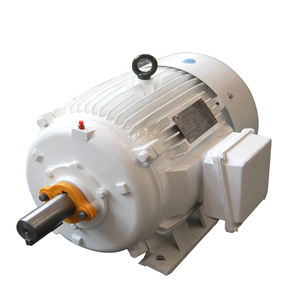
Designed according to North American and global standards; robust insulation class F/B temperature rise for continuous high-load motor soft starting.
Inquire Now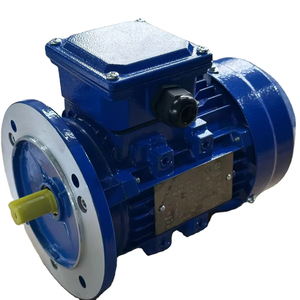
Compact high-torque motor optimized for industrial conveyors, fans, and process automation equipped with modern reduced-voltage soft starters.
Inquire NowIn modern process industries, direct-on-line (DOL) starting of heavy squirrel-cage induction motors introduces severe electrical and mechanical stress. Across power-intensive sectors—such as wastewater management, marine propulsion, mining, bulk material handling, and HVAC process plants—the locked-rotor current during startup can spike to 600%–800% of nominal full-load amperage (FLA). This surge causes severe line voltage drops, triggers nuisance tripping of circuit protection equipment, accelerates insulation degradation, and imposes violent mechanical shock on gearboxes, couplings, and pump impellers.
Industrial solid-state soft starters, utilizing six-thyristor (anti-parallel SCR pairs) power topology, solve these issues by progressively controlling voltage acceleration via phase-angle firing microprocessors. By managing initial starting torque (reducing starting currents to 200%–450% FLA), soft starters protect power grids, minimize thermal hysteresis, and increase motor operating longevity. As China reinforces its industrial position through advanced automation hubs in Zhejiang, Jiangsu, and Guangdong, global OEMs and EPC system integrators increasingly source industrial soft starters and compatible IE3/IE4 heavy-duty induction motors directly from certified Chinese manufacturers.
Technical Insight: Integrating high-efficiency solid-state soft starters with IE4 super-premium efficiency motors reduces peak electrical demand charges during motor startup by up to 65% and completely eliminates mechanical water hammer damage in pumping systems.
To establish optimal engineering criteria when evaluating OEM suppliers from China, enterprise procurement teams must analyze how digital soft starters compare against Variable Frequency Drives (VFDs), Star-Delta (Y-Δ) starter setups, and classic Direct-On-Line (DOL) contactor configurations:
| Performance Parameter | Solid-State Soft Starter | Variable Frequency Drive (VFD) | Star-Delta (Y-Δ) Starter | Direct-On-Line (DOL) |
|---|---|---|---|---|
| Inrush Current (% FLA) | 150% – 450% (Programmable) | 100% – 150% (Constant Torque) | 300% – 400% (Step Jump) | 600% – 800% (Severe Spike) |
| Torque Control Characteristics | Smooth linear ramp / Torque control | Full speed & torque modulation | Abrupt transition torque spike | Uncontrolled high starting shock |
| Harmonic Distortion (THD) | Transient during ramp (~0% in bypass) | Continuous (Requires active filters) | Negligible | Zero harmonic distortion |
| Thermal & Footprint Efficiency | High density (Integrated bypass) | Moderate (Heat sink required) | Large enclosure footprint | Extremely compact |
| Capital Investment (CapEx) | Optimal / Cost-Effective | High (2.5x – 4x Soft Starter cost) | Low initial, high maintenance | Lowest initial CapEx |
Sourcing high-power industrial soft starters and custom-wound asynchronous motors from China requires balancing competitive manufacturing scale with global engineering standards. Advanced production clusters in Ningbo and surrounding East Asian industrial zones combine vertical integration of silicon-controlled rectifiers (SCRs), heavy cast-iron housing foundries, and automated copper-coil winding with European-level Quality Assurance (QA).
Over 50 years of combined engineering capability allows Chinese factories to customize soft starter parameters, SCR voltage curves, thermal protection curves (Class 10, 20, 30), and fieldbus communication cards (Modbus, Profinet, EtherNet/IP) for specific customer operating profiles.
Whether deploying medium-voltage (3.3kV–11kV) soft start cabinets for offshore marine vessels or IP65 enclosed units for corrosive chemical plants, products are optimized for exact thermal, environmental, and mechanical duty cycles.
Every motor drive assembly and soft starter unit undergoes 100% full-load bench testing, insulation resistance testing, SCR thermal imaging, and high-potential (Hi-Pot) testing at key logistics centers in Denmark and China prior to dispatch.
Through integrated setups like the Hoyer VMS Group, industrial enterprises gain access to full lifecycle support: from initial engineering selection, low-voltage (LV) and medium-voltage (MV) soft starter configuration, to fast global logistics backed by a buffer inventory exceeding 70,000 electric motors and control units.
As global manufacturing shifts toward smart factory paradigms, carbon neutralization, and real-time operational tracking, the design and procurement of industrial soft starters are undergoing major technological evolutions:
Modern industrial soft starters are evolving beyond simple motor starting devices into intelligent edge monitoring nodes. Next-generation soft starters manufactured in China incorporate embedded vibration sensors, high-frequency current sampling modules, and real-time thermal modelling algorithms. These components continuously track motor stator temperature, SCR heatsink status, load torque fluctuations, and power factor metrics, transmitting telemetry directly to centralized SCADA or cloud-based predictive maintenance systems via OPC UA and MQTT protocols.
To reduce internal cabinet heat buildup, energy losses, and cabinet space requirements, top manufacturers are standardizing integrated internal bypass contactors across their soft starter lineups. Once the motor reaches full operating speed, internal contactors bypass the thyristors, cutting heat loss by up to 98% during continuous operation and removing the need for external forced-air cooling units or oversized air-conditioned enclosures.
Emerging solid-state soft starters feature hybrid Silicon Carbide (SiC) power semiconductors capable of handling higher switching frequencies, elevated thermal limits, and harsh power grid environments. Combined with adaptive mathematical torque control algorithms, these units automatically recalculate soft ramp trajectories in real-time, preventing voltage sag and mechanical stress even under fluctuating load conditions.
With stringent global regulations (such as EU MEPS, IE4/IE5 efficiency classes, and China's GB 18613 standards) driving industrial energy policies, enterprise procurement officers prioritize motor starting solutions that minimize startup power spikes. Using soft starters eliminates peak current penalties imposed by electrical utilities, providing measurable carbon reduction benefits across industrial processing facilities.
Below are detailed answers to key engineering and commercial questions encountered by plant managers, system integrators, and procurement officers when sourcing industrial soft starters from China.
Sizing a soft starter requires evaluating the motor's Full Load Amperage (FLA), starting frequency, ambient operating temperature, and load inertia (Class 10 standard duty vs. Class 20/30 heavy-duty). For heavy-duty equipment like jaw crushers, ball mills, or high-pressure centrifugal blowers, select a soft starter rated one frame size higher than the motor's nominal kilowatt (kW) rating. Ensure the thyristor thermal current rating supports 400%–450% FLA for up to 30 seconds to prevent thermal tripping during long acceleration ramps.
An internal bypass soft starter integrates mechanical bypass contactors directly inside the compact starter chassis, automatically closing when the motor reaches full operating speed. This saves control cabinet panel space, reduces wiring complexity, and lowers installation costs. An external bypass configuration requires installing an independent electromagnetic contactor beside the starter cabinet, which is typically specified for ultra-high-power applications (above 500kW) or medium-voltage marine systems requiring dedicated bypass isolation switchgear.
Soft starters generate phase-angle controlled voltage harmonics only during the brief startup or soft-stop ramp period (typically 5 to 30 seconds). Once the soft starter transitions to the bypass state, the thyristors turn off, and line power feeds the motor directly through mechanical contactors with zero harmonic distortion. This makes soft starters vastly superior to VFDs in applications where continuous speed regulation is unnecessary, eliminating the need for expensive active harmonic filters or shielded motor cables.
Ensure manufacturers provide verified compliance with international standards such as IEC 60947-4-2 for low-voltage semiconductor motor controllers and starters, CE marking (EMC Directive 2014/30/EU & Low Voltage Directive 2014/35/EU), and ISO 9001 quality management systems. For marine and offshore deployments, confirm type-approval certifications from recognized classification societies such as DNV, ABS, LR (Lloyd's Register), BV (Bureau Veritas), or CCS (China Classification Society).
Yes. Soft starters equipped with specialized pump-control algorithms provide controlled deceleration (soft stopping). By gradually ramping down terminal voltage over an adjustable time window (e.g., 10 to 60 seconds), the starter slowly decreases fluid flow velocity, preventing abrupt check-valve closure and eliminating damaging hydraulic shock waves (water hammer) in pipeline networks.
Standard low-voltage soft starters and stock IE3/IE4 motors are typically dispatched within 48 to 72 hours from regional warehouse hubs in Ningbo or Denmark. Custom-engineered control panels featuring specific IP enclosure ratings, integrated circuit breakers, bypass switchgear, and customer-specified fieldbus communication cards generally carry manufacturing lead times of 3 to 5 weeks. Partnering with suppliers offering dual-region inventory buffering mitigates global logistics disruptions.
Connect with our global application engineering team to request technical datasheets, CAD models, customized soft starter panel configurations, or direct factory pricing for high-volume enterprise orders.
