Select from our standard high-efficiency series or request specialized OEM electrical and mechanical modifications engineered for extreme continuous duty cycles.
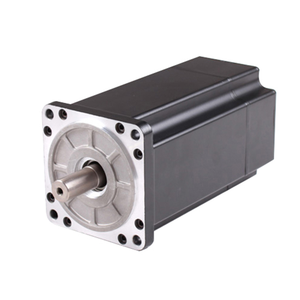
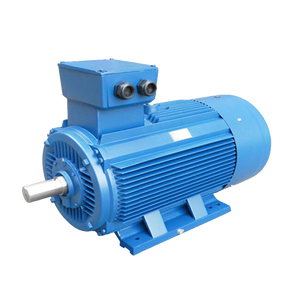
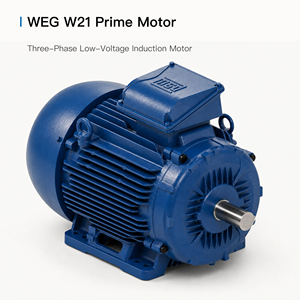
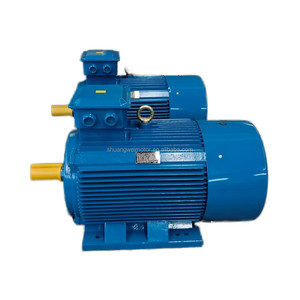
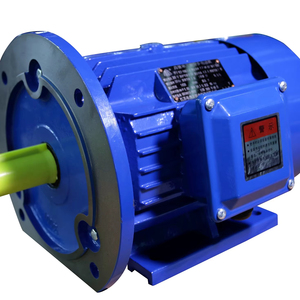
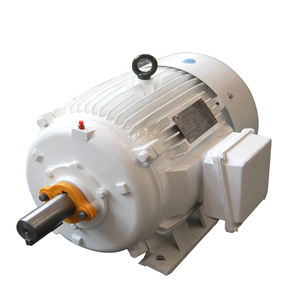
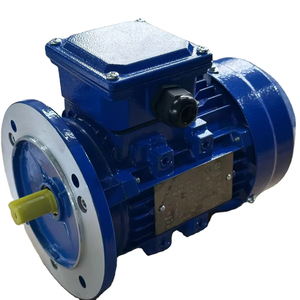
Three-phase induction motors serve as the foundational workhorses of global industrial infrastructure. Operating on the principle of electromagnetic induction first discovered by Nikola Tesla and Michael Faraday, modern AC asynchronous motors have evolved into highly sophisticated electromechanical power units. Choosing the correct electric motor manufacturer from China requires navigating international efficiency standards, insulation metallurgy, thermal management dynamics, and Total Cost of Ownership (TCO) parameters.
As industrial automation accelerates globally, selecting a manufacturer is no longer merely a matter of comparing unit purchase price. It demands evaluating IE3 Premium Efficiency and IE4 Super Premium Efficiency performance metrics, mechanical balance tolerances (ISO 21940), and structural integrity under variable frequency drive (VFD) switching stresses.
International industrial markets operate under two primary standards systems: the International Electrotechnical Commission (IEC) standards—dominant across Europe, Asia, and South America—and the National Electrical Manufacturers Association (NEMA) standards utilized primarily throughout North America.
| Specification Feature | IEC Standard Frame (IEC 60034) | NEMA Standard Frame (NEMA MG1) |
|---|---|---|
| Efficiency Hierarchy | IE1 (Standard), IE2 (High), IE3 (Premium), IE4 (Super Premium), IE5 (Ultra) | Standard, High Efficiency, NEMA Premium®, Super Premium |
| Dimensional Unit | Metric (millimeters) - Frame sizes 56 to 450+ | Imperial (inches) - Frame sizes 48 to 449T+ |
| Terminal Box & Voltage | Typically 230/400V or 400/690V @ 50Hz (Star/Delta convertible) | Typically 230/460V, 575V @ 60Hz (9 or 12 lead setups) |
| Enclosure Protection | IP55, IP56, IP65, IP66 standard rated | TEFC (Totally Enclosed Fan Cooled), ODP (Open Drip Proof) |
The operational longevity of a three-phase asynchronous motor is dictated primarily by stator winding insulation temperature limits and rotor heat dissipation capabilities. We utilize Class H thermal insulation systems, calibrated to operate safely within Class F thermal margins (max rise 105K). This built-in thermal headroom enables continuous operation under voltage fluctuations of ±10% without insulation degradation.
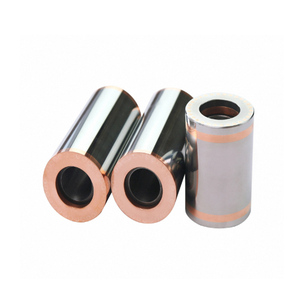
Key metallurgical components integrated into export-grade three-phase motors include:
When operating induction motors via Variable Frequency Drives (VFDs / Inverters), pulse-width modulation (PWM) switching causes rapid voltage rise times (dV/dt). Without adequate protection, these voltage spikes breakdown standard slot insulation and generate common-mode shaft voltages.
Our export-grade IE3 and IE4 motors incorporate NEMA MG1 Part 31 compliance, utilizing inverter-grade magnet wire capable of withstanding voltage peaks up to 1600V. For motors above 75kW (frame 280 and larger), we integrate insulated non-drive end (NDE) bearings or grounding shaft rings to eliminate electrical bearing fluting, preventing premature bearing failure and grease carbonization.
Leveraging over 50 years of application expertise, a 70,000+ motor global stock inventory, and full-lifecycle OEM/MRO support.
With decades of specialized industrial and marine motor engineering experience, we customize shaft profiles, mounting flanges (B3, B5, B14, B35), special voltages, and extreme marine environmental coatings (C4/C5-M painting standards).
Minimizing lead times and downtime risks through an active inventory buffer of over 70,000 standard motors. Our strategic warehousing in Europe and Asia guarantees rapid dispatch for urgent OEM and MRO continuous requirements.
From initial design specification and 3D CAD modeling to factory acceptance testing (FAT), vibration spectrum analysis, and 24/7/365 field execution, we act as a single accountable partner throughout your motor lifecycle.
The global electric motor market is experiencing a structural shift driven by decarbonization mandates, rising industrial power tariffs, and mandatory minimum energy performance standards (MEPS). Procurement teams must align purchasing strategies with upcoming technological shifts:
Global regulatory frameworks (such as EU Regulation 2019/1781) have made IE4 efficiency mandatory for specific power ranges. Upgrading from IE2 or IE3 to IE4 reduces electrical power losses by 15% to 20%, offering an average payback period of less than 14 months under continuous operation.
Modern procurement specifies smart wireless vibration and thermal sensors mounted directly on motor bearing houses. Real-time data streams monitor winding temperatures, tri-axial vibration, and magnetic flux anomalies to trigger predictive maintenance before catastrophic downtime occurs.
Direct technical answers addressing OEM specifications, export standards, customization options, and order logistics.
Consult with our senior motor application engineers today for detailed CAD drawings, torque-speed curves, customized OEM pricing, and rapid global delivery logistics.
Inquire Now