China Best Shipboard Electric Motors Factory & Exporter

High-Efficiency Marine-Class Certified (CCS, ABS, DNV, BV, LR) Electric Motors Engineered for Propulsion, Auxiliary Machinery & Offshore Applications

Featured Marine Fleet Products

High-Performance Shipboard Electric Motors

Factory-direct OEM solutions customized for marine pumps, winches, thrusters, blowers, and robotic systems with heavy-duty corrosion protection.
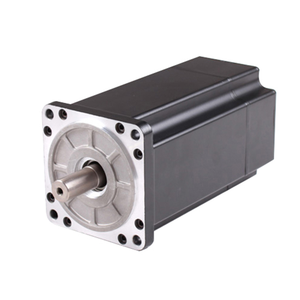
High Speed 3 Phase BLDC Motor for Marine Robotics

High Speed 3 Phase 48V/310V 3000rpm NEMA 42 BLDC Motor for Marine Robotics

  • Power Range: 1kW, 1.5kW, 2kW, 3kW
  • Voltage: 48V DC / 310V DC
  • Protection: IP67 Waterproof Shaft Seal
  • Application: Shipboard Inspection Robots
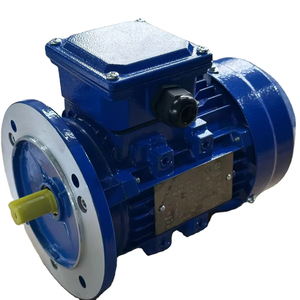
Premium Made Induction Motor High Speed Marine Motor

Premium High Speed Brushless & Induction Motor Elements for Shipboard Auxiliary

  • Efficiency: Premium Efficiency GEM Standard
  • Speed: High Speed Precision Rotor
  • Insulation: Class H (180°C) VPI Treated
  • Duty Cycle: Continuous S1 Duty
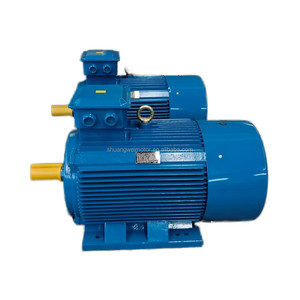
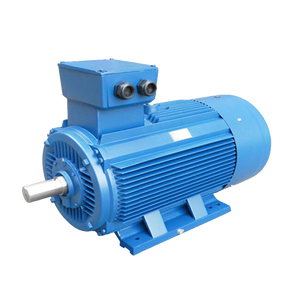
Y3-450 800KW 4P High Power Marine Pump Motor

Motor Y3-450-800KW-4P High Power Marine Induction Motor for Pumps & Blowers

  • Rated Power: 800kW (4-Pole)
  • Cooling: IC411 Heavy Heat Dissipation
  • Frame Material: Rigid Marine Cast Iron
  • Application: Ballast Pumps, Main Blowers
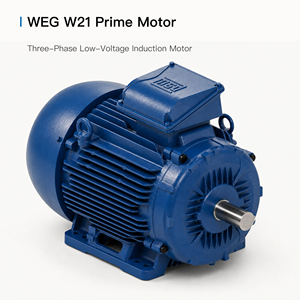
WEG W21 Prime IE3 IE4 IE5 Cast Iron Marine Motor

WEG W21 Prime IE3 IE4 IE5 Cast Iron Marine Motor for Compressors & Fans

  • Efficiency Class: IE3 / IE4 / IE5 Ultra-Premium
  • Mounting: B3, B5, B35 Marine Flange
  • Protection Grade: IP55 / IP56 / IP66
  • Features: Low Energy Consumption
15KW 20HP IE4 Super Premium Efficiency 3-Phase Motor

15KW 20HP IE4 Super Premium Efficiency 3-Phase Marine Asynchronous Motor

  • Power / Voltage: 15kW (20HP) / 380V 50/60Hz
  • Speed Range: 2-Pole (2800rpm) / 4-Pole (1450rpm)
  • Winding: 100% Electrolytic Copper
  • Protection: IP55 Marine Anti-Humidity
YE3 Factory Direct Export Specific Marine Motor

YE3 Premium High Efficiency Three Phase Marine Induction AC Motor (Export Standard)

  • Type: Asynchronous Squirrel Cage
  • Certification: CCS, CE, ISO9001 Certified
  • Housing: Cast Iron / Heavy Aluminum
  • Environment: Tropicalised Marine Duty
NEMA Premium Efficiency Marine Electric Motor

NEMA Premium Efficiency Three Phase Heavy-Duty Marine Duty Motor

  • Standard: NEMA MG-1 IEEE 841 Compliance
  • Bearings: Re-greasable Heavy SKF/NSK
  • Coating: C5M Epoxy Anti-Corrosion Paint
  • Duty: Continuous Marine Duty 50°C Ambient
Factory Direct Sale IE4 Marine Motor 2.2KW

Factory Direct IE4 Super Premium Efficiency 2.2kW Marine Motor (B3/B5/B35 Mounted)

  • Output Power: 2.2kW (3HP)
  • Mounting: Universal B3, B5, B35 Flange
  • Vibration Level: Grade A Precision Balance
  • Thermal Protection: Built-in PTC Thermistors
Factory Excellence & Capabilities

Why We Are China’s Leading Shipboard Motor Exporter

Combining 50+ years of industrial legacy with state-of-the-art automated manufacturing, rigorous Marine Classification Society testing, and global logistics power.

50+
Years Engineering Expertise
70,000+
Motors Stocked Globally
100%
Full Class Survey Support
IE3/IE4/IE5
Eco-Design Efficiency

Application-Specific Marine Design

Marine environments impose harsh operational stresses: high ambient humidity, high temperatures in engine rooms (up to 50°C), constant saline atmosphere, and intense mechanical vibration. Our engineering teams customize winding tropicalization, shaft seals (IP56/IP66/IP67), anti-condensation heaters, and C5M marine coatings to ensure zero unplanned downtime at sea.

Multi-Class Marine Certifications

We work directly with major international marine classification societies. Every batch of shipboard electric motors can be delivered with individual or type approval certificates from DNV, ABS, Bureau Veritas (BV), Lloyd's Register (LR), China Classification Society (CCS), and RINA, guaranteeing global port state regulatory compliance.

VPI Winding & Thermal Endurance

Utilizing Vacuum Pressure Impregnation (VPI) with high-grade resin, our copper windings achieve Class H electrical insulation with thermal rise limits constrained to Class F or B. This provides a massive thermal cushion against power surges, voltage fluctuations, and high-ambient marine engine room conditions.

Custom OEM/ODM & Rapid Modification

From non-standard shaft dimensions, special dual-shaft extensions, brake assembly integration, and VFD-rated inverter duty insulation (reinforced turn-to-turn insulation) to custom terminal box positioning, our agile manufacturing line handles short-run OEM customization without inflating lead times.

Global Logistics & Lifecycle Support

Backed by a robust international spare parts warehouse network and 24/7 technical field support, we guarantee quick replacement of bearings, terminal blocks, seals, and complete motor units across major shipbuilding hubs in Asia, Europe, the Middle East, and the Americas.

Lowest Total Cost of Ownership (TCO)

By upgrading auxiliary shipboard machinery from legacy IE1/IE2 motors to our IE4 Super Premium and IE5 Ultra-Premium efficiency series, ship operators achieve fuel consumption reductions on shaft/auxiliary generators, realizing operational payback within months.

Industry Technical Whitepaper

Engineering & Procurement Standards for Modern Shipboard Electric Motors

In modern commercial shipping, offshore platform operations, and naval architecture, electric motors are the hidden workhorses driving critical auxiliary and propulsion systems. From fuel oil transfer pumps, ballast water management systems (BWMS), engine room ventilation blowers, and air compressors to deck winches, anchor windlasses, and azimuthing thrusters—motor reliability directly dictates vessel safety, operational availability, and environmental regulatory compliance.

Key Insight for Marine Procurement Officers: Marine electric motors operate under fundamentally different stress profiles than onshore industrial motors. Ambient engine room temperatures routinely hit 45°C to 50°C, while shipboard power grids experience voltage harmonics, frequency drops, and intense structural vibration. Standard industrial motors installed on sea vessels face high rates of premature insulation breakdown, bearing pitting, and salt-spray corrosion.

1. Critical Engineering Specifications for Shipboard Electric Motors

When specifying electric motors for shipboard applications, engineers and procurement teams must evaluate key technical parameters to ensure long-term survivability in marine duty cycles:

  • Environmental Protection Ratings (IP Code): Shipboard motors installed below deck generally require minimum IP55 protection against dripping oil and water splash, whereas deck-mounted machinery (winches, windlasses, cranes) demands IP56, IP67, or IP68 submersible enclosures fitted with labyrinth stainless steel oil seals to prevent seawater ingress during heavy seas.
  • Winding Insulation & Tropicalization: Marine motors must feature Class F or Class H insulation systems utilizing double-vacuum pressure impregnation (VPI). Copper magnet wires are coated with moisture-resistant enamel, and stator slots receive additional phase insulation to prevent dielectric breakdown in relative humidity environments reaching 95%.
  • Corrosion Protection Paint System: Cast iron frame marine motors undergo multi-stage surface preparation (SA 2.5 sandblasting) followed by high-solid epoxy zinc-rich primer and aliphatic polyurethane topcoats, complying with ISO 12944-5 C5-M (Marine Heavy Coastal/Offshore) anti-corrosion standard to endure salt fog for over 1,500 hours without rusting.
  • Bearings & Mechanical Vibration: Heavy-duty, low-noise SKF or NSK C3-clearance deep-groove ball bearings or cylindrical roller bearings are mandatory. Rotors undergo dynamic balancing to Grade G1.0 or G2.5 (ISO 1940) to minimize structure-borne vibration transmitted through ship hulls.
  • Dual-Frequency & Voltage Compatibility: Most global commercial fleets run on 440V/60Hz or 380V-415V/50Hz marine auxiliary generators. Premium shipboard motors feature dual-stamped nameplates enabling seamless 50Hz/60Hz operational flexibility without overheating.

Comparison Matrix: Marine Duty vs. Standard Industrial Motors

Technical Parameter Standard Industrial Motor China Marine-Grade Shipboard Motor (Export Std) Operational Impact at Sea
Ambient Temperature Rating 40°C Standard 45°C to 50°C Marine Engine Room Standard Prevents continuous thermal overload trip in enclosed engine spaces.
Enclosure Paint System C2/C3 Industrial Acrylic C5-M Heavy Marine Epoxy-Polyurethane (1,500hr Salt Fog) Resists atmospheric salt spray, high humidity, and oily bilge chemical exposure.
Insulation Process Single Dip Varnish (Class F) Double VPI Resin Vacuum Impregnation (Class H Winding) Eliminates internal air voids, preventing moisture-induced insulation short circuits.
VFD Inverter Duty Rating Optional / Standard Wire Phase Barriers + Reinforced Spike Guard Winding Wire Withstands PWM voltage spikes ($dV/dt$) generated by frequency drives.
Marine Class Compliance None CCS, DNV, ABS, BV, LR Type Approval Ready Ensures smooth vessel survey clearance by Port State Control (PSC) inspectors.

2. Future Procurement & Technology Trends in Shipboard Motors

The global maritime industry is experiencing a seismic shift driven by International Maritime Organization (IMO) decarbonization mandates (EEXI, CII index compliance) and the rapid digital transformation of smart vessels. Procurement strategy for shipboard electric motors must align with these strategic developments:

  1. Transition to IE4 Super Premium & IE5 Ultra-Premium Efficiency: Auxiliary motor systems account for up to 30% of a vessel's non-propulsion electrical load. Upgrading from IE2 to IE4/IE5 synchronous reluctance (SynRM) or permanent magnet (PM) motors directly decreases generator fuel burn, reducing marine gas oil (MGO) or LNG consumption and shaving off carbon intensity metrics.
  2. Integration of Smart IoT & Condition Monitoring Sensors: Next-generation shipboard motors feature integrated wireless or Modbus-connected condition monitoring units. Tri-axial vibration sensors and embedded PT100 temperature sensors transmit real-time bearing health and thermal metrics to the shipboard automation system (IAS), enabling predictive maintenance before catastrophic sea failure occurs.
  3. Widespread Adoption of Variable Frequency Drives (VFDs): Coupling shipboard electric motors with frequency converters allows dynamic speed adjustment for seawater cooling pumps and ventilation fans. Instead of running at 100% capacity in cold Arctic waters, pump speeds modulate based on actual cooling demand, delivering electrical energy savings of 40% to 60%.
  4. Hybrid & All-Electric Ship Propulsion: As naval architecture shifts toward hybrid-electric tugboats, offshore supply vessels (OSVs), and passenger ferries, high-power water-cooled PM motors and high-voltage (3.3kV/6.6kV) induction motors are replacing traditional mechanical diesel propulsion drives.
Procurement Guidance

Shipboard Electric Motors FAQ

Answers to common technical, regulatory, and logistics queries from shipyards, ship managers, and global OEM buyers.

Which marine classification society certificates can your factory supply?

Our factory works directly with all major international IACS (International Association of Classification Societies) members. We regularly provide official certificates and survey stamps from China Classification Society (CCS), DNV, American Bureau of Shipping (ABS), Bureau Veritas (BV), Lloyd's Register (LR), RINA, and ClassNK. Both individual batch test certificates and Type Approval Certificates are available upon request.

What is the difference between a standard industrial motor and a marine-duty shipboard motor?

Marine-duty shipboard motors are specially designed for harsh marine environments. Key differences include: higher ambient temperature rating ($45^\circ\text{C}$ to $50^\circ\text{C}$ vs $40^\circ\text{C}$), tropicalized insulation with double VPI treatment to resist humidity up to 95%, C5-M grade epoxy anti-corrosion paint system, low-vibration dynamic balancing, stainless steel nameplates/hardware, and compliance with marine class vibration and safety standards.

How do you ensure motor windings withstand variable frequency drive (VFD) voltage spikes?

For inverter-duty applications, we employ high-grade enamelled copper wire with enhanced dielectric strength, insert phase insulation barriers between stator phases, and utilize specialized pulse-resistant varnish. For motors with frame sizes 280 and above driven by VFDs, we install insulated bearings (or grounding brushes) to eliminate micro-bearing fluting caused by shaft currents.

Can you manufacture non-standard custom flanges or shaft dimensions for retrofits?

Yes. As a primary OEM manufacturer in China, we specialize in drop-in replacement motors for older European or Japanese vessel retrofits. We can machine custom shaft diameters, keyways, special flange dimensions (NEMA, DIN, IEC, JIS standards), and custom terminal box locations to match existing shipboard piping and foundation bolt footprints.

What efficiency classes do your shipboard motors comply with?

We offer full series coverage ranging from standard IE2 and IE3 high-efficiency motors to IE4 Super Premium Efficiency and IE5 Ultra-Premium synchronous reluctance / permanent magnet motors, complying with IEC 60034-30-1 and MEPS energy conservation standards globally.

What is the lead time for export orders and emergency spare parts shipment?

Standard IEC marine motors are kept in stock with over 70,000 units ready for rapid assembly and dispatch within 5 to 7 days. Custom OEM orders with marine class survey witnessing typically ship within 20 to 30 days. For urgent vessel-in-repair (AOG/MRO) situations, we offer expedited air freight and port-side delivery service to major global ports.

Partner with China’s Premier Shipboard Motor Exporter

Whether you need custom OEM motors for a newbuild shipyard project, energy-saving IE4 upgrades for an existing fleet, or urgent replacement motors with class certification, our engineering team is ready 24/7 to assist you.