Engineered for extreme starting torques, frequent acceleration/braking cycles, and harsh industrial environments worldwide.
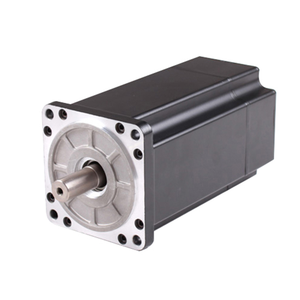
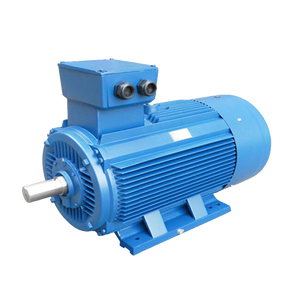
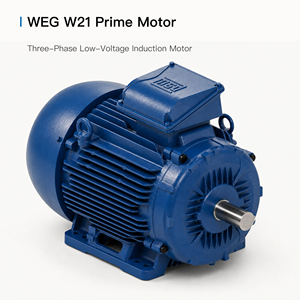
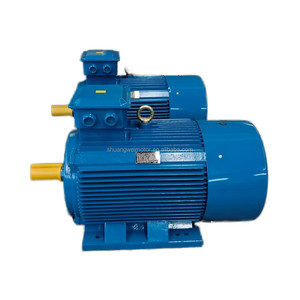
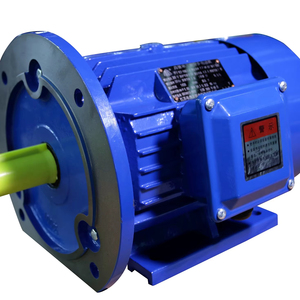
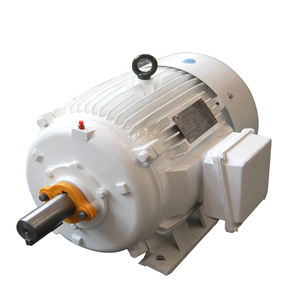
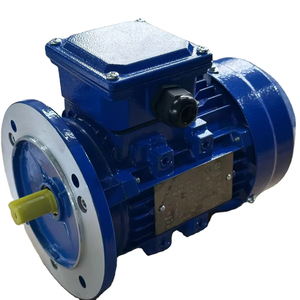
Crane duty electric motors are fundamentally different from standard industrial motors (which operate under continuous S1 duty). Crane operations involve severe operating conditions characterized by frequent starting, electrical plug braking, reversing, dynamic load surges, and short-time intermittent operation under duty cycles defined by IEC 60034-1 standards (specifically S3 Intermittent Periodic Duty, S4 Duty with Starting, and S5 Duty with Electric Braking).
When evaluating global sourcing destinations, China has emerged as the premier manufacturing powerhouse for heavy-duty crane motors. China's top tier electric motor exporters combine advanced electromagnetic modeling, high-grade silicon steel laminations, vacuum pressure impregnation (VPI), and automated dynamic rotor balancing to yield motors capable of surviving tens of millions of switching cycles over decades of operation.
Core Engineering Rule: A crane motor must be rated based on its Cyclic Duty Factor (CDF) and starts per hour ($C/h$). Selecting a standard IE3 motor for hoist or gantry travel without accommodating thermal dissipation limits under high $C/h$ leads to catastrophic winding insulation degradation due to localized stator hot spots.
To assist procurement managers and project engineers in matching drive specs to heavy overhead cranes, container gantry cranes (RTG/RMG), tower cranes, and shipyard winches, the table below outlines the mechanical and electrical boundary conditions:
| Duty Rating Type | Cyclic Duty Factor (CDF) | Starts per Hour (C/h) | Primary Application Field | Thermal Dissipation Strategy |
|---|---|---|---|---|
| S3 Intermittent | 15%, 25%, 40%, 60% | < 150 C/h | Main Hoist / Auxiliary Hoist | Natural convection (IC411) / Heavy Ribbed Surface |
| S4 Intermittent w/ Start | 25%, 40%, 60% | 150 to 300 C/h | Long Travel / Cross Travel Gantry | Forced Surface Cooling (IC416) w/ External Fan |
| S5 Duty w/ Braking | 40%, 60% | > 300 C/h | High-Frequency Port Container Handling | VFD Inverter Duty + Separate Powered Blower |
| S9 Non-Periodic VFD | Variable Load / Speed | Continuous Modulation | Smart Automated Crane Systems | Insulated Bearings + Shaft Grounding Ring |
Building on more than 50 years of combined engineering tradition, China's premier motor manufacturing facilities—often integrated with European design standards like Hoyer VMS group protocols—deliver unmatched reliability across maritime, mining, port logistics, and metallurgical crane industries.
Why global original equipment manufacturers (OEMs) and engineering, procurement, and construction (EPC) contractors consistently choose China's leading crane motor suppliers:
Tailored shaft dimensions (splined, tapered, double-extended), custom mounting flanges (B3, B5, B35, V1), and specialized electromagnetic DC/AC fail-safe disc brake integration.
Ingress protection up to IP66 and marine environment corrosion proofing (C4/C5-M painting systems according to ISO 12944) for offshore port operations.
Corona-resistant magnet wire, reinforced slot liner insulation, and insulated ceramic bearings (or hybrid bearings) to withstand high dV/dt voltage spikes from VFD PWM drives.
The global crane and material handling industry is undergoing a structural transition driven by automation, decarbonization, and digital condition monitoring. Exporters in China are pioneering critical innovations that redefine lifecycle cost performance:
Historically, crane duty motors were exempt from strict minimum energy performance standards (MEPS) due to their intermittent nature. However, modern automated logistics terminals run continuously 24/7. Leading manufacturers now offer IE4 (Super Premium) and IE5 (Ultra-Premium) permanent magnet synchronous crane motors (PMSM) and synchronous reluctance motors (SynRM), reducing energy overhead by up to 18% when operated with regenerative braking systems.
Smart crane motors are now equipped with factory-embedded multi-axis wireless vibration sensors, PT100/PT1000 stator winding RTDs, and bearing temperature detectors. Using cloud-edge analytics, maintenance teams receive real-time warnings regarding bearing raceway micro-spalling, dynamic rotor unbalance, or brake liner wear before catastrophic failure occurs on critical harbour container cranes.
Modern crane architectures feed kinetic energy back into the facility power grid during load lowering operations. Future-ready crane motors feature low-loss magnetic core materials to handle high harmonics from bidirectional active front end (AFE) inverters, accompanied by built-in shaft grounding rings (SGR) to neutralize bearing fluting currents.
Clear technical answers to common queries faced by procurement directors, electrical engineers, and crane OEM specifiers.
To select the correct motor, determine the required mechanical power at the drum ($P_m = \frac{F \times v}{60 \times \eta}$), and convert this base rating to an equivalent continuous power rating based on the Cyclic Duty Factor (CDF). Multiply by the thermal duty multiplier factor ($K_d$) corresponding to your desired S3 percentage (e.g., 25%, 40%, or 60% CDF) and the required starts per hour ($C/h$). Always ensure the pull-out torque ($T_k$) exceeds the peak dynamic load by at least 250%.
Standard motors are optimized for continuous S1 duty with low starting current and moderate starting torque. Crane duty motors feature specially laminated rotors for low moment of inertia ($J$), reinforced Class H insulation, robust cast-iron housings to endure mechanical shocks, heavy-duty electromagnetic brake mounts, and high starting torques ($T_{st}/T_n \ge 2.8$) designed specifically for intermittent S3/S4 start-stop dynamics.
VFDs control motor speed by rapidly switching voltage pulses using IGBTs, generating high rate-of-voltage-rise ($dV/dt$) spikes. This creates common-mode shaft voltages that discharge through the motor bearings, causing electrical discharge machining (EDM) pits or "fluting" tracks on bearing raceways. Insulating the non-drive end (NDE) bearing or utilizing ceramic hybrid balls breaks the electrical circuit, preventing premature bearing failure.
Yes. China's top exporters routinely build crane motors in full compliance with major IACS (International Association of Classification Societies) bodies. You can order motors pre-certified or type-approved by DNV, ABS, Bureau Veritas (BV), Lloyd's Register (LR), ClassNK, and CCS, complete with factory witness testing documentation.
Crane motors usually incorporate fail-safe spring-set electromagnetic brakes (DC or 3-phase AC), which automatically engage upon power loss. Options include manual release levers, microswitches for brake open/close status monitoring, wear indicator sensors, anti-condensation heaters within the brake enclosure, and heavy-duty friction linings tailored for high kinetic energy absorption.
Motors destination-bound for sea ports or coastal container yards receive heavy-duty C4 or C5-M high-durability epoxy polyurethane paint systems (dry film thickness $\ge 240\,\mu\text{m}$). Internal surfaces feature anti-fungal varnish, hardware is upgraded to 316 stainless steel, and anti-condensation heating tapes are installed to protect windings during idle periods.
Partner with China's leading crane duty electric motor manufacturer. Over 70,000 standard and heavy-duty industrial motors in stock with custom engineering capabilities.
Get a Quote