
 CE Certified
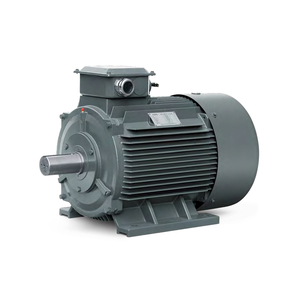
30KW PMSM Motor IEC60034 IE3 Efficiency 380V Large Power
- Power Output: 30kW Heavy Duty
- Standard: IEC60034 / IE3 Efficiency
- Voltage: 380V Three-Phase
Explore our high-performance permanent magnet synchronous AC motors engineered for energy efficiency, ultra-high torque density, and rigorous industrial continuous-duty applications.
CE Certified
 IE5 Ultra
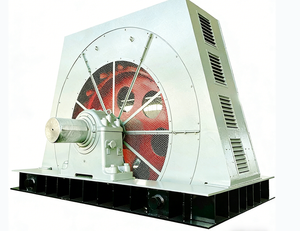 High Voltage
 RoHS Compliant
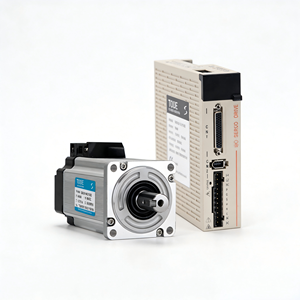 All-in-One
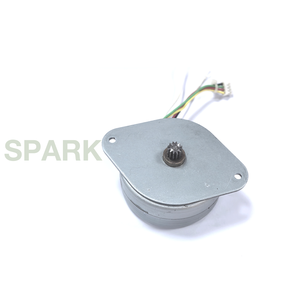
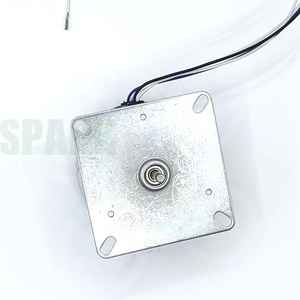 Low Voltage
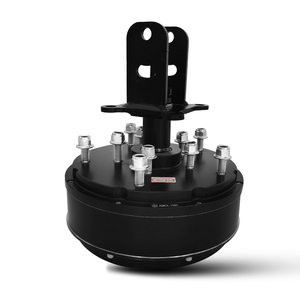
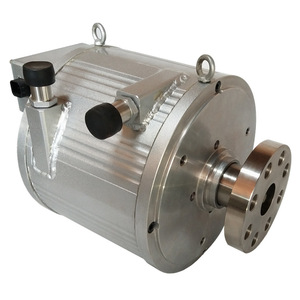 EV Drive Unit
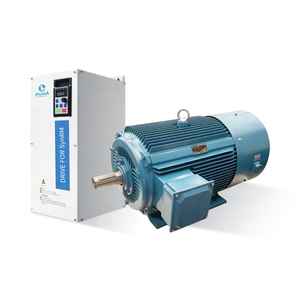 PM-SynRM
In modern industrial manufacturing and heavy marine engineering, energy optimization has transitioned from an operational preference to a stringent regulatory requirement. As global energy standards enforce transitions toward IEC 60034-30-2 IE4 and IE5 efficiency classes, the limitations of traditional asynchronous induction motors (ACIM) have become increasingly evident. Asynchronous induction motors suffer from continuous rotor copper losses caused by induced currents. In contrast, CE certified Permanent Magnet Synchronous Motors (PMSM) eliminate rotor resistive losses by utilizing high-coercivity rare-earth permanent magnets (NdFeB or SmCo) to establish the rotor magnetic flux field.
Direct-drive and geared PMSM architectures allow original equipment manufacturers (OEMs) and plant engineers to downsize machinery frames, reduce overall system weight, achieve precise motion vector control, and dramatically lower Total Cost of Ownership (TCO) across 20-year operational lifecycles.
PMSM systems naturally operate at power factors exceeding 0.95 to 0.98. This eliminates the need for large external reactive power compensation capacitor banks and decreases thermal loads on industrial electrical infrastructure.
By embedding permanent magnets into the rotor core (IPM structure), dynamic speed response is accelerated, allowing high torque output even at low-speed operation without requiring mechanical reduction gearboxes.
Utilizing high-grade Neodymium-Iron-Boron (NdFeB) with Dysprosium (Dy) and Terbium (Tb) doping ensures permanent magnets maintain full flux integrity at continuous operating temperatures exceeding 150°C to 180°C (Class H isolation).
Selecting the optimal electric motor topology requires assessing key performance metrics including thermal loss patterns, speed range control, rotor maintenance requirements, and overall drive efficiency. The matrix below contrasts high-capacity PMSM units with traditional induction and modern synchronous reluctance motors.
| Engineering Characteristic | Standard IE3 Induction Motor (ACIM) | CE Certified IE4/IE5 PMSM Motor | PM-Assisted SynRM (PM-SynRM) |
|---|---|---|---|
| Efficiency Standard | IE2 - IE3 (IEC 60034-30-1) | IE4 - IE5 Ultra-Premium | IE4 - IE5 High Efficiency |
| Rotor Losses | High (Induced Slip Current Losses) | Zero Rotor Current Loss | Near-Zero (Minimal Magnetic Losses) |
| Torque Density (Nm/kg) | Baseline (1.0x) | Very High (up to 2.2x) | High (1.6x) |
| Partial Load Efficiency (25%-75%) | Drops Significantly (<82%) | Remains Flat (>94%) | Maintains High Efficiency (>91%) |
| VFD Requirement | Optional (Direct-On-Line Capable) | Required (FOC / Vector Control Drive) | Required (Dedicated VFD Drive) |
| Frame Size Downsizing | Standard Frame Sizes | 1 to 2 Frame Sizes Smaller | 1 Frame Size Smaller |
Our permanent magnet synchronous motor production facilities integrate automated winding, precision dynamic balancing, vacuum pressure impregnation (VPI), and fully digitized automated test benches. To ensure global market compliance and system reliability, every motor series undergoes strict quality validation in accordance with European and international electro-technical standards.
CE Compliance & EN Standards: All motors manufactured across our factory network comply strictly with the European Low Voltage Directive (LVD 2014/35/EU) and Electromagnetic Compatibility Directive (EMC 2014/30/EU). Key benchmark standards include:
Beyond standardized IEC and NEMA frame dimensions, our engineering team works directly with global original equipment manufacturers (OEMs) to deliver tailored solutions. We provide custom shaft machining (spline, keyless, dual-tapered), custom flange configurations (B5, B14, V1), special thermal protection sensors (PT100, PTC thermistors, KTY84), and marine-grade protective coatings designed for harsh offshore environments. Equipment destined for marine auxiliary drives can be delivered with major classification society certificates including DNV, ABS, Lloyd's Register (LR), BV, and CCS.
As industrial supply chains adapt to decarbonization policies, geopolitical shifts, and digital transformation, B2B motor procurement strategies are evolving rapidly. Procurement managers and OEM design engineers should anticipate the following key market developments:
To reduce reliance on heavy rare-earth elements like Dysprosium, factories are increasingly sourcing PM-Assisted Synchronous Reluctance Motors (PM-SynRM). These motors utilize ferrite or reduced rare-earth magnets to deliver IE5 efficiency while maintaining cost stability.
Modern PMSMs are increasingly specified with built-in vibration, temperature, and magnetic flux sensors. Real-time data streams to cloud-based predictive maintenance platforms, alerting engineers to bearing wear or thermal anomalies before catastrophic failure occurs.
Procurement teams are shifting focus from upfront purchase price (CAPEX) to 10-year total energy expenditure (OPEX). Because electricity costs account for over 90% of a continuous-duty motor's lifecycle cost, upgrading to IE5 PMSM units yields ROI within 12 to 18 months.
Detailed technical answers to common inquiries regarding permanent magnet synchronous motor selection, CE certification, VFD compatibility, and factory lead times.
No, standard Permanent Magnet Synchronous Motors cannot be started directly across an AC power line (DOL) because their rotors cannot synchronize instantly with grid frequency (50/60Hz). PMSMs require a Variable Frequency Drive (VFD) equipped with permanent magnet vector control algorithms or Field Oriented Control (FOC) to start, accelerate, and regulate speed reliably. However, Line-Start PMSMs (LSPMSM) with embedded cage windings are available for specialized DOL applications.
In Surface Permanent Magnet (SPM) motors, magnets are mounted directly on the outer surface of the rotor core. SPM designs provide high magnetic efficiency at lower speeds but have lower mechanical integrity at ultra-high speeds. In Interior Permanent Magnet (IPM) motors, magnets are embedded inside the rotor structure. This provides mechanical robustness for high-speed operation and generates reluctance torque alongside magnetic torque, expanding the field-weakening speed range.
Our production lines utilize premium Sintered NdFeB magnets with high intrinsic coercivity ($H_{cj}$), supplemented with Dysprosium (Dy) and Terbium (Tb) heavy rare-earth additions. For ultra-high temperature applications, SmCo magnets are utilized. Furthermore, our motor designs incorporate advanced stator fluid cooling channels and embedded PTC/PT100 thermal sensors to ensure magnet temperatures stay safely below the Curie point.
Every factory shipment includes an official EU Declaration of Conformity (DoC), CE conformity marking on the motor rating nameplate, ISO9001 factory inspection certificates, routine routine-test reports (insulation resistance, high-voltage withstand, shaft voltage, and no-load losses), and comprehensive installation and maintenance manuals complying with EN 60204-1 safety standards.
Standard frame-size CE certified PMSM motors (0.75kW to 90kW) maintained in regional stock warehouses can ship within 48 to 72 hours. Custom OEM orders requiring special shaft machining, custom voltage windings (e.g., high voltage 3kV-10kV), custom flange dimensions, or marine class certification (DNV/ABS) typically require a production lead time of 4 to 6 weeks, inclusive of factory testing validation.
PMSM motors excel in low-speed, high-torque conditions. Because magnetic excitation is provided permanently by the rotor magnets rather than induced stator current, PMSM motors generate full rated torque even at zero or ultra-low speed without suffering from severe thermal breakdown. This allows direct-drive application in ball mills, heavy extruders, agitators, and ship propulsion systems, eliminating mechanical gearboxes.