Explore our CE-marked, heavy-duty industrial electric motors and matched control modules, designed for continuous duty cycle integration within modern Motor Control Centers.
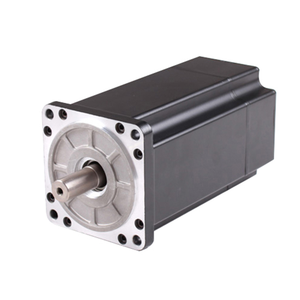
NEMA 42 1kW–3kW servo-grade brushless DC solution engineered for robotic positioning and high-torque dynamic drive integration in smart MCC switchboards.
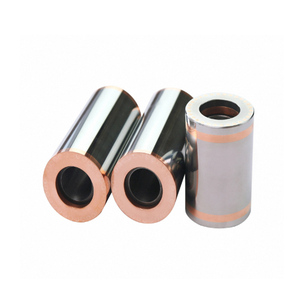
Precision-engineered high-speed induction elements with customized stator windings for seamless soft-starter and VFD MCC bucket synchronization.
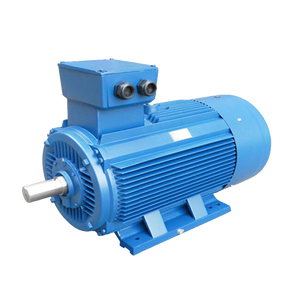
Heavy-duty 800kW 3-phase asynchronous motor featuring optimal heat dissipation channels for large-scale industrial pumps, blowers, and mining MCC feeds.
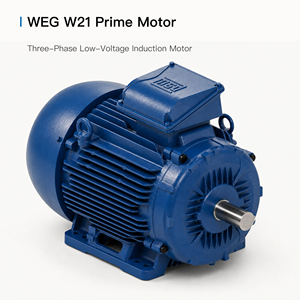
Ultra-efficient cast iron motor design matching EU Eco-design guidelines, compatible with intelligent motor protection relays within centralized control panels.
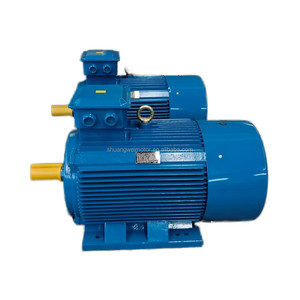
100% copper-wound, 380V 50/60Hz dual-frequency motor certified for severe duty cycles, featuring IP55 protection for marine and process plant automation.
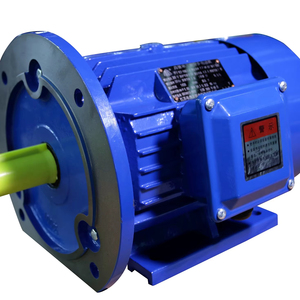
Standardized export-grade induction motor compliant with international IEC standards, optimized for multi-bucket MCC line starter applications.
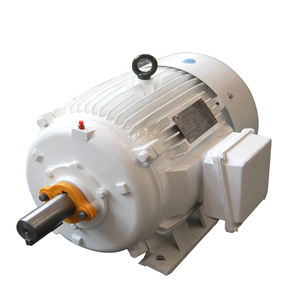
Ruggedized frame electric motor engineered for global machinery OEMs, supporting direct-on-line (DOL) and star-delta starting architectures.
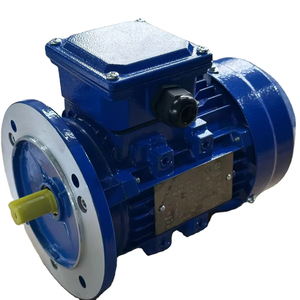
Versatile foot/flange mounted 2.2kW motor tailored for continuous HVAC, water treatment pump networks, and centralized MCC switchgear installations.
Partnering with a premier European-heritage supplier ensures seamless single-source accountability, robust logistics, and uncompromising electrical safety for your motor control assembly needs.
Backed by over 50 years of specialized motor and switchgear development, our engineers modify, customize, and configure low-voltage control gear for marine, offshore, mining, and critical process environments.
We reject one-size-fits-all manufacturing. Every MCC cubicle and matching motor drive is engineered around your exact operating envelope, ambient thermal constraints, and fault level requirements.
With more than 70,000 electric motors and modular MCC starter components maintained across strategically located global warehouses, we guarantee short lead times and zero downtime exposure.
As part of the Hoyer VMS Group, we offer a comprehensive one-stop-shop: from initial panel engineering and FAT validation to emergency 24/7 on-site overhaul, retrofits, and spare parts supply.
A comprehensive technical breakdown for procurement directors, electrical consulting engineers, and plant automation managers specifying low-voltage assemblies under European standards.
In the European Economic Area (EEA) and globally accepted industrial jurisdictions, a Motor Control Center (MCC) is defined as a Low-Voltage Switchgear and Controlgear Assembly under EN 61439-2 (Power Switchgear and Controlgear Assemblies). Achieving full CE marking certification requires rigorous verification of design, structural integrity, electrical clearances, and thermal management, proving compliance with both the Low Voltage Directive (LVD) 2014/35/EU and the Electromagnetic Compatibility (EMC) Directive 2014/30/EU.
Unlike basic electrical enclosures, a CE-certified MCC factory must subject its standard configurations to formal Type Testing (Design Verification). This encompasses thermal rise limits at rated currents, short-circuit withstand withstand testing ($I_{cw}$ up to 100kA for 1s), dielectric properties verification, protective circuit effectiveness, and clearance/creepage distances. Suppliers relying on unverified assembly components expose process facilities to severe arc-flash liabilities, insurance nullification, and operational failure during power transients.
Technical Insight: Original Equipment Manufacturers (OEMs) and engineering engineering contractors must verify that the supplier’s CE certification covers Design Verification by Test rather than mere calculation or extrapolation, especially when incorporating High-Efficiency VFD buckets alongside Direct-On-Line (DOL) starters.
Electrical safety during routine maintenance, thermal imaging inspection, or starter drawer replacement depends directly on the MCC’s internal physical separation. Under IEC 61439-2, internal separation is categorized into distinct forms designed to mitigate accidental contact with live busbars or adjacent functional units.
| Separation Level | Busbar Compartmentalization | Functional Unit Segregation | Terminal Box Separation | Typical Application Risk Profile |
|---|---|---|---|---|
| Form 2b | Separated from functional units | No separation between units | Terminals separated from busbars | Light industrial, commercial HVAC plant rooms |
| Form 3b | Separated from functional units | Units separated from each other | Terminals separated from busbars | Standard industrial manufacturing, water treatment |
| Form 4a | Separated from functional units | Units separated from each other | Terminals within same housing as unit | Continuous process plants with tight footprint |
| Form 4b | Separated from functional units | Units separated from each other | Terminals in individual dedicated cubicles | Critical Infrastructure, Offshore Marine, Heavy Mining |
For high-reliability plants, specifying Form 4b Type 7 separation guarantees that maintenance personnel can safely work within an individual starter terminal compartment while neighboring motor buckets and main vertical busbars remain fully energized, eliminating plant-wide shutdown requirements.
The global industrial landscape is undergoing a massive shift driven by decarbonization, automated maintenance, and stringent energy efficiency directives. When sourcing CE certified Motor Control Centers, global procurement teams must align specifications with four macro trends:
Traditional electromechanical relays and standard thermal-magnetic breakers are rapidly giving way to Intelligent Motor Protection Relays (IMPR) integrated directly into industrial Ethernet loops (PROFINET, EtherNet/IP, Modbus TCP). Modern iMCC buckets incorporate embedded edge computing nodes that monitor real-time phase current imbalance, insulation resistance, harmonic distortion (THD), and mechanical vibration profiles. Procurement strategies must prioritize switchgear vendors capable of delivering pre-configured, cybersecurity-hardened (IEC 62443 certified) communication bridges.
With European Eco-design Regulation (EU) 2019/1781 mandating minimum IE4 efficiency for motor power ranges from 75kW to 200kW, MCC factories must engineer control buckets optimized for high-inrush permanent magnet (PM) and synchronous reluctance (SynRM) motors. VFD-based MCC drawers require active front-end (AFE) filtering to counteract network harmonics and maintain total harmonic voltage distortion below 5% at the main busbars.
Electrical safety standards have evolved beyond passive arc containment. Top-tier CE suppliers now integrate active optical arc detection sensors coupled with fast-acting arc eliminators capable of quenching internal arcing faults within 2 to 4 milliseconds. This ultra-fast response prevents pressure buildup, protects personnel, and preserves nearby functional modules from catastrophic damage.
To reduce Mean Time to Repair (MTTR), industrial facilities are standardizing on fully withdrawable drawer designs equipped with automatic self-aligning power and control stabs. Mechanical safety interlocks ensure drawers cannot be inserted or withdrawn under load, while clear visual indicators confirm test, isolated, and connected positions.
Leading international MCC factories are currently investing in sophisticated material science and automated manufacturing techniques to optimize performance and reduce carbon footprints:
Answers to common technical, compliance, and supply chain questions encountered during the procurement of CE certified Motor Control Centers.
Whether you require custom Form 4b intelligent switchgear, specialized marine motor starters, or rapid-delivery IE4/IE5 industrial motors, our engineering team is ready to review your single-line diagrams (SLD) and technical specifications.
Get a Quote