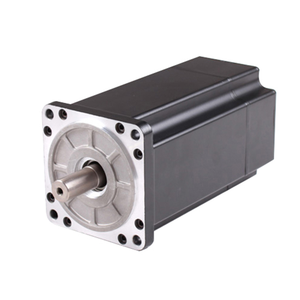
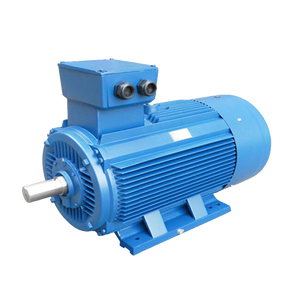
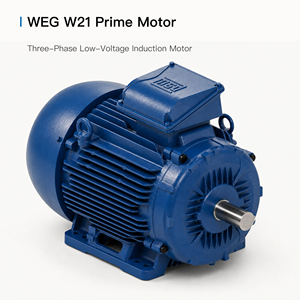
High-torque inverter platforms paired with fit-for-purpose induction, BLDC, and permanent magnet synchronous motor tech. Engineered to withstand harsh electrical ambient environments.
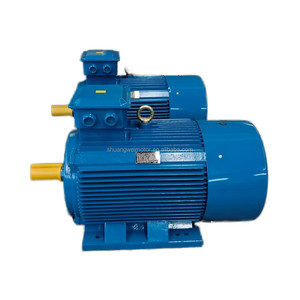
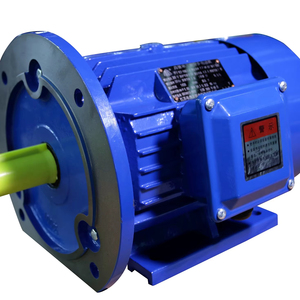
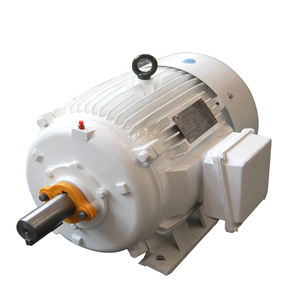
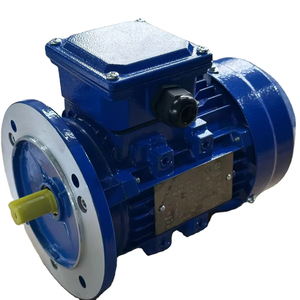
Over 50 years of power and motion engineering legacy. Delivering fit-for-purpose, CE-marked Variable Frequency Drives and drive-motor ecosystems worldwide.
We do not simply distribute hardware; we customize drive software parameters, harmonic filters, and motor windings to ensure fault-free operation under the world's most severe duty cycles.
With major logistical centers across Europe and APAC (Denmark and Ningbo, China), we maintain immediate inventory availability to eliminate assembly line down-time risk.
Every VFD unit undergoes 100% full-load thermal burn-in, High-Voltage insulation testing, and electromagnetic compatibility (EN 61800-3 Category C2/C3) verification prior to dispatch.
In high-demand industrial processing, standard commercial variable frequency drives (VFDs) often fail prematurely due to thermal overload, high-frequency voltage spikes (dV/dt), and severe harmonic distortion. A true CE Certified Heavy Duty VFD Drive is designed specifically to handle continuous 150% to 200% overload torque profiles for 60 seconds or more, accommodating the high inertia demands of heavy industrial machinery such as ball mills, marine winches, positive displacement pumps, and multi-stage air compressors.
Compliance with European Directives—specifically the Low Voltage Directive (LVD) 2014/35/EU and Electromagnetic Compatibility (EMC) Directive 2014/30/EU—requires robust internal design architectures. Heavy-duty drives must incorporate integrated C2 or C3 class EMC filters to suppress high-frequency radio noise from escaping onto the plant grid. Furthermore, internal DC bus chokes or 3-phase AC input line reactors are mandatory engineering elements that limit total harmonic distortion (THDi) and safeguard the inverter bridge’s Insulated Gate Bipolar Transistors (IGBTs) from voltage transients.
Technical Insight: Standard-duty VFDs utilize derated thermal heatsinks and 120% short-term current limits. Industrial heavy-duty VFDs feature oversized IGBT modules, dual-stage forced cooling, and advanced Flux Vector Control algorithms that maintain maximum continuous motor torque down to 0.1 Hz without encoder feedback.
Global industrial procurement is undergoing a paradigm shift. Procurement directors are migrating away from analyzing initial equipment purchasing cost (CapEx) to evaluating the total 10-year Total Cost of Ownership (TCO). Electric motor-drive systems consume approximately 70% of all electrical energy utilized across industrial facilities. Consequently, integrating a CE-certified heavy-duty drive with high-efficiency IE4 or IE5 class induction/PM motors delivers an average operational payback period of under 14 months.
| Control Technology Profile | Starting Torque Capabilities | Efficiency Index (At 50% Load) | Harmonic Distortion (THDi) | Ideal Heavy Industrial Application |
|---|---|---|---|---|
| V/Hz (Scalar Control) | 100% - 120% at > 3Hz | 88.5% | > 35% (Unfiltered) | Standard Centrifugal Fans & HVAC Systems |
| Sensorless Vector (SVC) | 180% - 200% at 0.5Hz | 95.2% | < 12% (With DC Choke) | Extruders, Heavy Conveyors, Mixers |
| Closed-Loop FOC Vector | 200% Torque at 0.0Hz (Zero Speed) | 97.8% | < 5% (Active Front End) | Mine Hoists, Marine Propulsion, Cranes |
| Matrix Direct AC-AC Inverter | 200% Regenerative Braking Torque | 98.4% | < 3% (IEEE 519 Compliant) | Continuous Deceleration Centrifuges & Elevators |
Future procurement trends highlight the necessity of standardized multi-protocol connectivity. Modern industrial plants no longer tolerate isolated drive architectures. Heavy-duty drives must support fieldbus cards natively—including PROFINET, EtherNet/IP, Modbus TCP, and EtherCAT—enabling direct telemetry integration into SCADA systems and cloud-based predictive maintenance networks.
The drive manufacturing industry is transitioning from legacy Silicon (Si) IGBTs to Silicon Carbide (SiC) MOSFETs. SiC power semiconductors allow switching frequencies to increase from standard 4kHz–8kHz up to 32kHz without generating excessive thermal losses. This higher carrier frequency results in a near-pure sinusoidal output waveform, reducing high-frequency motor heating, eliminating motor acoustic hum, and substantially reducing drive physical footprint by up to 40%.
Modern heavy-duty VFDs are evolving into intelligent edge-computing nodes. By continuously monitoring stator current signatures, micro-vibrations, thermal degradation trends, and DC bus ripple voltages, the drive's embedded firmware can predict bearing failure, insulation breakdown, or mechanical unbalance months before a catastrophic shutdown occurs.
