Discover expert articles, energy efficiency guides, and industry innovations in industrial and marine motor engineering.
China’s industrial motor sector has become a major force in global manufacturing. Its suppliers serve factories, water plants, logistics systems, mining operations, and renewable-energy projects. This article examines China’s top Industrial electric motors manufacturers through practical performance, engineering depth, and long-term reliability.
Austin Hughes, a respected author on motor drives, describes electric motors as “the workhorses of industry.” That description remains accurate. A motor hidden inside a pump room may run continuously, moving thousands of liters every hour. A factory motor may start and stop hundreds of times daily. Small design weaknesses become expensive problems.
The leading Chinese manufacturers compete through broad product ranges and customized engineering. Their portfolios often include induction motors, permanent-magnet motors, explosion-resistant models, servo systems, and high-efficiency units. However, product catalogs alone prove little. Buyers should examine efficiency ratings, insulation systems, bearing quality, thermal protection, vibration control, and after-sales support.
Certification matters, but it is not the whole story. Field testing, maintenance records, and transparent technical documentation provide stronger evidence. Some manufacturers offer excellent value, while others need closer quality verification. This difference is easy to miss.
The following outline compares leading companies, manufacturing capabilities, export experience, certifications, application fields, and customer service. It also considers delivery consistency and spare-parts availability. These practical details often decide whether a motor performs reliably after installation. A famous name helps, but careful evaluation remains necessary.
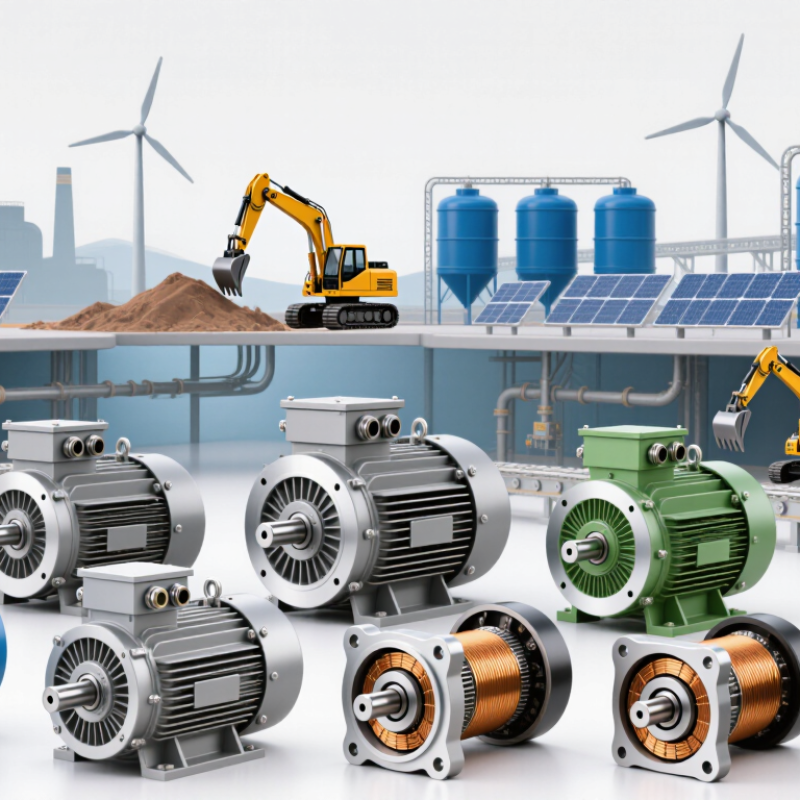
China’s industrial electric motor manufacturing sector serves steel, water treatment, mining, HVAC, and automated production. The International Energy Agency reports that motor-driven systems consume nearly half of global electricity, while industrial motors use about 70% of industrial electricity. These figures explain China’s strong focus on efficient motor production.
Manufacturers typically build induction, permanent-magnet, and variable-speed motors across low- and medium-voltage ranges. Production quality depends on copper winding accuracy, silicon-steel lamination, rotor balance, insulation, and thermal testing. Small defects matter. A minor air-gap error can increase vibration, noise, and energy loss during continuous operation.
IEC 60034-30-1 defines efficiency classes from IE1 to IE4, supporting clearer international comparisons. China’s updated efficiency requirements also encourage higher-performance motor systems, especially in energy-intensive factories. The IEA notes that combining efficient motors with variable-speed drives can reduce electricity use substantially, depending on load conditions. However, catalog efficiency is not enough. Installation, alignment, maintenance, and operating load can change real performance. This is where procurement reviews often become too optimistic. Factory audits, calibrated test records, traceable materials, and after-sales engineering support provide stronger evidence than promotional claims. China’s manufacturing scale is impressive, but consistency between batches still deserves careful verification.
| Data Dimension | Typical Industry Data | Technical or Manufacturing Reference |
|---|---|---|
| Product Portfolio and Electrical Specifications | ||
| Motor Type | Three-phase asynchronous induction motors; permanent-magnet synchronous motors; single-phase motors for selected low-power applications | Induction motors remain widely used in pumps, fans, compressors, conveyors, machine tools, and general industrial equipment. |
| Common Rated Power Range | Approximately 0.12 kW to 1,000 kW for standard industrial product families | Actual ranges vary by frame size, cooling method, voltage class, duty cycle, and customized design requirements. |
| Low-Voltage Supply | 380 V, 400 V, or 415 V; 50 Hz; three phase | These ratings are commonly specified for industrial systems using IEC-based electrical practices. Voltage and frequency should be confirmed for the installation site. |
| Medium-Voltage Supply | Commonly 3 kV, 3.3 kV, 6 kV, 6.6 kV, or 10 kV | Medium-voltage motor designs generally require application-specific insulation systems, testing, protection, and commissioning procedures. |
| Efficiency Classification | IE2, IE3, and IE4; higher-efficiency designs are available for suitable applications | Efficiency classes for line-operated AC motors are defined in IEC 60034-30-1. Required class depends on rated power, speed, duty, and applicable regulations. |
| Rated Speed | Common designs include approximately 750, 1,000, 1,500, and 3,000 rpm at 50 Hz | Actual operating speed is lower than synchronous speed because of slip in induction motors. Pole count determines the approximate speed range. |
| Duty Rating | S1 continuous duty is standard; S2 to S9 duties are available for specialized applications | Duty types are specified in IEC 60034-1 and should match the load profile, starting frequency, thermal cycle, and operating environment. |
| Mechanical Construction and Environmental Protection | ||
| Frame and Mounting | IEC metric frame sizes with foot-mounted, flange-mounted, and combined mounting arrangements | Frame dimensions and mounting interfaces are selected according to the required shaft height, base arrangement, flange size, and replacement compatibility. |
| Ingress Protection | IP55 is common; IP56, IP65, and IP66 are used where greater protection is required | IP ratings are defined by IEC 60034-5. The appropriate rating depends on dust, water, washdown, outdoor exposure, and installation conditions. |
| Cooling Method | Totally enclosed fan-cooled construction, commonly identified as IC411; other IC cooling arrangements are available | Cooling design affects enclosure temperature, noise, allowable load, maintenance requirements, and suitability for variable-speed operation. |
| Insulation System | Class F is common; Class H is used for higher-temperature or demanding applications | Insulation class indicates the thermal endurance of the insulation system. Temperature rise limits and service factors must also be considered. |
| Ambient Temperature | Many standard designs are rated around -15°C to +40°C ambient temperature | High-altitude, high-temperature, low-temperature, humid, corrosive, and explosive environments may require derating or special construction. |
| Noise and Vibration Control | Dynamic rotor balancing, bearing alignment, and vibration testing are standard quality-control activities | Permissible vibration and noise levels depend on motor size, speed, balance grade, bearing arrangement, and the applicable technical specification. |
| Manufacturing and Quality-Control Characteristics | ||
| Core Manufacturing | Electrical steel laminations assembled into stator and rotor cores | Lamination quality, stacking accuracy, burr control, and core compression influence iron loss, temperature rise, efficiency, and vibration. |
| Rotor Construction | Squirrel-cage rotors are common; cast-aluminum and copper-bar rotor designs are selected according to performance requirements | Rotor material and geometry affect starting torque, current, efficiency, thermal performance, and suitability for demanding load cycles. |
| Winding and Insulation Process | Formed or random windings with varnish treatment, resin impregnation, or vacuum-pressure impregnation for selected designs | The insulation process is selected based on voltage level, motor size, thermal class, mechanical strength, and inverter-duty requirements. |
| Routine Electrical Tests | Winding resistance, insulation resistance, high-voltage withstand, no-load current, rotational direction, and operating performance checks | Routine tests are generally performed before shipment, with additional type or special tests specified for particular projects. |
| Variable-Frequency Drive Compatibility | Available for many low-voltage motor designs, with inverter-duty insulation and thermal protection options | Drive applications require attention to bearing currents, minimum speed cooling, voltage rise time, cable length, overload profile, and braking conditions. |
| Certification and Compliance | IEC-based technical compliance is common; project-specific certification may include CE, CCC, or hazardous-area approval | Certification requirements depend on the destination market, motor type, installation environment, voltage level, and end-use application. |
| Customization Capability | Common options include special voltage, frequency, shaft dimensions, mounting, brake systems, encoders, heaters, thermistors, and corrosion protection | Customized designs should be confirmed through an approved technical specification covering load data, operating conditions, interface dimensions, and testing requirements. |
| Selection Considerations for Industrial Applications | ||
| Typical Application Sectors | Water treatment, HVAC, mining, metallurgy, cement, chemicals, oil and gas, material handling, manufacturing, and renewable-energy systems | The required motor design depends on starting conditions, load torque, speed control, duty cycle, environmental exposure, and maintenance strategy. |
| Key Procurement Parameters | Power, voltage, frequency, speed, efficiency, enclosure, mounting, duty, insulation class, protection level, ambient conditions, and certification | A complete datasheet and mechanical drawing help prevent compatibility problems during installation and replacement. |
| Data Interpretation Note | The values shown are common technical ranges and specifications used in industrial electric motor manufacturing in China and international IEC-based markets. | Individual products may differ. Final selection should be verified against the applicable standard, technical datasheet, local electrical code, and actual operating conditions. |
They serve steel, water treatment, mining, HVAC, and automated production. Continuous operation is common.
Manufacturers produce induction, permanent-magnet, and variable-speed motors. They cover low- and medium-voltage applications.
Copper winding accuracy, silicon-steel laminations, insulation, cooling, and rotor balance matter. Small defects matter. A minor air-gap error can increase vibration, noise, and energy loss.
IEC 60034-30-1 defines efficiency classes for many motor types. Higher classes usually require improved magnetic steel, optimized windings, and better cooling paths. Labels alone are insufficient.
They can reduce speed and energy use when load conditions allow. Poor settings may increase heat and vibration. The result depends on application details.
Request temperature-rise, efficiency, insulation-resistance, vibration, and no-load-current results. Testing should follow relevant international standards. Calibrated instruments matter.
Ask for traceability covering copper, bearings, laminations, and rotor balancing. Request serial-level records and corrective-action reports. Paperwork can still miss reality.
A motor may pass final testing yet develop early bearing noise. Review vibration data and consider sample endurance tests. That gap matters.
Compare voltage, frequency, load, and ambient temperature in every test report. Review factory audits, batch consistency, alignment needs, and service support. Catalog claims need verification.
China has developed a broad industrial electric motors manufacturing sector serving applications in factories, infrastructure, energy, transportation, and automated production. Chinese manufacturers commonly produce induction motors, synchronous motors, DC motors, gear motors, explosion-protected models, and high-efficiency variable-speed motors. Their capabilities cover customized power ratings, voltage levels, mounting designs, cooling systems, and control requirements, allowing buyers to select solutions for diverse operating environments.
When evaluating Chinese industrial motor suppliers, buyers should consider manufacturing capacity, engineering expertise, product consistency, delivery reliability, and after-sales support. Attention should also be given to motor efficiency, insulation systems, protection ratings, temperature performance, vibration control, and compatibility with international standards. Effective quality control should include material inspection, production monitoring, electrical testing, load testing, and final performance verification. A careful comparison of certifications, technical documentation, sample results, communication, and warranty terms can help identify a dependable supplier and achieve a suitable balance between cost, efficiency, durability, and long-term operating value.